

Spend a Week in Mexico City
Mexico City was introduced to me a few years ago as one of the most cosmopolitan cities in Mexico and Latin America due to its thriving and diverse food scene, world-renowned architecture and architects, and having more museums than Paris and New York City! I feel like all of the cool artsy girls visited Mexico City post-Covid and worked remote there, and that’s how it got on my radar. There was a resurgence recently and I saw more people going to Mexico City and sharing their experience. From then on, I knew I had to experience it for myself. I booked a trip to Mexico City for 8 days at the end of September, which I figured would be a great escape and preparation for Fall and Winter season in Chicago. Unbeknownst to me at the time, September is Mexico City’s rainy season. I spent weeks coming up with things to do, food and restaurants to try, and experiences I had to take advantage of firsthand. I had a rough itinerary of what I wanted to do, but still left some time slots open to be spontaneous. I also wanted to work from my company’s local office in Mexico City to interact directly with locals, practice my Spanish, and be social. Mexico City has a population of over 22 million people! If you’ve caught up with my Japan blog, you know I’m struggling to grasp the concept of large populations of dense cities. Mexico City is in the top 10 of the largest cities by population. 22 million is such an enormous number to comprehend — that is twice the population of NYC and Los Angeles combined!
The infrastructure of Mexico City is better than other parts of Mexico that I’ve visited such as Juarez and the Yucatan, likely because Mexico City is the capital city of Mexico and hosts more global tourists. Post-Covid, many American remote workers relocated to Mexico City and tried to gentrify some neighborhoods. With a population of over 22 million people, there are several neighborhoods to house its citizens, and the neighborhoods vary from one to the next. The most popular and tourist-heavy neighborhoods are Roma Norte, Condessa, Polanco, and Centro Historico.
The peso exchange rate has been relatively consistent of 18:1 to the U.S. Dollar. Ubers are easy to order and affordable in Mexico City. Taxis are also plentiful in the city, but I did not take any during my time. Mexico City has a robust public transportation system, including streetcars/trolleys, buses, collectivos, a subway system, and a cable car system.
I took a direct flight from Chicago to Benito Juárez International Airport in Mexico City, which was a little over 4 hours. I didn’t take heed to everyone’s recommendations of staying in Roma Norte or Condessa for walkability, convenience, shopping, sightseeing, and access to some of the city’s best restaurants and shops. When looking for hotels, I wanted a cute boutique hotel that was interesting, had great service, and amenities. Because I was staying for a relatively extended period of time, I wanted to try different hotels just in case one didn’t work out, I knew I wouldn’t be bound to it for my entire stay.
I checked in to Casa de la Luz Boutique Hotel located downtown in Centro Historico, steps away from the Museum of Mexico City, Constitution Plaza, and Zocalo subway station. The small boutique hotel has less than 20 rooms, a rooftop restaurant, and is absolutely stunning from the moment you enter the glass doors to the cobblestone lobby, and greeted by the friendly staff. All of the staff members I encountered were amazing from check-in to check-out. I appreciated the free bottled waters upon arrival, with the staff ensuring there were water bottles in my room throughout my stay, and the staff giving me a tour of the property and my room.
You can view a full hotel tour of Casa de la Luz Boutique Hotel on my YouTube below.
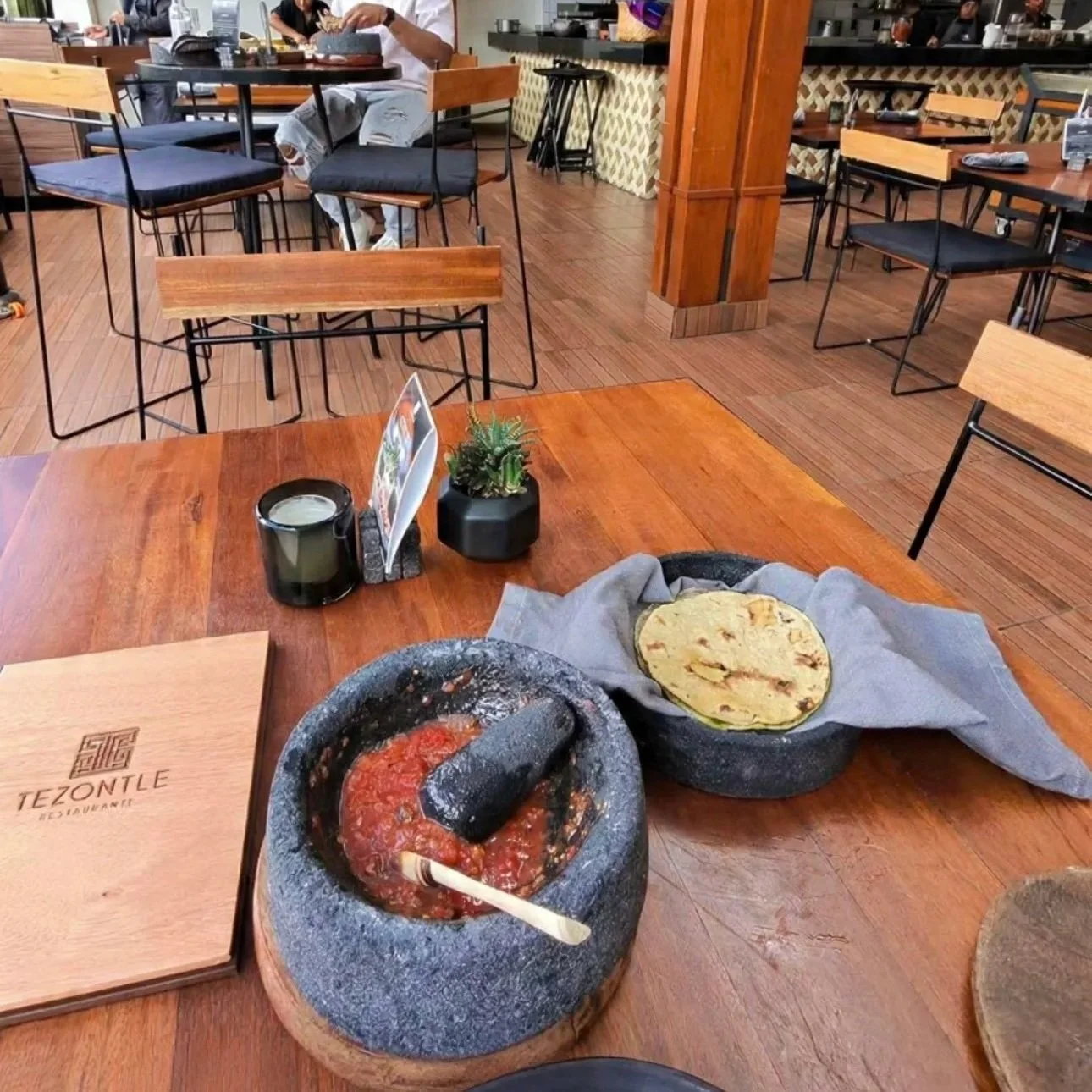
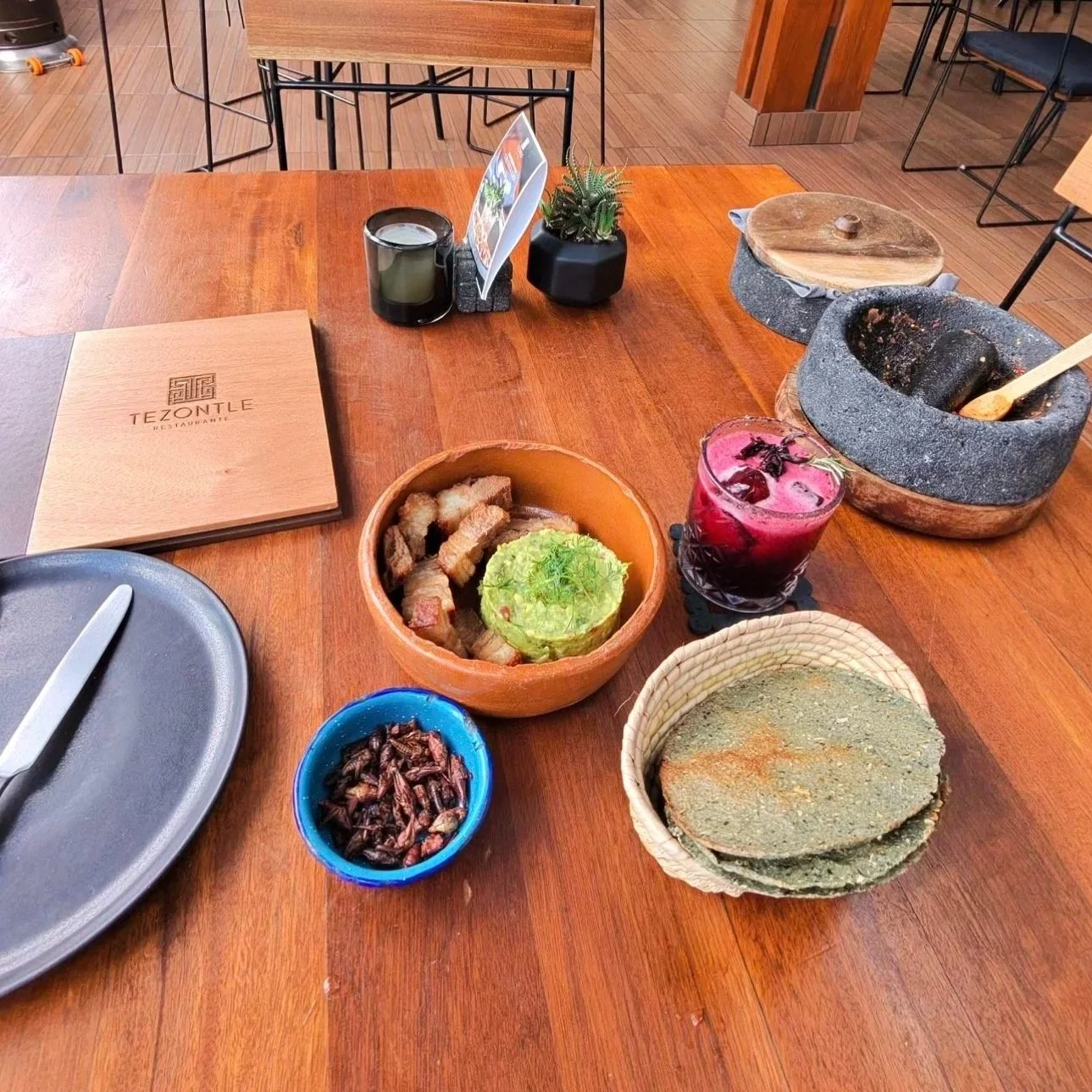
After I got settled, I headed to their on-property restaurant, Tezontle located on the rooftop. Tezontle’s menu is full of elevated traditional Mexican dishes. I started off with their welcome drink which is a hibiscus mezcal cocktail and house salsa prepared tableside. Tortillas are made in-house with an abuela preparing 3 different varieties in the dining room. I had the rest of the day ahead of me, and knew I wanted to go out for dinner, so I didn’t want a heavy lunch. I settled for the guacamole served with fried pork belly. To my surprise, the guac came with a small serving of grasshoppers, which I learned is a delicacy across Mexico, specifically in Mexico City, Puebla, and Oaxaca. Unfortunately, this time I passed on eating the critters. I found the salsa to be delicious, watching my server prepare it in front of me in a mortar and pestle with dried peppers, tomatoes, salt, and other dried seasonings. My server then recommended I turn my chicharrón and guac into tacos, and he brought me more fresh and hot tortillas— game changer! I was stuffed from the appetizers at this point, but I had to head to my first activity of the day.
I arrived to Mexico City on a Saturday, and everyone hailed El Sabado Bazar as a must-visit for locally made and artisanal crafts such as ceramics, clothing, and silver jewelry. There are at least two restaurants on site as well as a coffee shop if you need to take a break from shopping for a bite to eat. El Sabado Bazar is located in the San Ángel neighborhood of Mexico City and is a 20-minute ride away from the Historic Center. By the time I arrived to the bazar, it was 6pm, and the bazaar closes at 7pm. It was also drizzling, so most vendors in the outside market were packing up for the week. It is best to start outside because vendors outdoors have better prices than boutiques inside the market.
I went inside a few boutiques and was intrigued as soon as I walked in. I first walked in to Joyas de Museo by Stefan Tanasescu, a jewelry store selling costume jewelry that you’ve likely seen across social media. The boutique jewelry store has several whimsical bug/insect/animal inspired earrings and many statement pieces of gold and silver plated jewelry. The price range for the statement pieces were $45+. I loved the bug jewelry, but knew I would rarely wear it for the price point, so I ended up purchasing a silver chain for around $25.
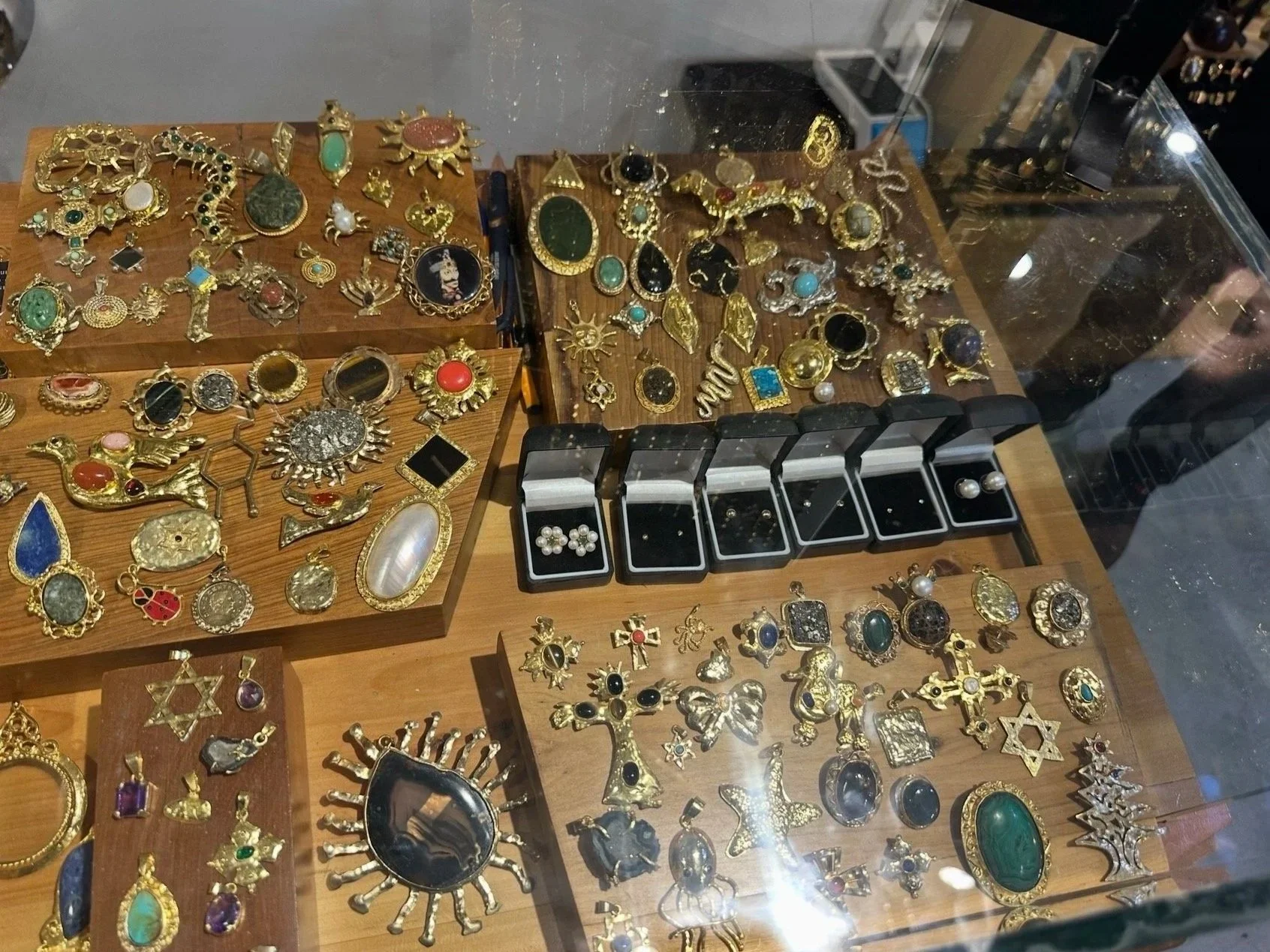
I ventured to other stalls inside, many others were selling jewelry, and home goods. The home goods included pottery, ceramic dinnerware, and tabletop accessories like vases, decorative saucers, candlestick holders, and more. All of the items were handmade in Mexico.
Because I went to the market at the end of the day, it was raining, and it was getting dark, I obviously didn’t get the full experience, so my view will likely be different from the norm. When I return to Mexico City, I will arrive at the bazaar earlier in the day so I can receive the full experience.
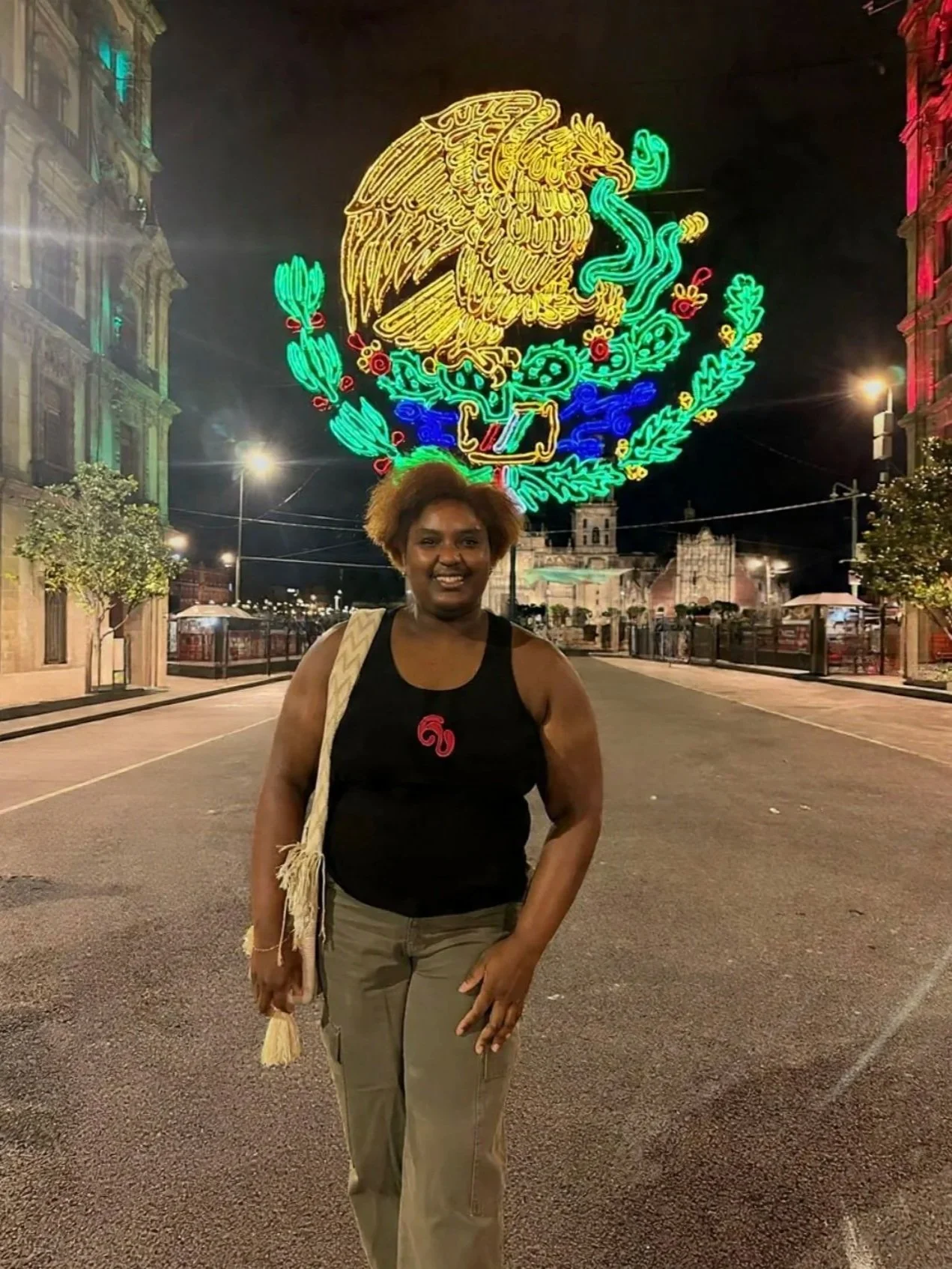
Around 8pm, I called another Uber to go back to my hotel. Before we arrived at the hotel, I saw a light show nearby and tried to ask my driver what I was seeing. My Spanish is still elementary, so I couldn’t understand what he was saying. I wasn’t far from Casa de la Luz, so I got out and headed to the lights. I then learned that I was viewing Constitution Plaza. The plaza was filled with vendors selling handmade crafts, homemade churros, street musicians playing, and people just enjoying their Saturday night. I stayed out enjoying the energy of the city, and realized the restaurant I wanted to go to for dinner was 20 minutes away and would be closed by the time I arrived.
Luckily, there was a McDonald’s not too far away. I rarely eat McDonald’s in the U.S. now, but I enjoy trying it abroad. I ordered a queso pie, which was just cream cheese, fries, McNuggets, and a Sponch McFlurry, which was McDonald’s ice cream with strawberry sauce, topped with Sponch cookies (Mexican strawberry and marshmallow shortbreads). Sadly, they were out of all beverages except Coke Zero and Coke, so I couldn’t try the Fanta.
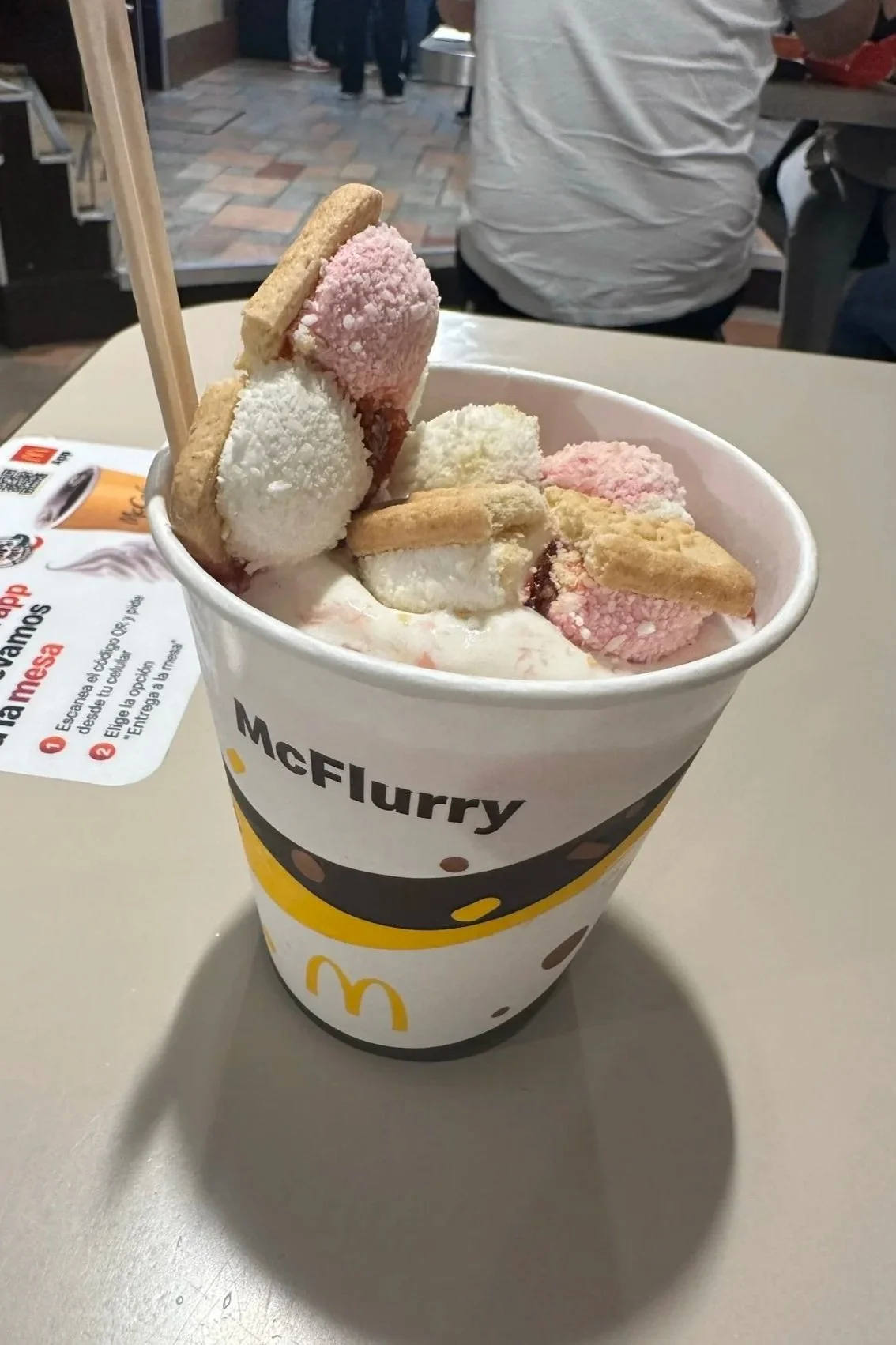
Mexican McDonald’s McFlurry with Sponch cookies
On day 2, Sunday I booked a day trip to Tolantongo Caves, which are 4 hours north of Mexico City. I inadvertently booked all of my tours with Amigo Tours on Expedia. If you search Expedia, Viator, or Get your Guide, you’ll find a ton of tour operators and can scour the reviews. I had nothing short of a great experience with all of my guides through Amigo Tours. During my time in Mexico City and speaking with my guides, I learned that all of them have extensive education in various fields, work as tour guides part-time, are Mexican, and are passionate about their country and educating people about the beautiful history and culture of their country. I’ve done quite a few tours and excursions where the guides are paid hourly and could not care less about what you learn and take away from your time with them — not here.
The arrival time at the meetup point for Tolantongo was 5 or 6am at a hostel in Centro Historico which was perfect for me, because it was a 10 minute walk away from my hotel. If I had a hotel in Roma Norte or the sort, I’d have to wake up even earlier to commute. All but one of my excursions with Amigo Tours had the meetup point at this hostel in Centro Historico.
The excursion to Tolantongo was in a sprinter van with maybe 12 people. We stopped halfway for a rest break and for breakfast in Ixmiquilpan, located in the Hidalgo state. The region is known for barbacoa, which I didn’t know until arriving to the town that barbacoa is the style of cooking, usually slow-cooked in a pit or in the ground. Traditionally, lamb is popular in this region of Mexico, but you can also cook whole cows, goat, even sheep barbacoa style.
Most tour groups stop in this region before heading to Tolantongo, so the town is filled with restaurants selling barbacoa and other local delicacies. There are also many souvenir shops for last-minute items that you may have forgotten before leaving Mexico City for Tolantongo. Before heading to the caves, it is imperative to know that you cannot bring additional items to the caves or hot springs. You’ll only need your phone and a waterproof case, a towel, sunscreen, and definitely water shoes, all of which the shops in Hidalgo sell. You may or may not be able to find these last-minute items once you get in to Tolantongo, but it may be overpriced or sold out by the time you arrive.
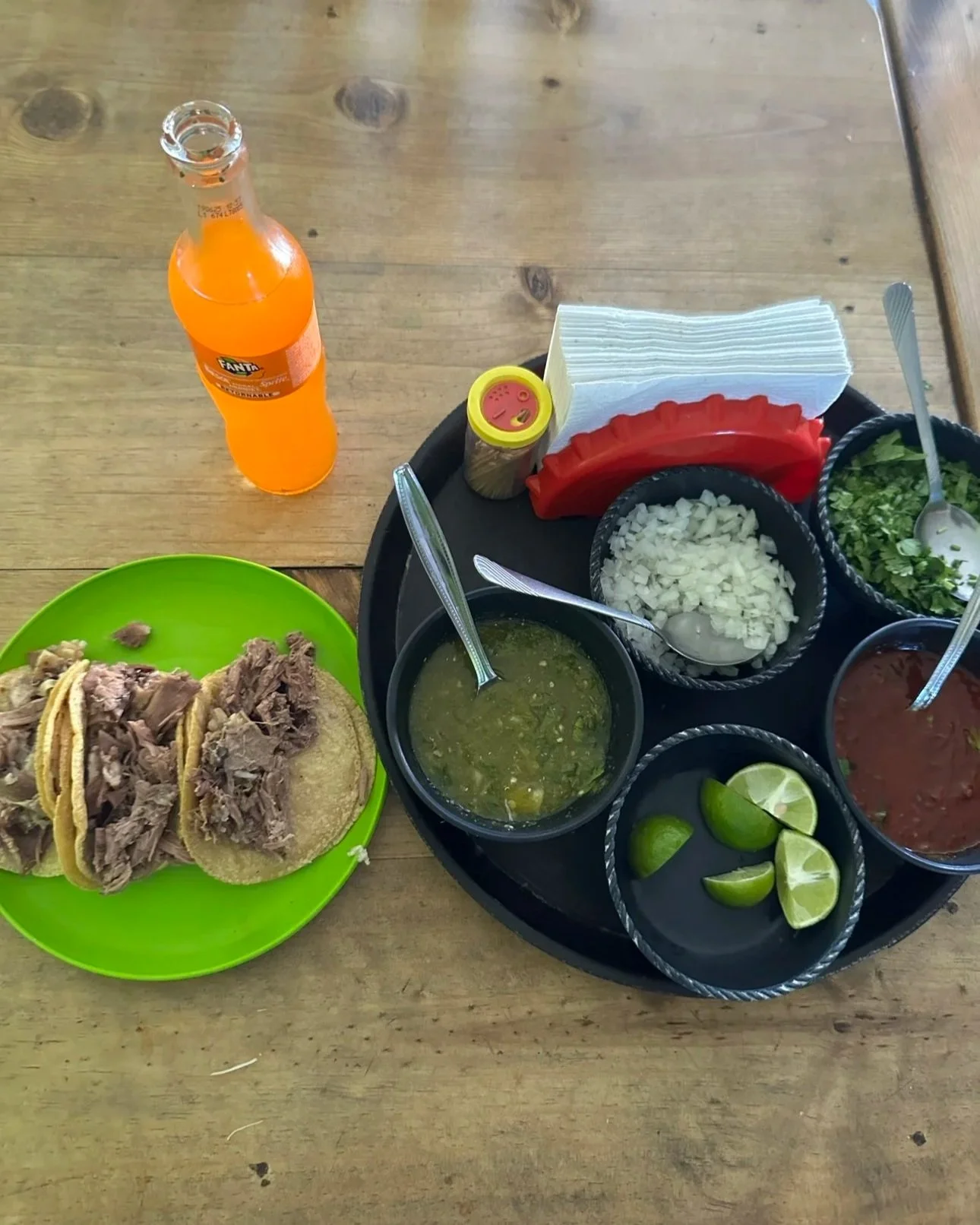
barbicoa tacos in the Hidalgo state, Mexico
The main water source for Tolantongo is a hot spring; the underground volcanic activity heats the water for the caves and grottos. The caves and river are natural, but the grottos are man-made, still sourcing from the hot spring water. The grottos are likely what you’ve seen on social media: a cascading series of soaking pools. The Tolantongo resort is split into 2 sections, which are not walkable between the 2 areas. The highway to Tolantongo is a winding road down a mountainside without streetlights, and I don’t recall seeing lane lines. I have seen some people rent a car to come, or hire a private driver to go at their own pace. The excursion was over 13 hours from pickup to drop-off and I felt more knowledgeable and had so much fun when I left. Calling an Uber is out of the question due to the remote-ness, and hiring a private driver may be tricky. While I felt completely safe, going with a group was the best option for me with a driver who knows the area.
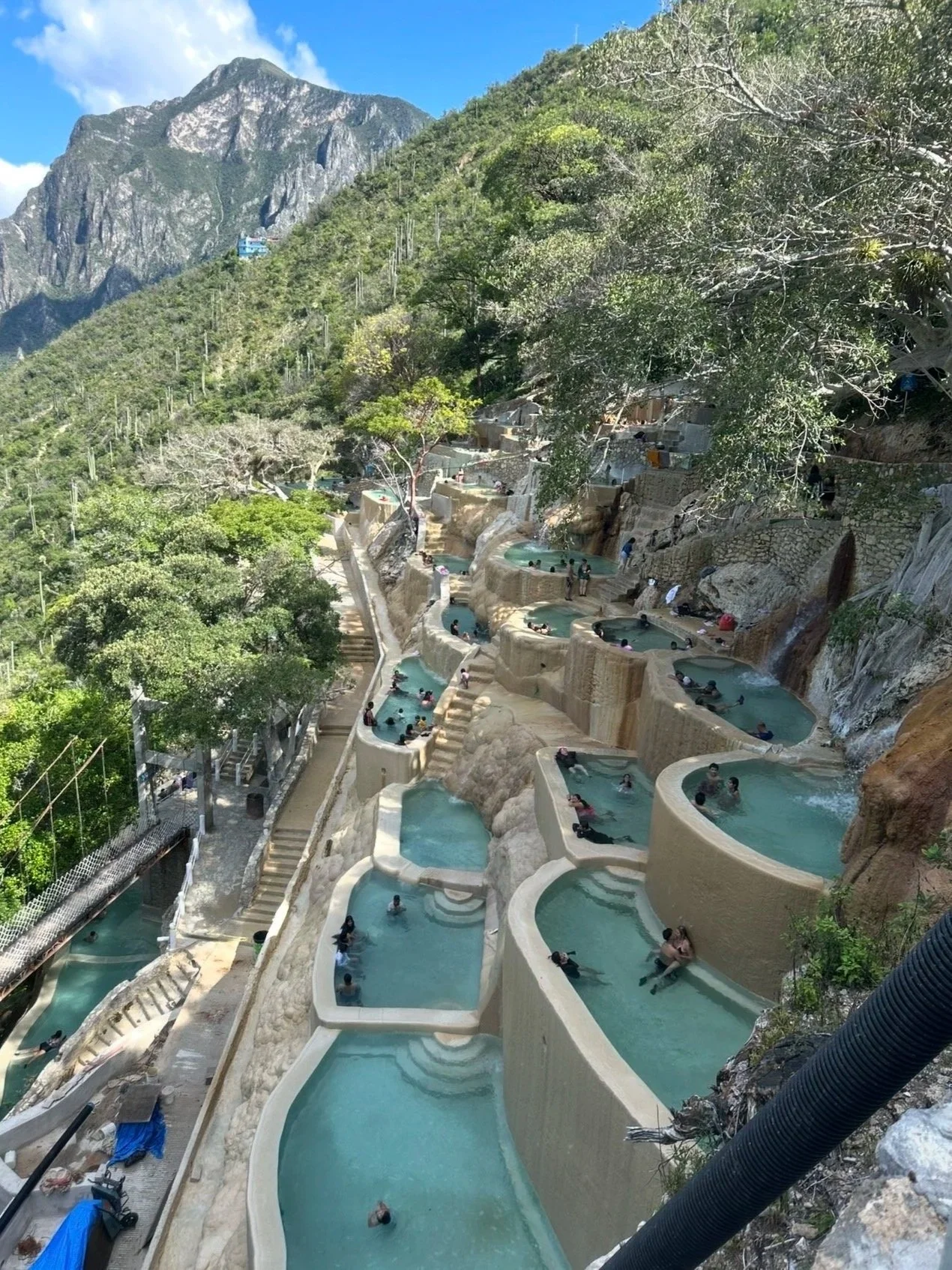
Tolantongo grottos
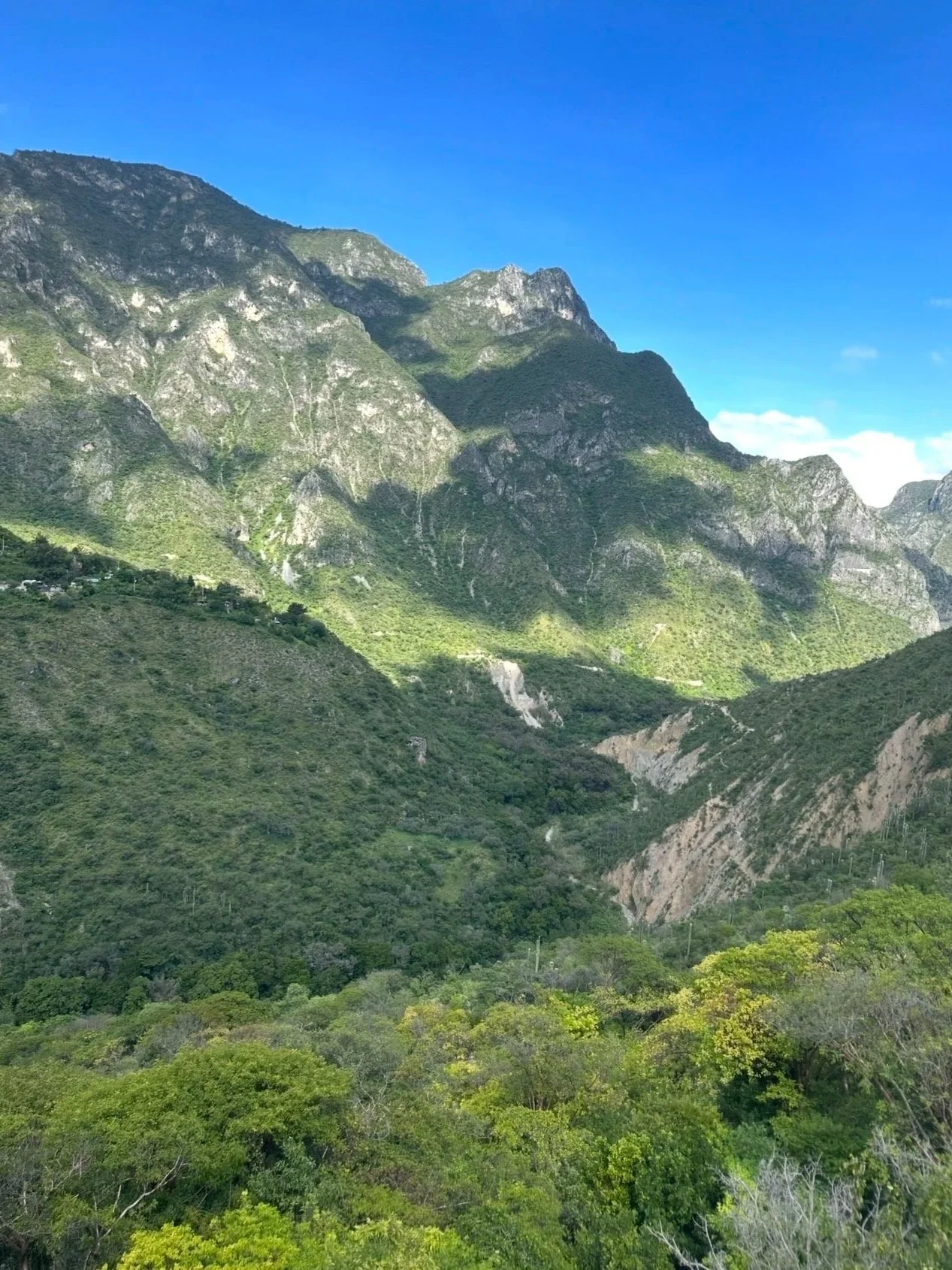
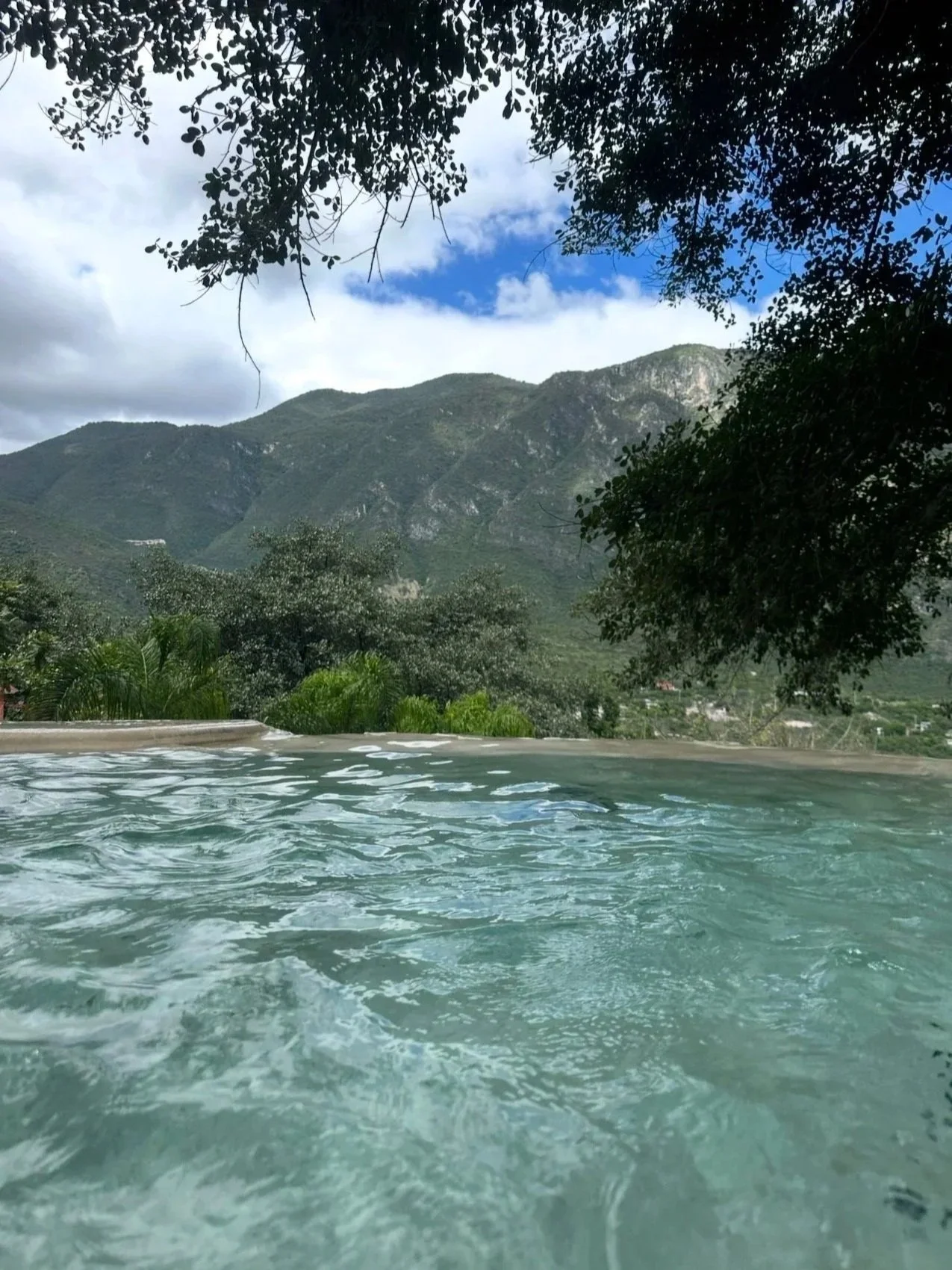
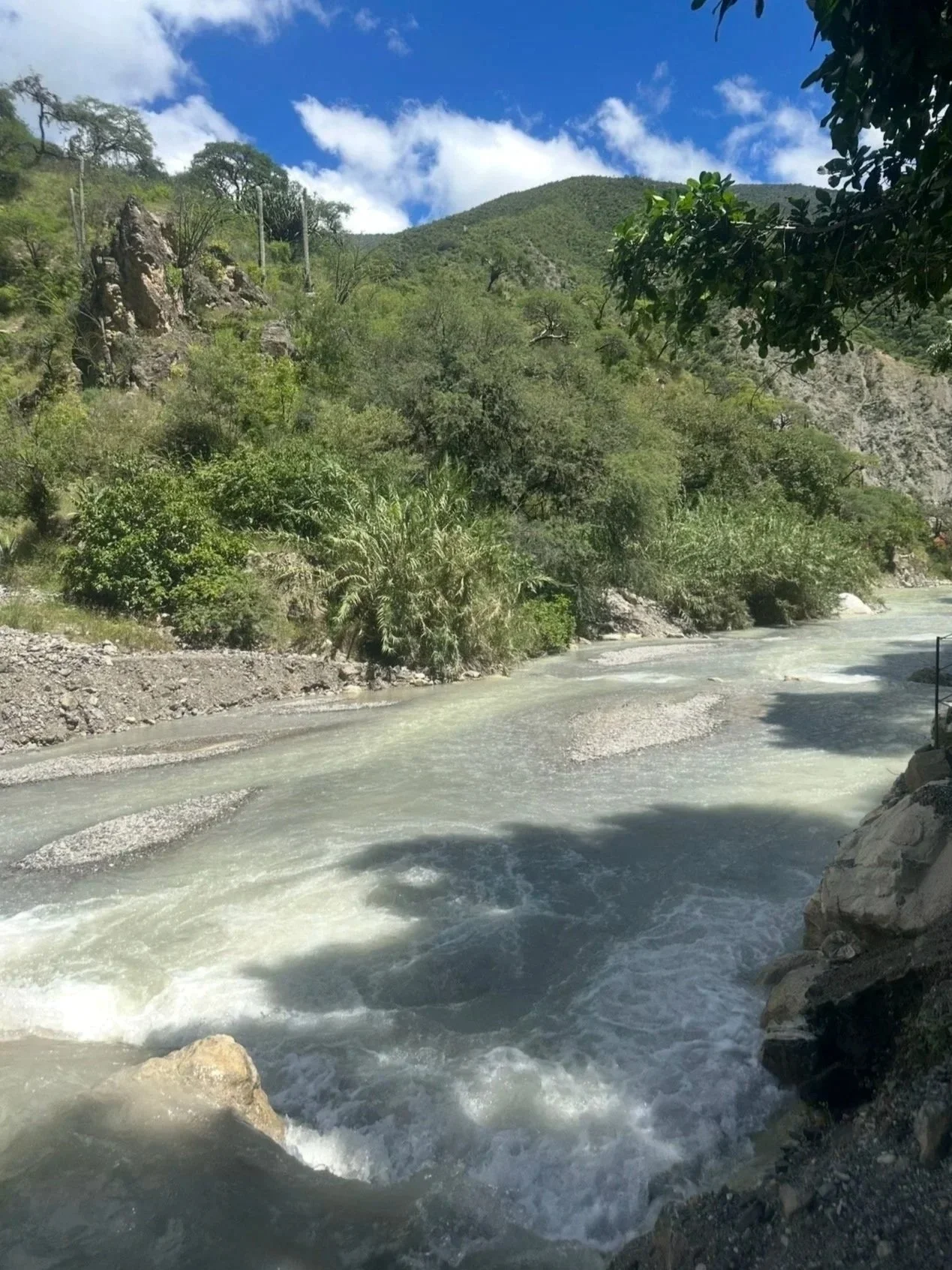
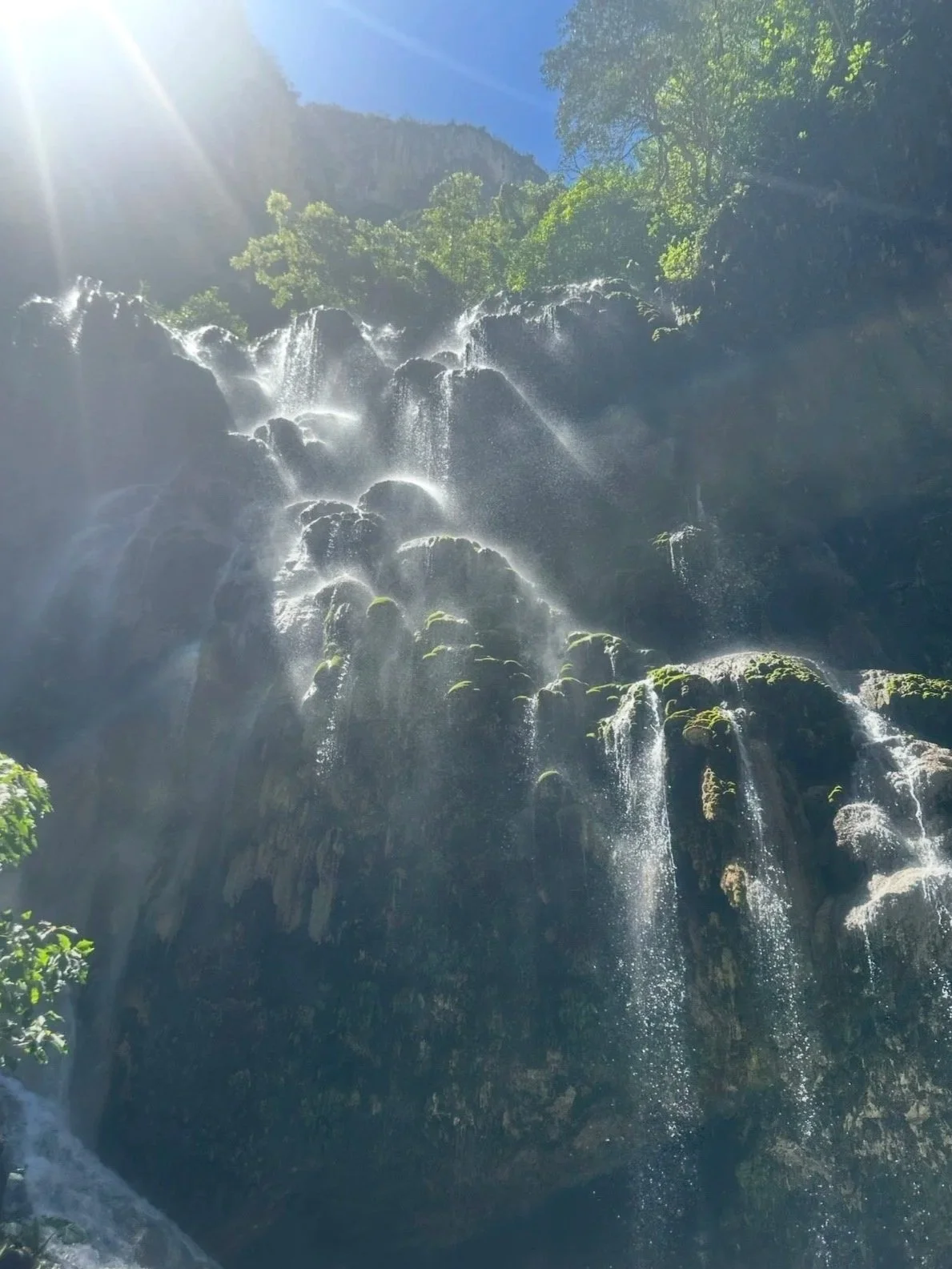
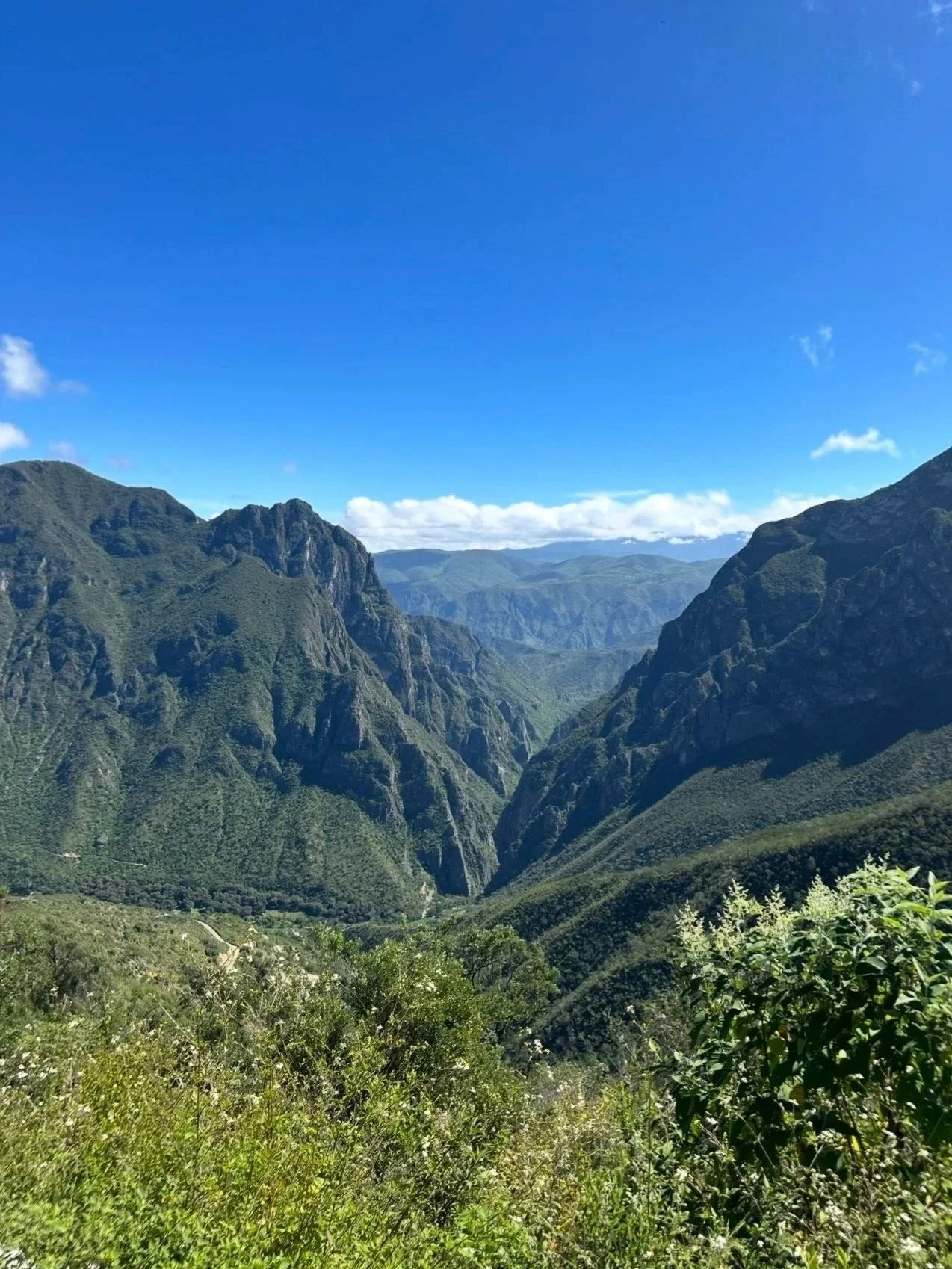
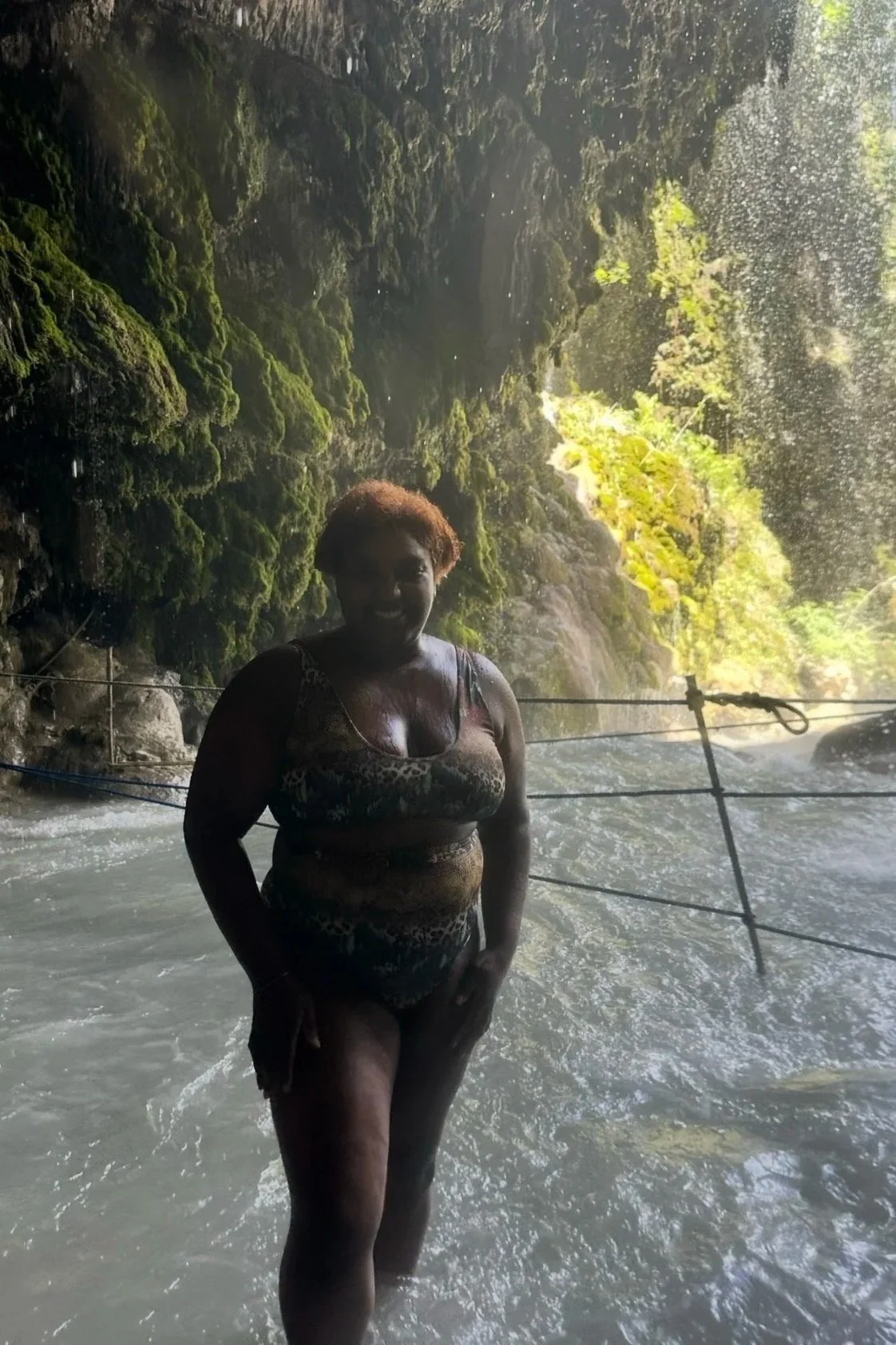
When we first arrived to the caves, there are 2 caves one more open-air, and the other more enclosed, steamy, and dark. There are no attendants inside the caves, but there are ropes to guide you, and many visitors help with a flashlight, or offer a hand maneuvering the rocks. There is access to the river, which is rocky and most people sunbathe or sit in the shallow river water. You can also find a pool with varying depths from a few inches where small kids were, all the way to 8+ feet which has a diving board. If you get hungry, there are 2 restaurants and a small convenience shop connected to a hotel on the property. We spent maybe 2 or 3 hours on this side of Tolantongo then took the Sprinter van to the other side which has the grottos. The higher up grottos have the warmest water, and sends the hot springs water to the lower grottos via pipes. As you matriculate down to the walking canopy, you’ll find fewer people, but cooler water. There is no time limit for either section of the resort, so you’re allowed to stay in all of the water areas for as long as you’d like. The grotto side is more relaxed with dozens of grottos to enjoy and relax in, with the least busy grottos on the right-hand side after you enter. Besides the soaking pools, there is a canopy walk and also a zip line to partake in.
In total, we probably spent 6 hours at Tolantongo and 4 hours on the road each way to and from Mexico City. There are motels and inns along the highway if you’d like to stay longer than a day trip excursion or would like to explore more of Hidalgo, and not treat CDMX as your home base. Both areas of Tolantongo have a hotel on both ends of the property for convenience.
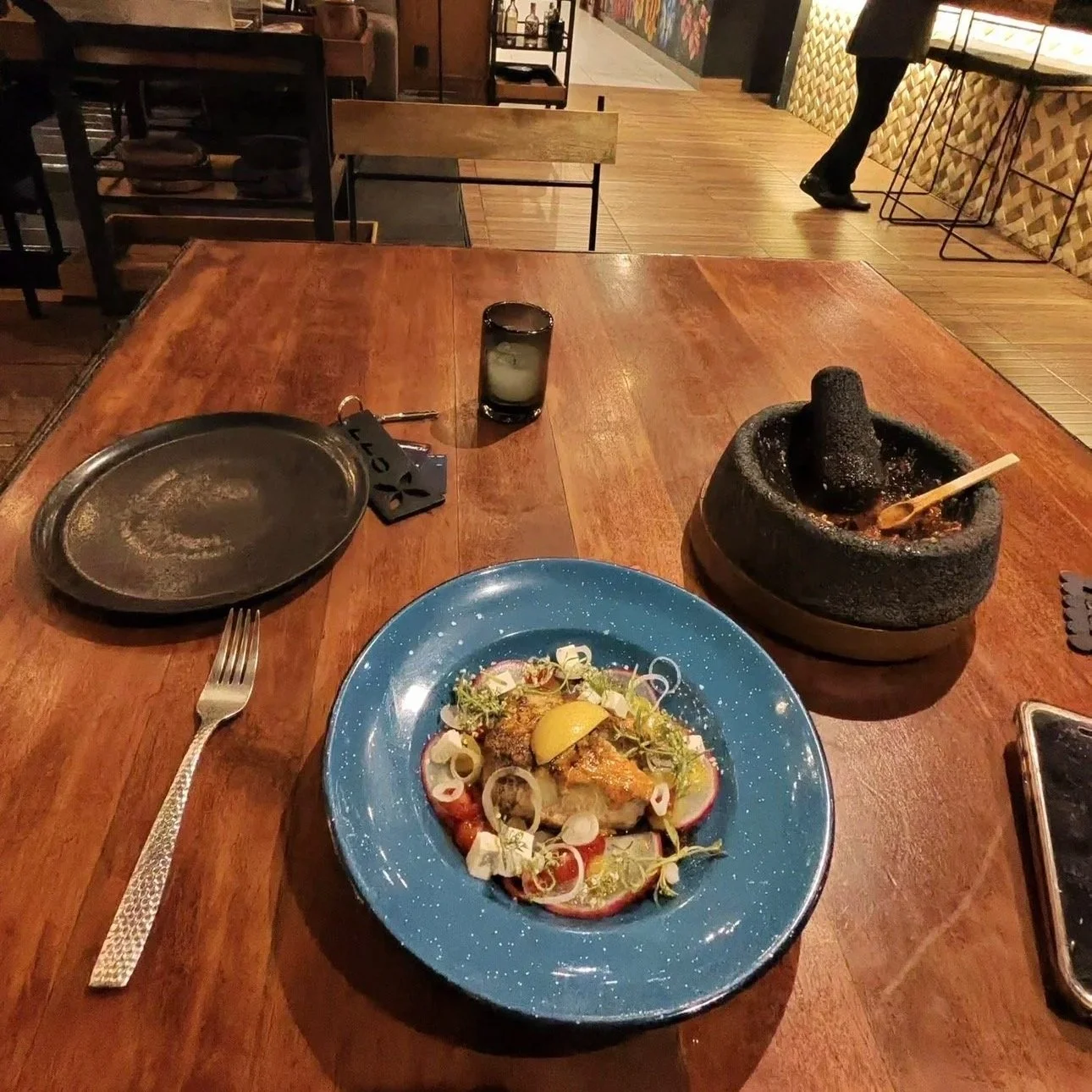
By the time we arrived back to Centro Historico, navigating the traffic, I was a bit tired, and knew by the time I’d showered, gotten ready, and headed to the restaurant I wanted to try in Roma Norte, they would be closed. Luckily, Casa de la Luz has Tezontle, and is open rather late, so I headed back to the rooftop for dinner. I again ordered the house mezcal hibiscus drink with tableside salsa and fresh tortillas. For dinner I had the special of the day which was a fish dish sprinkled with feta and radishes. I tried their upscale take on a churro with eggnog ice cream which they named the Wind Fritter.
By the end of day 2, I knew I would not be able to see and do everything that I’d like to do in Mexico City, and was preparing for my return while I was already there.
On Monday morning, I had breakfast at Tezontle which was included in the room package I purchased. Most hotels in Mexcio City don’t offer a continental breakfast buffet, but allow you to choose one entree from the breakfast menu and include accompaniments such as fresh fruit, beverages, and toast or a pastry.
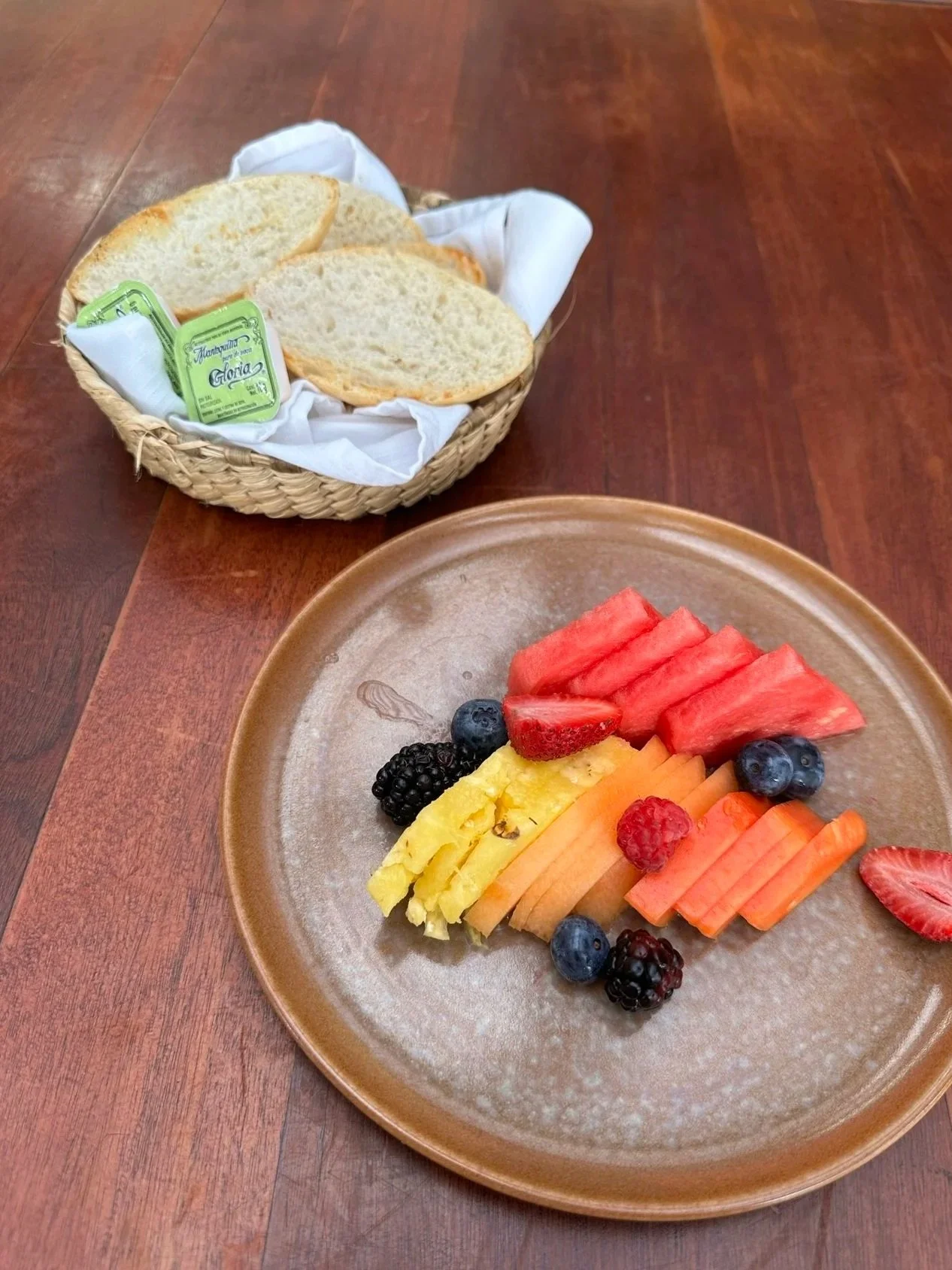
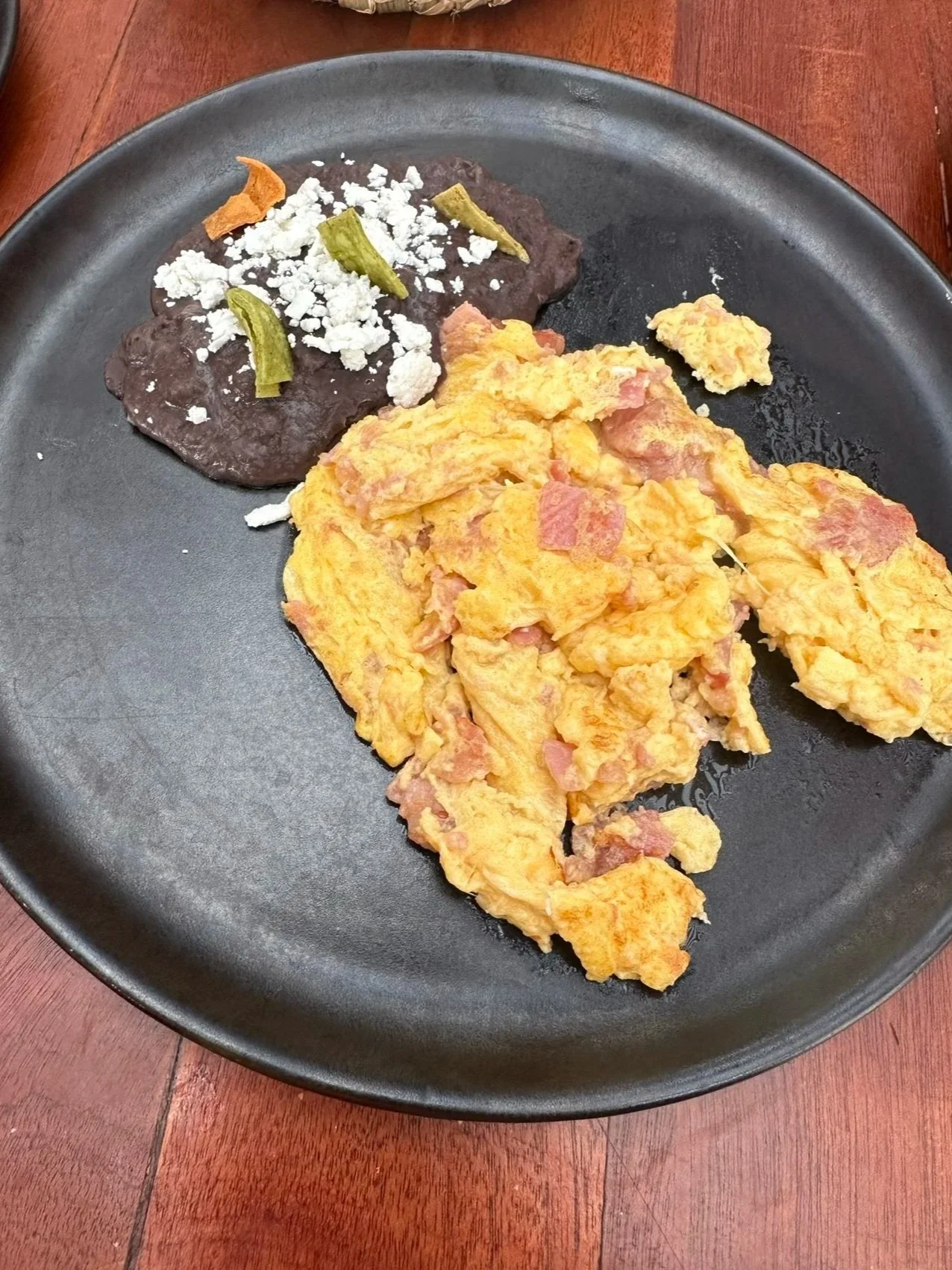
black beans with egg and ham scramble from Tezontle rooftop restaurant at Casa de la Luz hotel, Mexico City
I headed to my office in Colonia Juárez in Central Mexico City. This area to me appears as more of the business district as there are several commercial skyscrapers. Juarez is within walking distance to Roma Norte, Condessa, and San Rafael.
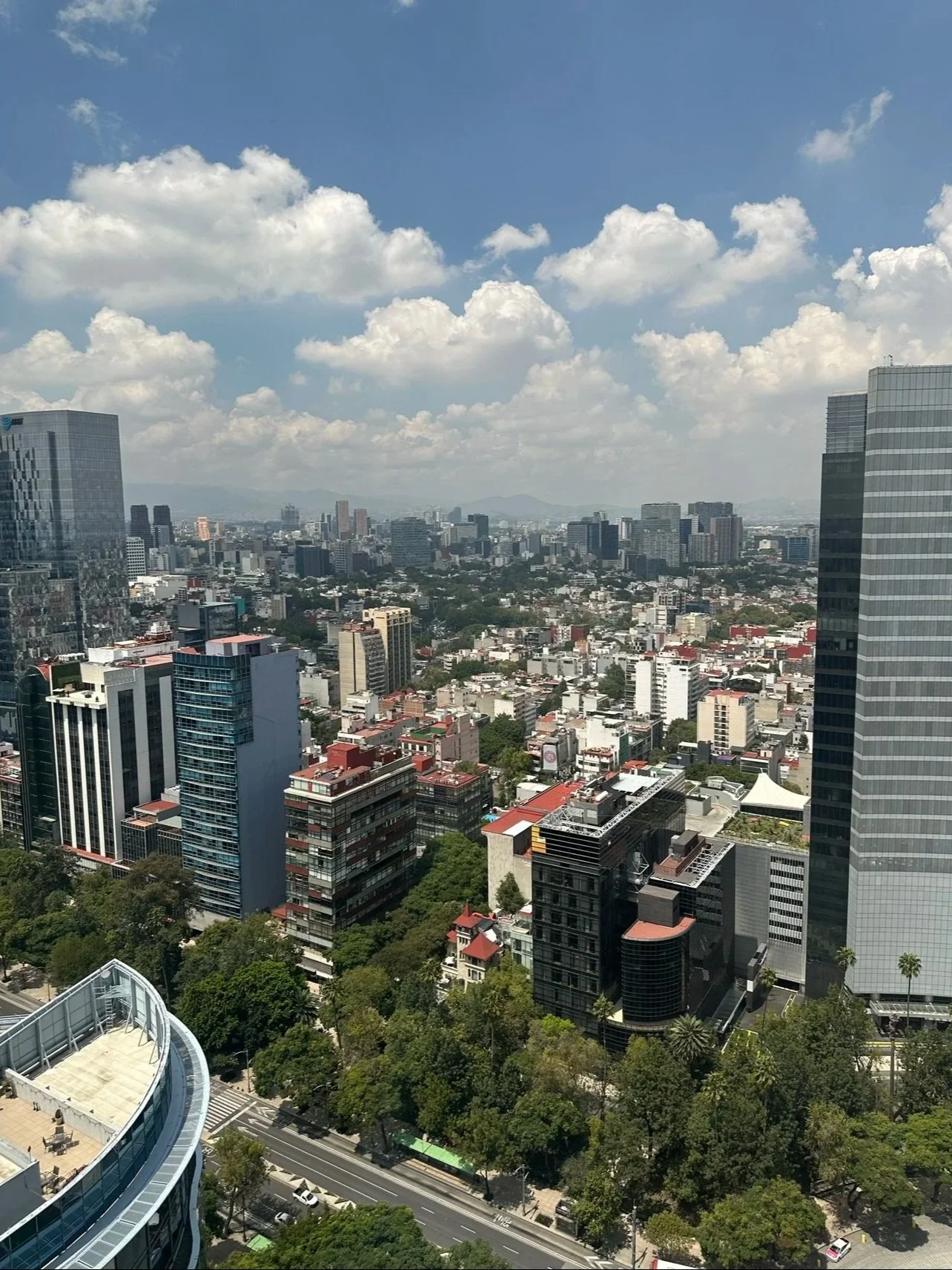
skyline view from skyscraper Colonia Juárez in Central Mexico City
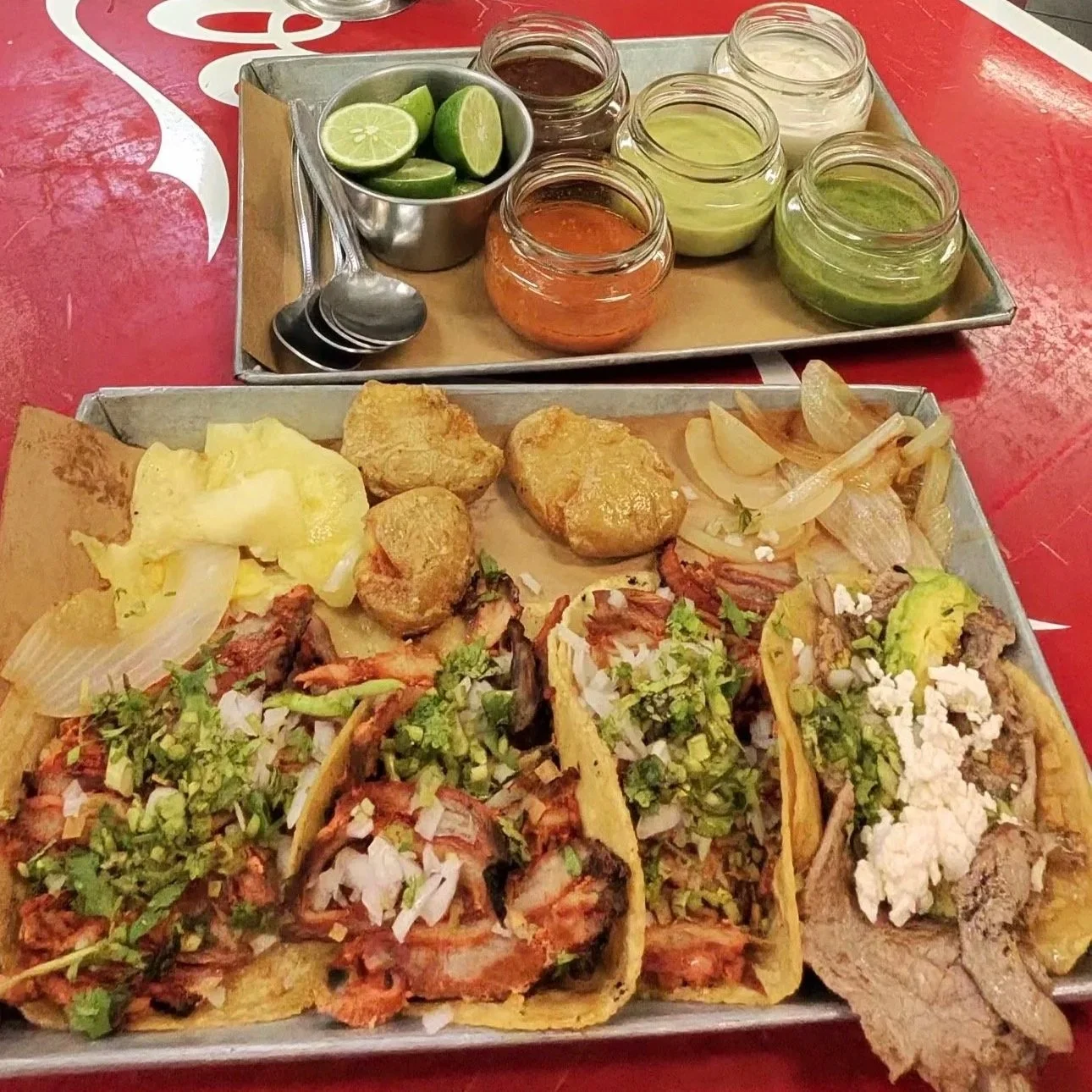
For lunch, I had tacos at Taqueria Orinoco. There are several locations throughout Mexico City, serving fresh and fast tacos. The menu is compact with just 3 proteins: al pastor or trompo, beef, and chicharrón. You can get the meats in a taco or quesadilla, and every order comes with a side of smashed potatoes with various salsas from mild to very spicy as well as limes. Some locations also serve desserts. Most Taqueria Orinoco locations are open from lunch time until after midnight. I received serveral recommendations to try the tacos here because they are very affordable, setting you back less than $4 per taco, packed with juicy and flavorful meat. I arrived shortly after they opened around 1pm and there was a line out the door, and almost all tables inside and outside were full. I ordered 2 trompo tacos and one res (beef) taco along with the smashed potatoes. Because everyone spoke so highly of it, I figured it would out-rank my favorite al pastor taqueria in Playa del Carmen, El Fogón. Every time I am in Quinta Roo, I visit El Fogón multiple times over the course of my stay for lunch and will eat at least 4-6 al pastor tacos each time. El Fogón’s various locations have never disappointed me as the meat is always tender, flavorful, and juicy but still slightly crisp, and I receive the perfect portion of cilantro and pineapple. At Taqueria Orinoco, on this specific day, I watched as the pork was on the conveyor and began to smoke, then burned. I received a piece of the burned al pastor, and it definitely tainted my taste of their tacos. The tacos are still good in general, and I wish I had a chance to visit them again on my trip to Mexico City. I still have to contend that El Fogón have the best al pastor tacos I’ve ever had.
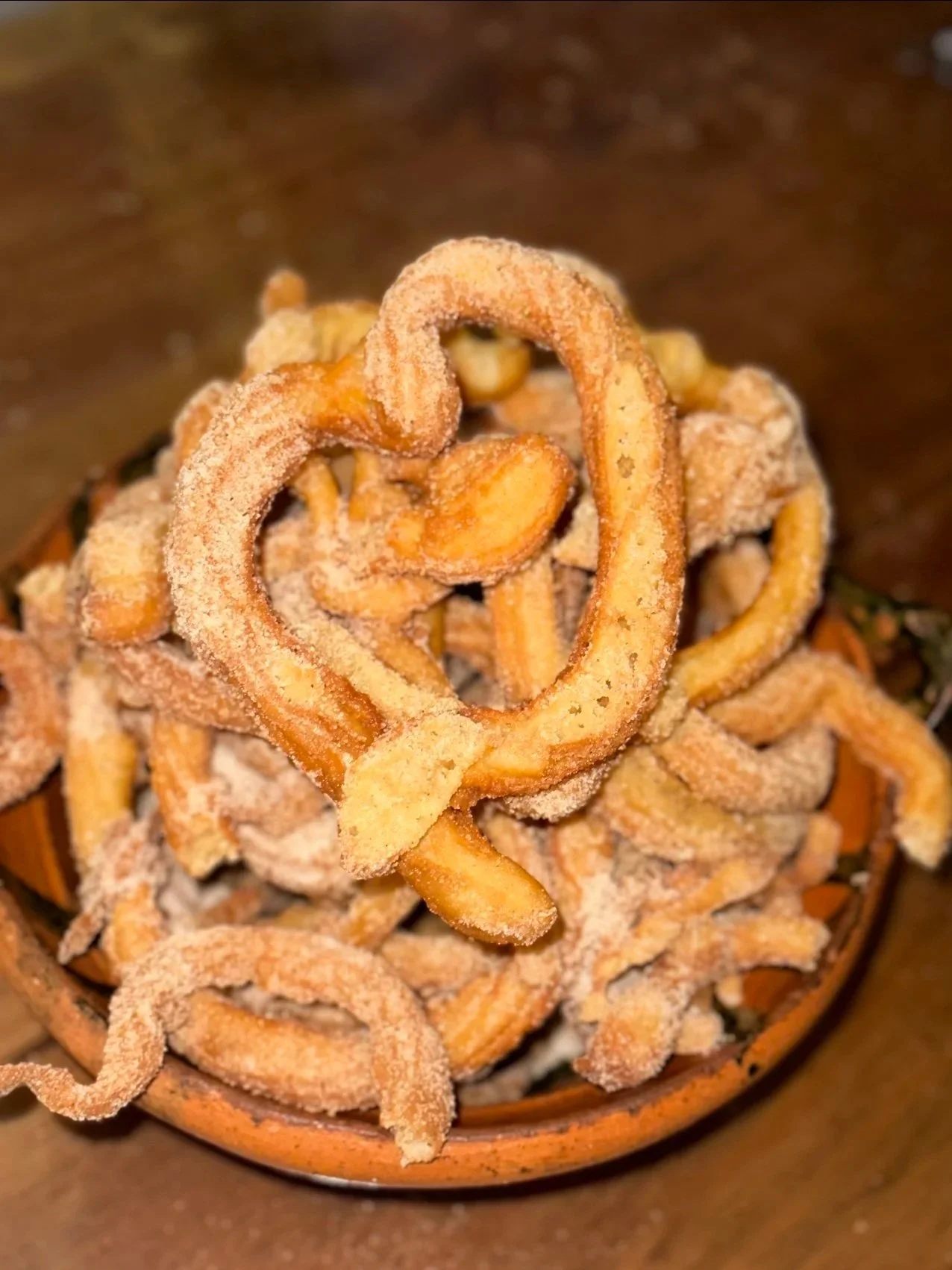
After my workday, I walked to the Condessa neighorhood for my evening activity. I booked a churro making class via AirBnB Experiences. The hosts Ricardo and Andrea host churro making classes, coffee tastings, and bread making classes in their home. Andrea was our host this evening, and the small class included 6 guests, Andrea, and her assistant. We made chocolate ganache from Sicao (a brand of Mexican chocolate), Mexican coffee infused with cinnamon, chile, and pilocilo (a brown sugar substitute), as well as the star of the show, churros. When I’d previously gone to Playa, I was told that churros were native to Mexico City, but during this experience, I learned that the Portuguese created churros, then the Spanish made it their own and spread it across their colonies, and it gained popularity in Mexico. The class was about 90 minutes start to finish, and everyone in the class got a chance to make every step in the churro making process from mixing the wet and dry ingredients to piping the bag, dropping the wet dough in grease, flipping the churro and removing it from the grease, then finally coating it in the cinnamon sugar mixture. From my three days in Mexico City so far, I saw several churro vendors on the street and asked Andrea if people cook churros at home, or is it only a delicacy that people buy from vendors. She told me that because churros can be quite time-consuming, and because they are relatively inexpensive, most people just buy them from a vendor. Once we all cooked all of our churros, we sat down as a group to dip our hot churros in the freshly made chocolate ganache and sip the authentic Mexican coffee. We were served on traditional Mexican clayware that the hosts sourced locally. As a group we discussed our travel plans while in Mexico, as all of us were in the country solo. Among all of the various excursion platforms, I enjoy AirBnB Experiences the most, specifically internationally, because you are able to do thoughtfully curated activities with locals, directly supporting locals. I also appreciate that I know exactly who I am booking with, am able to read legitimate reviews, and know the meeting and sometimes the endpoint ahead of time.
One of the restaurants that was at the top of my list to eat at was Contramar. Contramar is a seafood restaurant in the Roma Norte neighborhood, and is within walking distance from the AirBnB Experience in Condessa. Most popular restaurants within CDMX recommend a reservation to be booked 2-4 weeks in advance. Even though I knew I was going on this trip months in advance, I am always reluctant to book restaurant reservations because I don’t want to be worried about wrapping up an activity or excursion, just to eat. This concept works when you’re solo — don’t try this if you’re part of a group.
I took the 10 minute walk to Contramar, without a reservation, 1 hour before the restaurant closed, and the host was able to seat me at the bar! The staff was amazing and truly hospitable. The bartenders here only prepare drinks, and there are designated waiters for guests sitting at the bar. Besides seafood, Contramar is known for the desserts, specifically the fig tart, and tacos. I started off with a fresh lemonade that the bartender made in front of me, and for my entree, I ordered the star of the show: contramar fish! I’m not exactly sure the type of fish I was served, but it was delicious. It is served butterflied by the kilo and you can choose the seasoning, either traditionally with red chili, with parsley, or Contramar style with one side with parsley and the other side with red chili. I chose the contramar style and believe I ordered 500 grams of fish, which is the smallest portion available. They recommend 500 grams per person, so if you are sharing the entree, or ordering appetizers and other food, 500 g per person should suffice. With the fish, you’re served black beans, pickled onions, various sauces besides the red chili and parsley on the fish along with tortillas for you to eat as a taco.
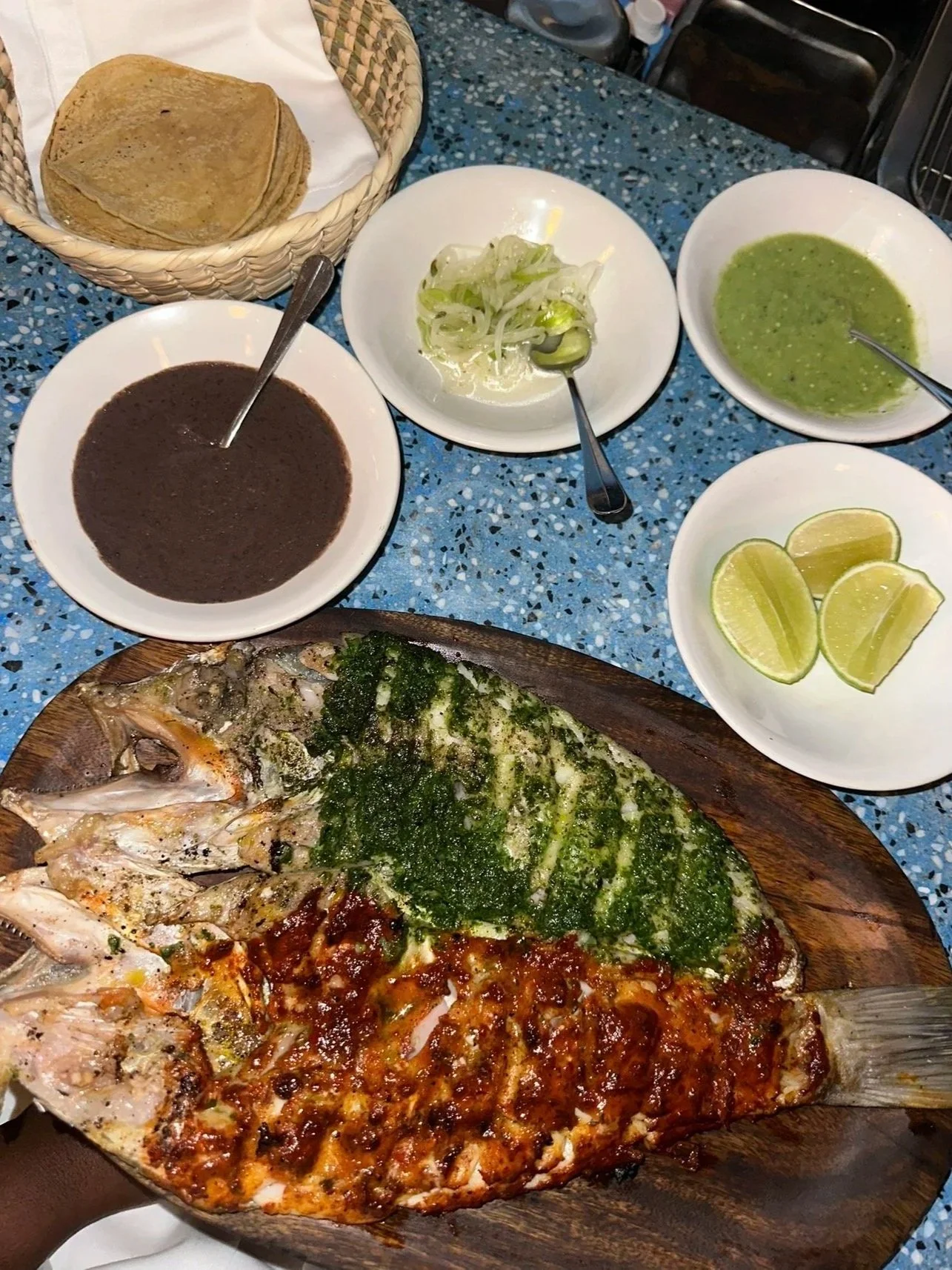
When I looked around the restaurant, close to closing time, I saw many foreigners and a lot of Americans. Is this a place where locals frequently eat, probably not. But the food is delicious, the service is top-notch, and the vibe is great. It may be touristy, but it works.
After dinner, I took another Uber back to my hotel and called it a night.
The following day, I wanted to finally take the bus or use public transit to get to work because public transit is so robust in the city and easily available. The city traffic was becoming hectic, and I wanted to cut my travel time. Ubers are really affordable in the city, with me traveling from Centro Historico to Colonia Juárez averaging $6 USD each way. I put in my destination address on Google Maps, and the app told me I should take a purple bus on the main street. Long story short, I got on the wrong bus and had to call an Uber to take me to my office. You can see the entire ordeal posted on my TikTok.
As a mid-day pick me up, I took a break and walked to San Matcha in Roma Norte. I found San Matcha on TikTok and knew I had to stop by because they serve creme brulee matcha! San Matcha serves several matcha and green tea beverages as well as traditional Japanese sandos. There are a few benches and tables outside on the sidewalk with shaded seating, but the cafe is moreso set up as a takeaway concept for you to either take a quick seat enjoying your beverage, or drink and walk to go about your business. I ordered an iced creme brulee matcha with like 2 ice cubes— you’ll notice outside of the U.S. most eateries don’t offer multiple cup sizes. I think my matcha was maybe 8 oz, and it left me wanting more. The creme brulee itself was definitely sweet, but the matcha was a bit bitter, but mixed with the creme brulee, it had the perfect level of sweetness. I took a long leisurely walk back to the office, and ate my leftovers from yesterday’s Contramar dinner.
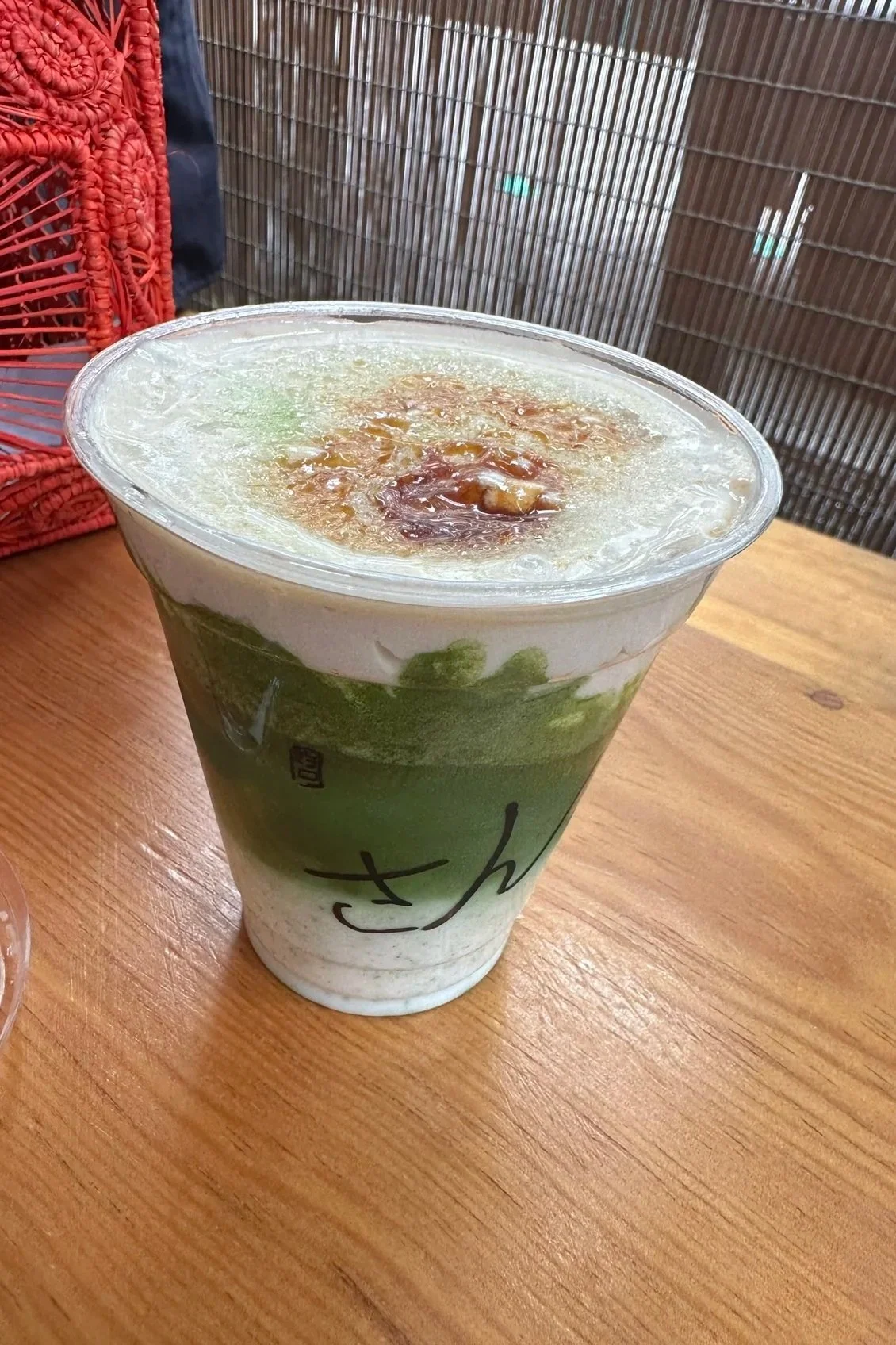
iced creme brulee matcha from San Matcha, Mexico City
After work, I went back to Casa de la Luz to check out, grab my luggage and check in to my second hotel, City Centro by Marriott Ciudad de Mexico also located in Centro Historico. My activity for the evening was a lucha libre show and walking tour which lasted roughly 4 hours. This tour was also booked on Expedia and hosted by Amigo Tours, the previous hostel was the meeting location which is perfect, because I didn’t have to walk far from my hotels to the meeting point.
I can’t remember the name of our guide for this excursion, but he was another amazing guide! We started off with a walking tour through Centro Historico, which I learned is “downtown” and one of the first settlements of Mexico City. Centro Historico doesn’t resemble a traditional downtown of skyscrapers, trendy restaurants, and business workers — it gives off old/walled city vibes. Each street and area within Centro Historico had a different specialty. On one street, shops are selling musical instruments and music repair shops, one street had appliances and kitchen supplies, another street had cell phones, cell phone accessories, and repairs, while another sold clothing, sneakers, bridal and quinceañera gowns. You’ll also notice that the streets are named after significant dates in Mexican culture such as Cinco de Mayo (Battle of Puebla), Veinte de Noviembre (Mexican Revolution), Diez y Seis de Septiembre (Day of Independence).
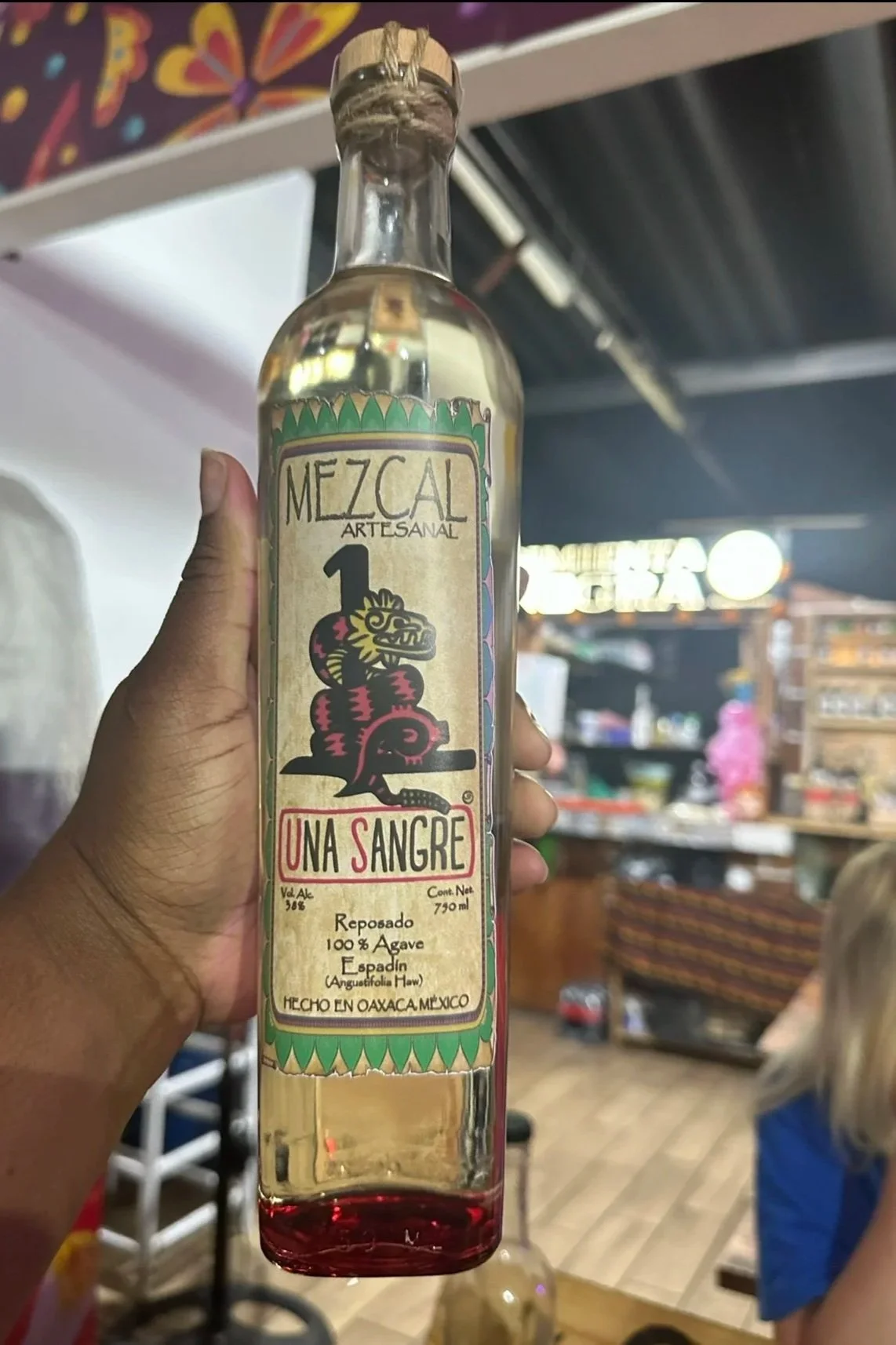
The first stop on our walking tour was a food hall, Bolivar 45 - Mercado Urbano on Calle Jose Simon Bolivar to try mezcal from Una Sangre. The owner of Una Sangre was so gracious to speak to us and educate us on mezcal and his brand. I learned that mezcal and tequila are both made from the agave plant, but mezcal is aged and distilled longer. which gives it a higher alcohol content. Mezcal is not a shot liquor: you’re supposed to first give your glass a little kiss, rubbing your tongue across the front of your mouth, then sip. If you’re one of the people who think mezcal is too smoky, drink it with fruit or lime. I am one of the people who thinks mezcal is smoky, so I asked if the wood barrels that mezcal is distilled in were previously used for red wine or whiskey, or if the wood barrels were burned to give it the smokiness. I was told that the smokiness, fruitiness, and flavor from mezcal all come from the soil the plant sits in. There are 300+ specialities of mezcal. Some higher-class mezcals are not vegan as a chicken breast is hung inside the barrel during distillation. The steam cooks the chicken, and the fat and juice drippings fall into the mezcal, providing a savory and smoky finish. The owner allowed us to have 2 heavy pours of his mezcal along with a side of crickets. Now here is where I actually tried the cricket! They are traditionally pan-fried with salt and oil. I only tried one cricket and followed it with a full shot of mezcal then seasoned salt. The cricket was crispy like the edges of toast. It wasn’t too flavorful besides the salt, and luckily there was no gushing. I tried it, got through with it, but likely won’t be trying bugs purposely again.
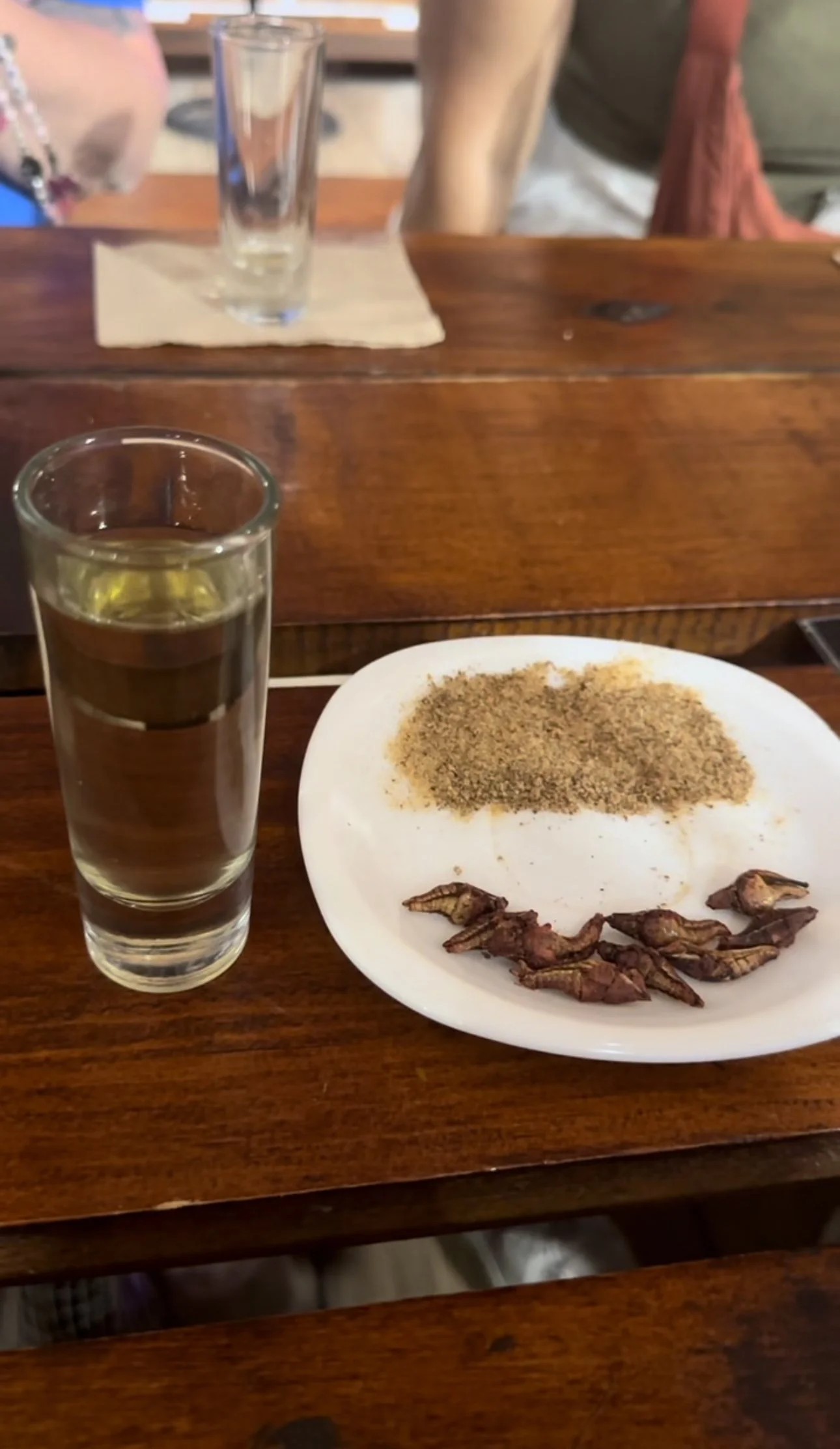
seasoned salt, pan-fried crickets, shot of mezcal in Mexico City
After we left Bolivar 45, we continued on our city tour and stopped at Pulquería Las Duelistas to try pulque aka agave wine. Pulque is one of the of the first alcholic beverages of Mexico City. It is an inexpensive drink with a low alcohol content. Pulque is made from the agave plant, same as tequila and mezcal. The sap is fermented and the finished product is a milky acidic drink with an alcohol content of 4-6%. Now, pulque is flavored with many fruits and flavors like coconut, coffee, strawberry, orange, and more. Pulque was said to be the drink of the people: the commoners and laborers of Mexico went to the local pubs years ago to drink pulque since it was affordable. Now, it is not served at mainstream bars or restaurants, but primarily at local dive bars. Our guide ordered a large raspberry pulque for us to share. Pulque is an acquired taste, and if you’ve tasted palm wine from West Africa, it has the same taste. Pulque is thick, like a smoothie, but acidic like cottage cheese with a shot of vinegar. Would I order a pulque for myself and drink the entire serving, no. But I am glad I had the experience and now know what it tastes like. Pulqueria las Duelistas is definitely a dive bar filled with locals, specifically the elders, which is how you know it is authentic.
As we were leaving Pulqueria las Duelistas, we passed the arts market, Mercado de Artesianos. The market was closing at this time. I asked our guide which market is better, the arts market, or Sabado Bazaar, and his response was Sabado has better prices, but the arts market has more variety because there are artisans from all over Mexico who come there to sell. It is a little more touristy, thus a little more expensive than Sabado Bazaar. By the time we reached the arts market, it was maybe 6:30 pm, quarter to 7 pm, and the vendors were packing up. Granted it was a weekday, but I pointed out that everything closes so early in CDMX. Our guide pointed out that the city is vast, and not everyone lives where they work. Some people commute 1-2 hours each way every day or sit in traffic to get to their destinations. Mexico City doesn’t just have morning and evening rush hour. Their traffic lasts throughout the day, so people want to get home to their families at a reasonable time. Mercado de Artesianos was another place I didn’t get a chance to visit.
One of our last stops was to finally get dinner at La Chela Libre before the Lucha Libre show. La Chela is a 5-minute walk away from the stadium, but there are other taquerias on the same street. I ordered beef and al pastor tacos, and they were pretty good. I did try the various sauces that accompanied the tacos.
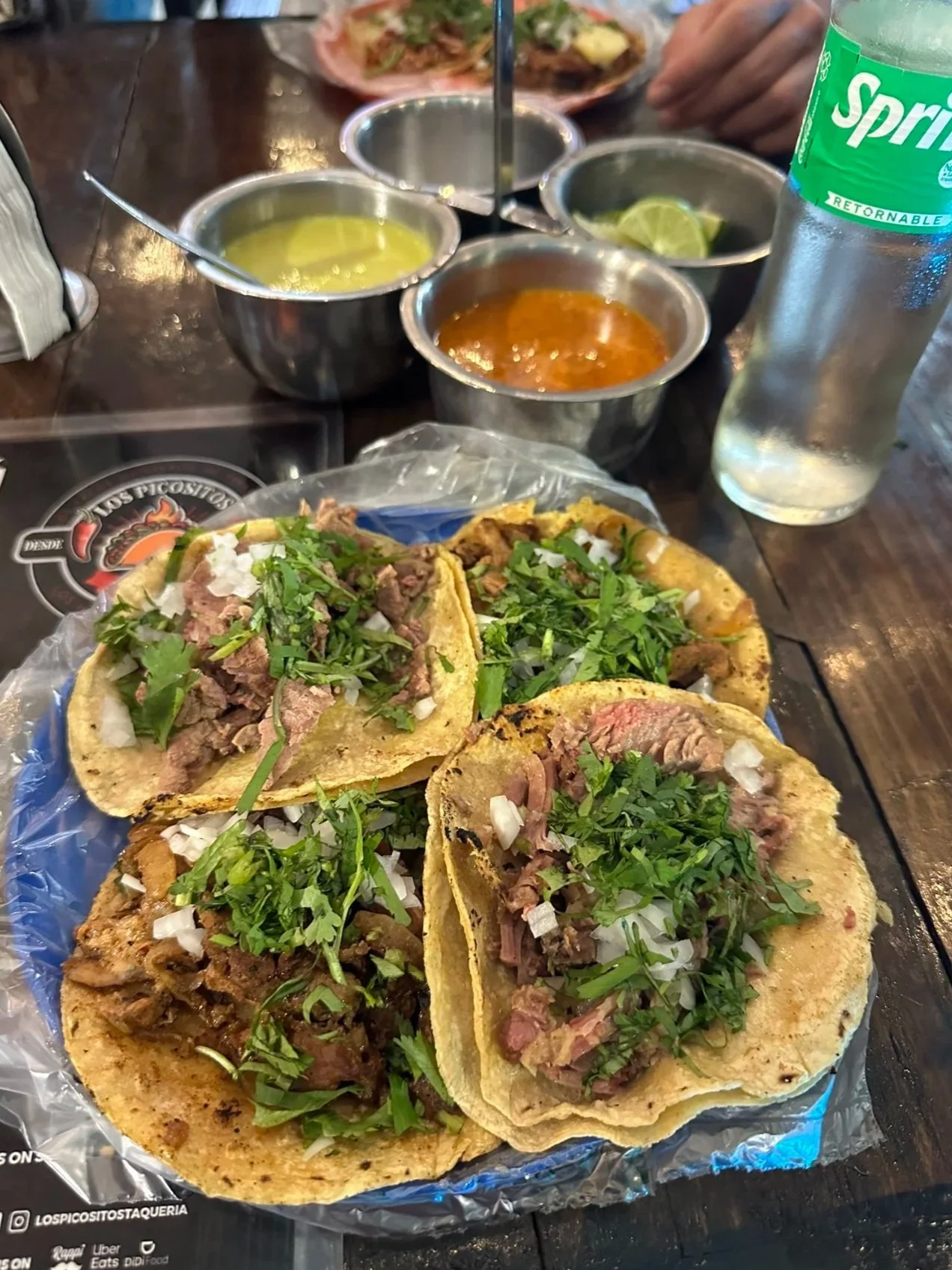
al pastor and beef tacos from Los Picostos Taqueria before Lucha Libre show, Mexico City
After dinner, it was finally time for us to see the Lucha Libre show. The show is set in an arena with vendors outside selling masks, flags, figurines, and other souvenirs. There are concessions for sale like candy, popcorn, beer, and micheladas, but nothing heavy like traditional U.S. arena food.
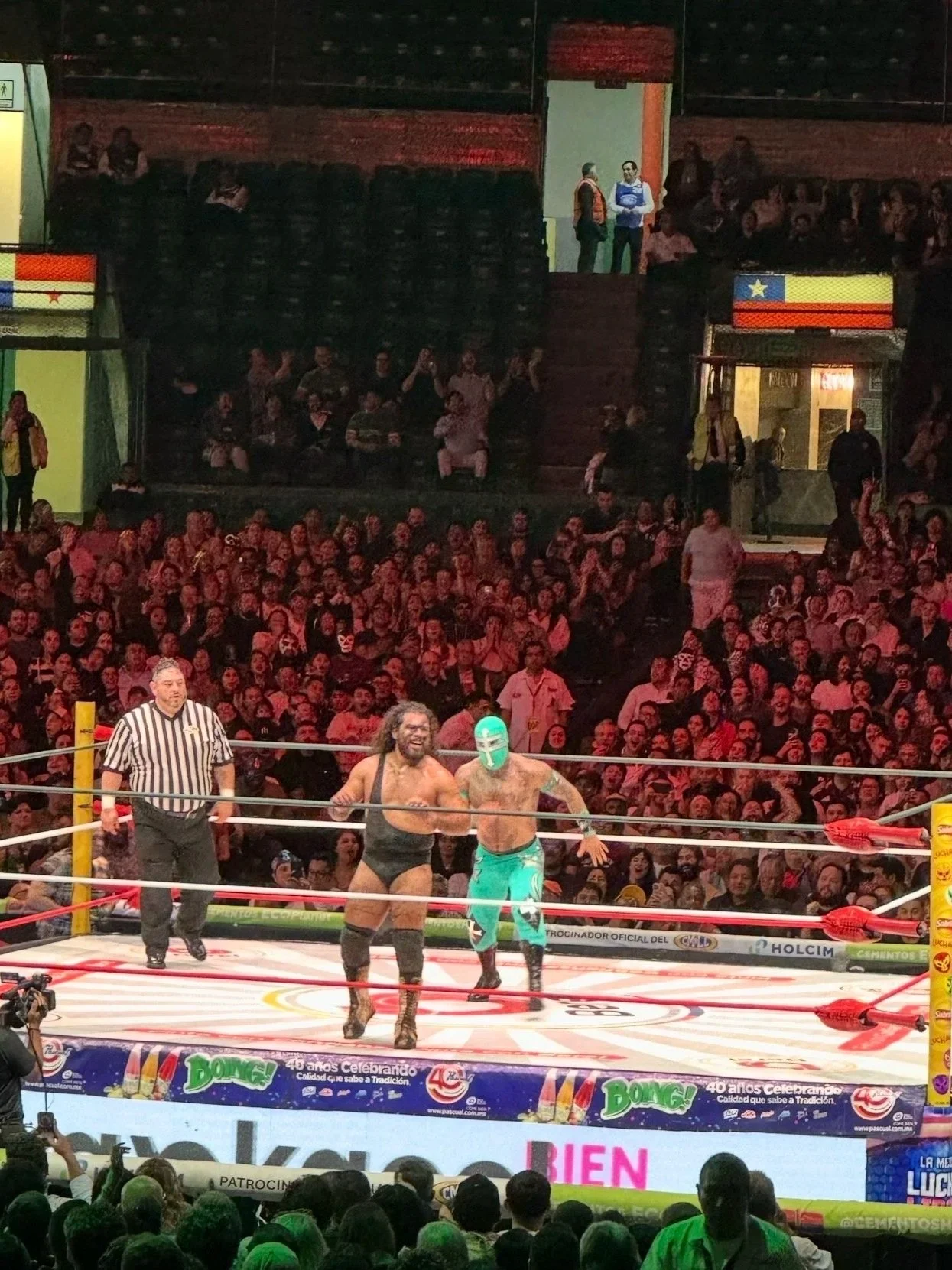
Lucha Libre, Mexico City
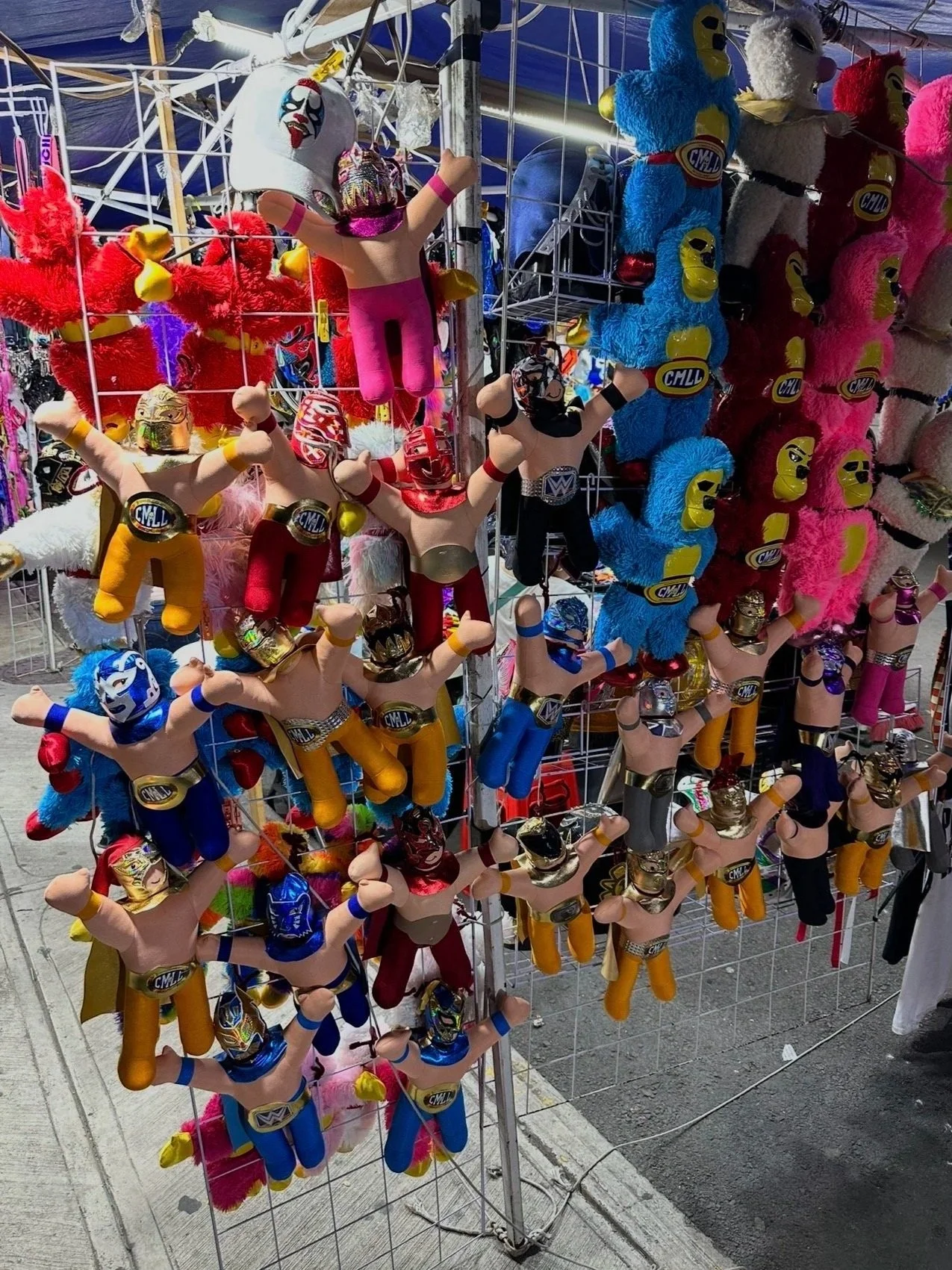
Lucha libre wrestlers are looked at as local celebrities. They wear masks to hide their identity. If you watch WWE in the U.S., Lucha Libre was theatrical like that, but the crowd cheered heavily for their favorites, and booed even louder for the wrestlers they didn’t like. There were multiple matches of both men and women competing.
I’m not sure what I ate, if it was the mezcal, the crickets, pulque, the tacos, or the salsa, or even a combination of all of those things in such a short time, but I felt sick and had to leave.
I went to my new hotel to settle in. City Centro has a few dining options on property, with the main gastropub being on the rooftop terrace, along with a pool that was closed due to the weather being cool. I ordered a ginger ale to settle my stomach and saw another black couple dining in. We spoke briefly about our travels, and found out they are California natives, but have an investment property in Chicago, not too far from me. They were in Mexico City after first exploring Zihuatanejo, located in Western Mexico on the Pacific Coast. That’s the joy of traveling: connecting with others who have similar interests and sharing recommendations.
I got up the next day to explore the property, and it looks different in the day time compared to the nighttime. This Marriott property was previously a bank, and is now transformed to a cosmopolitan hotel. It is very dark and moody at night — I’m not sure I would recommend this for elders as the upstairs walkways have glass flooring with dimly lit lights in the hallways. The multi-story building is protected by banisters with light luminating from the skylight. Watch my hotel tour on YouTube below.
After viewing the property, I took an Uber to Bobo Burgers & Cafe in Roma Norte for breakfast, and gave up on my desire to solely use public transit. Bobo has 2 locations, one in Roma Norte, and the other in Condessa. I believe both locations serve American cafe and breakfast food in the morning through early afternoon, then switch to burgers in the evening. Bobo’s has been dubbed as having the best pancakes in Mexico City, and their pancakes are said to be equivalent to Golden Diner in New York City. Reservations are also recommended for Bobo’s, but I went solo on a Wednesday morning, and there were several open tables available inside as well as outdoors. Everything on the menu looked familiar and made me want to order one of everything. I ordered the Bobo pancakes which come with one fluffly buttermilk pancake topped with butter, lemon zest, and pre-drenched in syrup. I also ordered a side of scrambled eggs and bacon. Everything tasted like I was transported stateside as the eggs were fresh and scrambled properly, and the bacon was pork and cooked until crispy! The pancake was delicious with the perfect amount of syrup, the pancake didn’t feel dry or soaked in sweet syrup. If you’re craving an American breakfast, besides pancakes their English muffin, breakfast burrito, and American breakfast with hashbrowns have all been raved about.
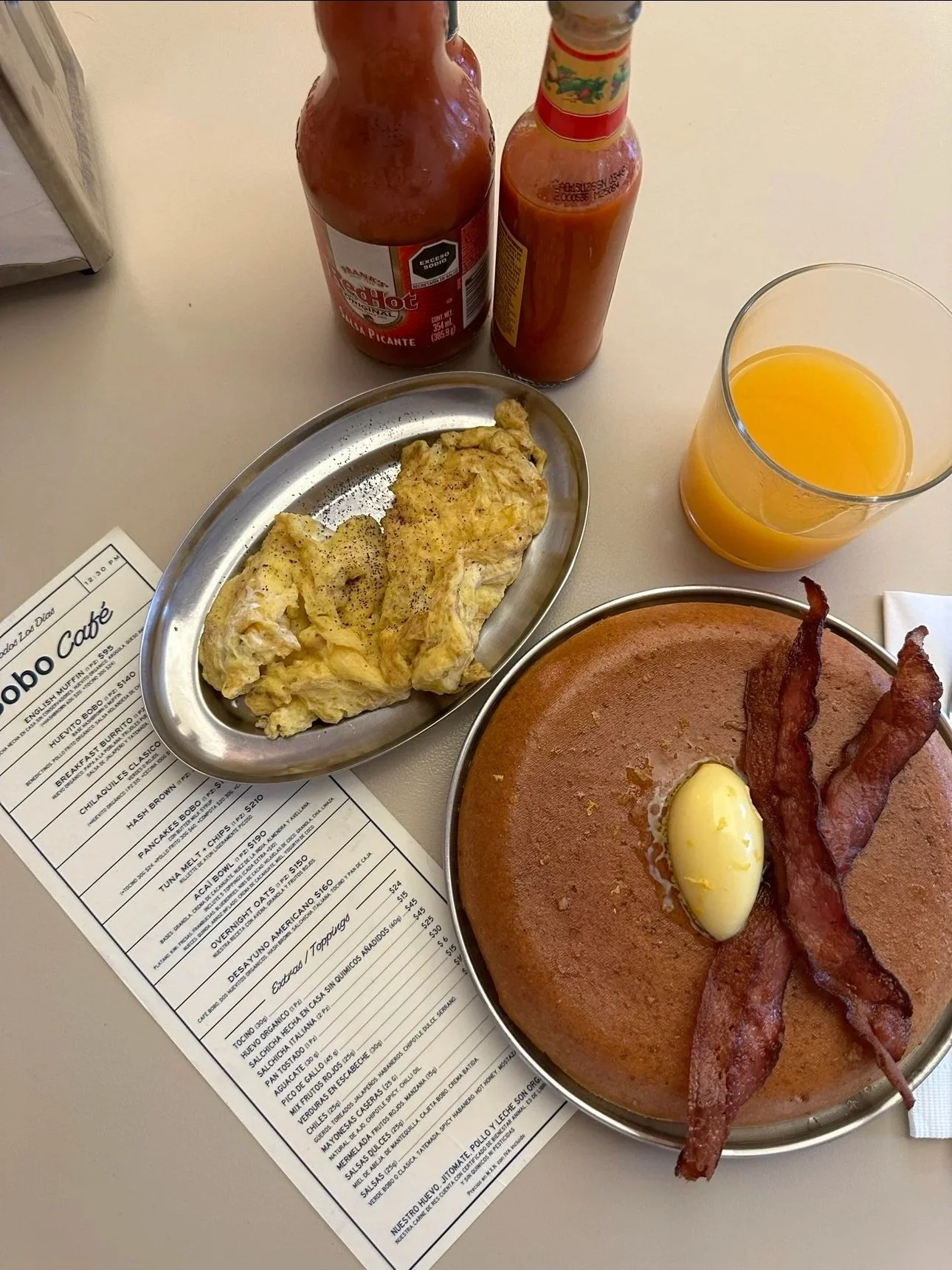
pancakes bobo from Bobo's Cafe, Roma Norte, Mexico City
I took my time walking around Roma Norte to shop and sightsee. The only items that I was looking to take back from Mexico City were handmade ceramics, silver jewelry, fragrance, home goods, and maybe spices. There is a big vintage scene in Mexico City, but I didn’t have any clothing items that I needed. My first stop was to Xinu Perfumes.
Xinu is a Mexican perfumery with its sole location in Roma Norte. All of their scents are woodsy and earthy, handcrafted locally, and focused on sustainability. Xinu only has 6 signature scents as unisex perfumes, 4 different scents in candles and the same candle scents as home incense. I found the products to be pricey for Mexico: the candles are $100 USD, and the perfumes are $240 USD for 1.7 oz. Unfortunately, I could not find a candle or perfume scent that I truly loved. The staff was lovely in-store and they answered all of my questions, so if you’re interested in a unique souvenir Xinu is a good option to stop in and smell.
Next, I headed to Le Labo to pick up their Mexico City signature scent. Mexico City’s signature scent is Coriandre 39. Coriander is another name for cilantro, but again unfortunately, I did not enjoy this scent, so I did not purchase. Coriandre 39 smelled of a hint of cilantro and lime, which is too fresh for me to smell like all day. I found the prices here to be tremendously higher than the U.S., likely due to importing from France, even though the fragrances are made in-house. The city exclusive scent for 3.4 oz was 11,600 pesos, or over $600 USD.
Leaving Le Labo I saw Jeni’s quesadillas, which is a quesadilla stand operated by a few tias that blew up on social media. I did ask some locals their opinions on the quesadillas, and I didn’t get a single response of people who had actually heard of Jeni’s or people who thoroughly enjoyed the quesadillas. The most common responses were that the operators were rude or it was just a tourist trap. There was a rather short line when I walked by, but I decided to skip it because I knew what I wanted for lunch. If I weren’t on a time crunch, I would have stayed in Roma Norte popping in and out of stores and vintage shops. I did hop in to Freak Tees, a vintage store dedicated to old-school t-shirts. The store was filled with throwback concert tour shirts, screen prints of musicians, specifically hip-hop and R&B artists, with a lot of pop culture, anime t-shirts, and sports jerseys. I am not a collector of vintage t-shirts, so I am unsure of the going rate of the memorabilia, but I saw the majority of the shirts priced around 600 pesos, or $38 USD.
After hours of window shopping, I went to lunch at Pizza Felix in Roma Norte, there is another location in Condessa that focuses on breakfast and pastries which is more cafe-style. Pizza Felix has an industrial, gastropub feel to it. If you’re tired of Mexican food and have a taste for Italian, Pizza Felix is a good option. I started off with meatballs, the kale salad, then ended with a margherita pizza. Everything was tasty for an Italian restaurant in Mexico. Pizza Felix was recently dubbed the best pizza in the city! I went around lunch time during the week, and there were only 2 or 3 parties there. If you plan on going with a group for dinner, make reservations.
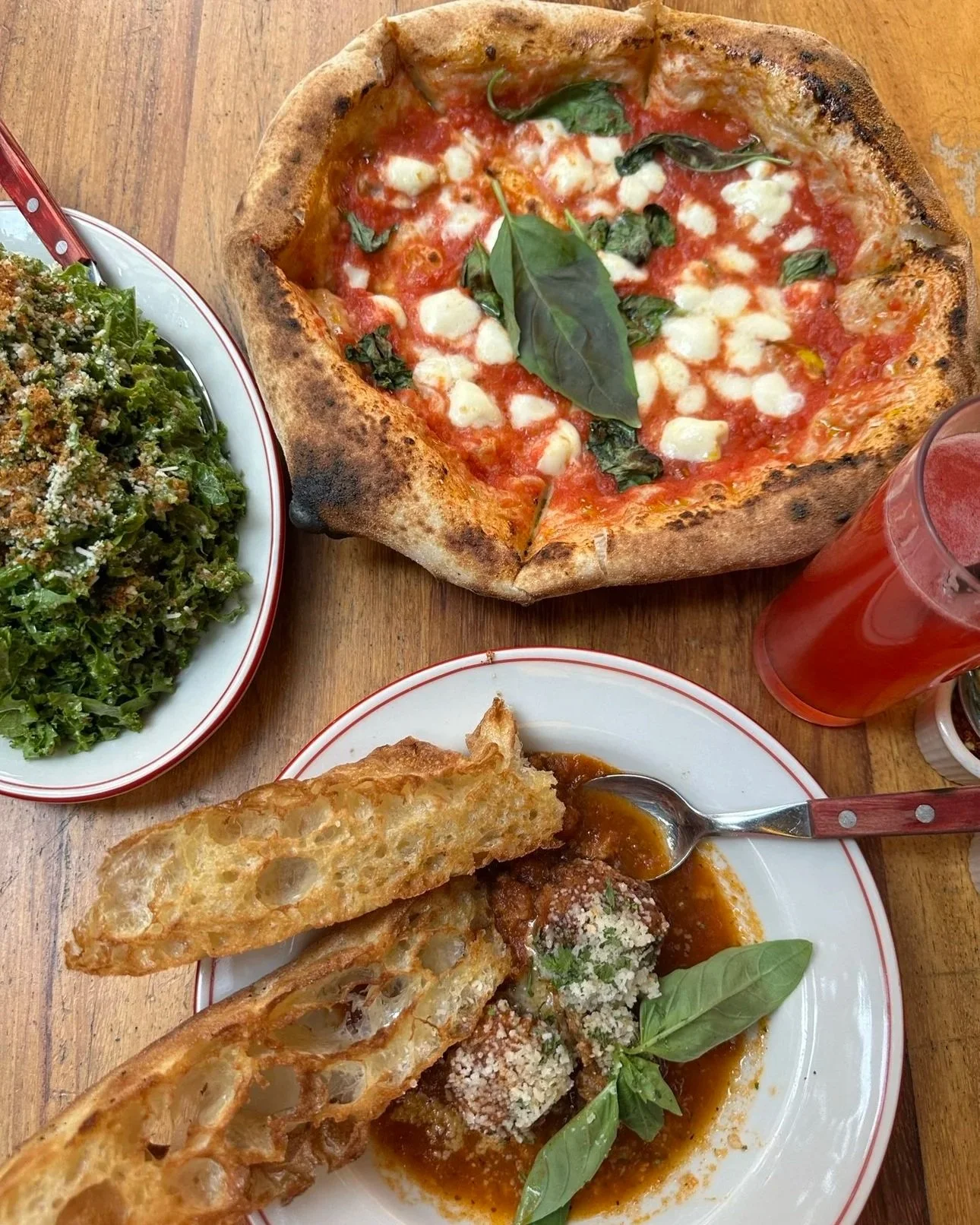
Pizza Felix, Roma Norte Mexico City. meatballs, kale caesar salad, margherita pizza
After lunch, I continued walking around Roma Norte and was in awe of how lush and green the city is! Most cities, especially large cities have designated green spaces or parks with trees. I found so many green spaces throughout Mexico City which isn’t limited to a specific neighborhood, and the parks are welcoming with benches and walking paths. There are so many trees throughout the city
I strolled leisurely to take in the architecture of the city and people walking their dogs.
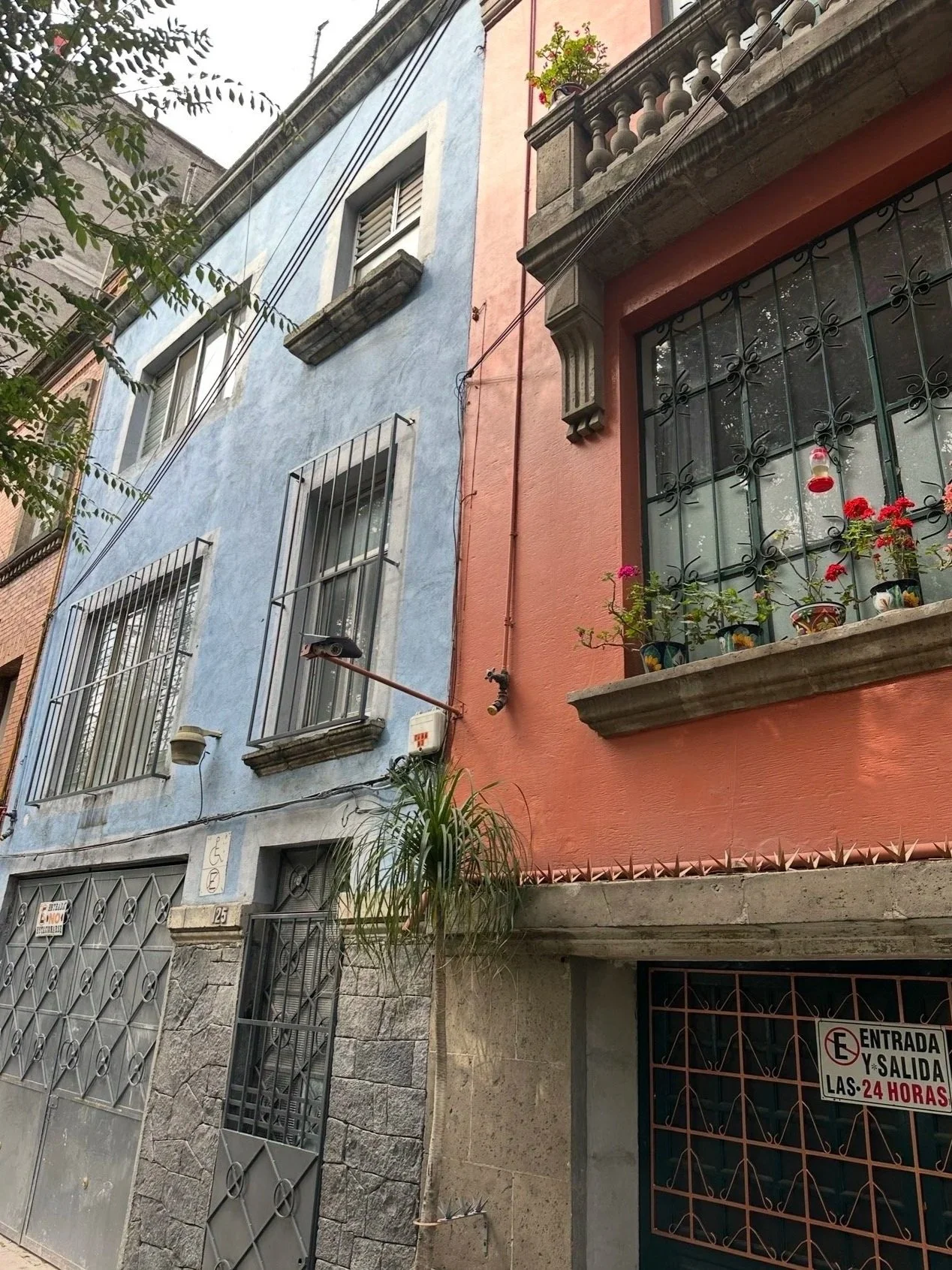
homes in Roma Norte neighborhood, Mexico City
On Thursday, day 6 I had a day-long excursion booked on Expedia with Amigo Tours. The day started bright and early with a 5am meeting time at Angel de Independencia, then an hour-long bus ride to a hot air balloon ride!!! If you remember a few years ago, I took my first hot air balloon ride with my friend in New Mexico, and I knew I would have not made it to the early start time without her, and I’d be less willing to take my first hot air balloon ride by myself. I debated taking this balloon ride in Mexico because I’d already done it once, but many of my friends encouraged me to do so because the views are obviously different in Mexico than in New Mexico. The all-day excursion started with round-trip transportation by Amigo Tours, the hot air balloon ride was facilitated by Aerodiverti, and I would not recommend them. I felt like many things were a money grab, granted I did not read or pay attention to the disclaimers such as the weight limit and inputting that on their website before the flight. Total flight time was maybe 45 minutes in the air. There are multiple other groups that also use Aerodiverti, as well as people who book direct with them, so you may or may not be in the same balloon bucket as the group you arrived with. The instructor primarily spoke Spanish, when he did speak. He didn’t tell us what we were flying over or any information of the area. He only gave us instructions before takeoff on how to prepare for landing.
We flew over the Teotihuacán pyramids which predates the Aztec era by hundreds of years. There are 2 main pyramids: the Pyramid of the Sun and Pyramid of the Moon along the Avenue of the Dead. The Teotihuacan Valley was home to thousands of people BC and was once one of the largest cities in the Americas. Over time people left the area, but their artifacts, buildings, and the pyramids remained, thousands of years later. I didn’t learn any of this during the flight, or at Aerodiverti‘s office, but after the fact on my own. Maybe some people don’t come for the history or culture and they’d just like to soak up the views and take pictures; but as someone who had no prior knowledge, I would have loved a quick spiel of the history of the city and modern life for its citizens.
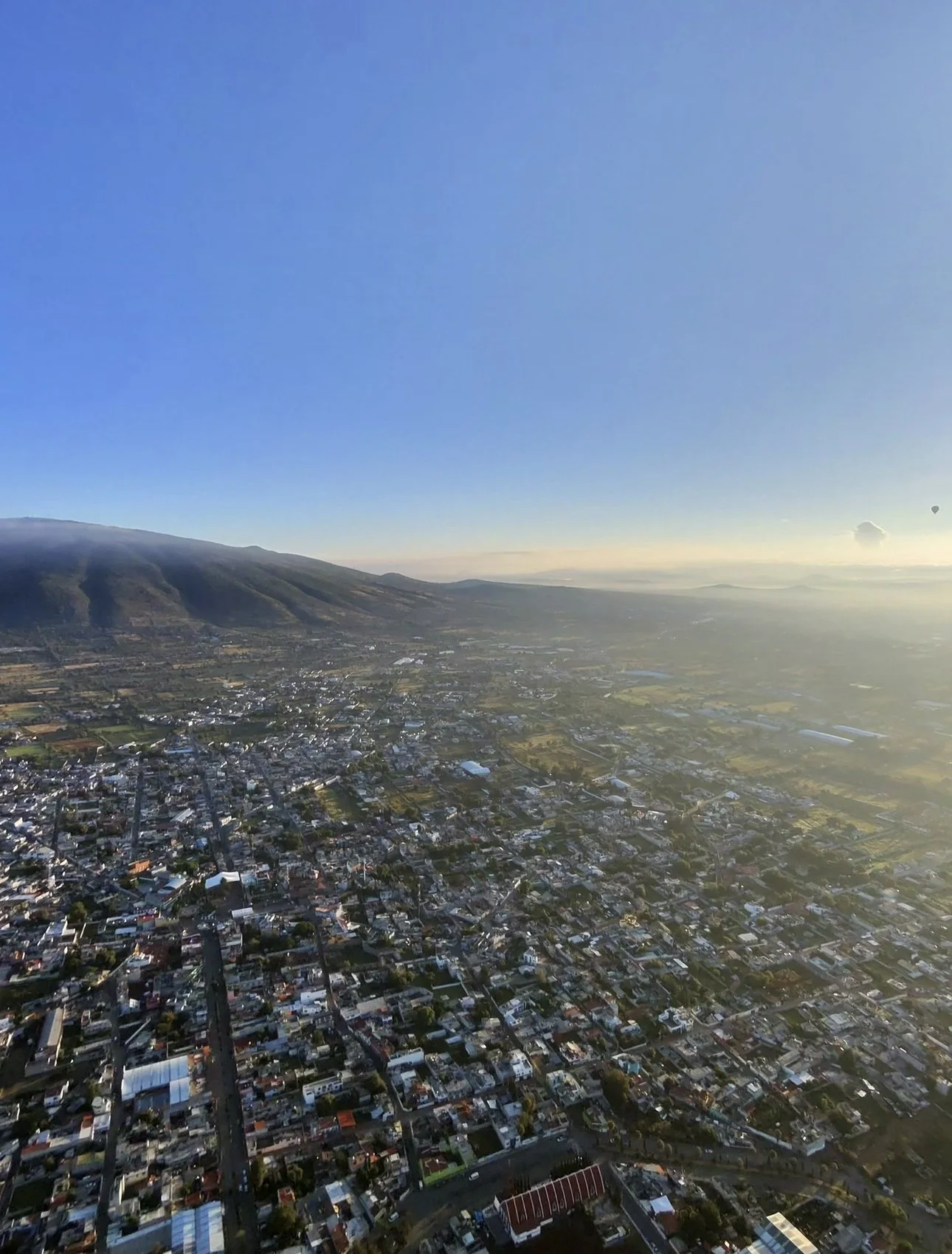
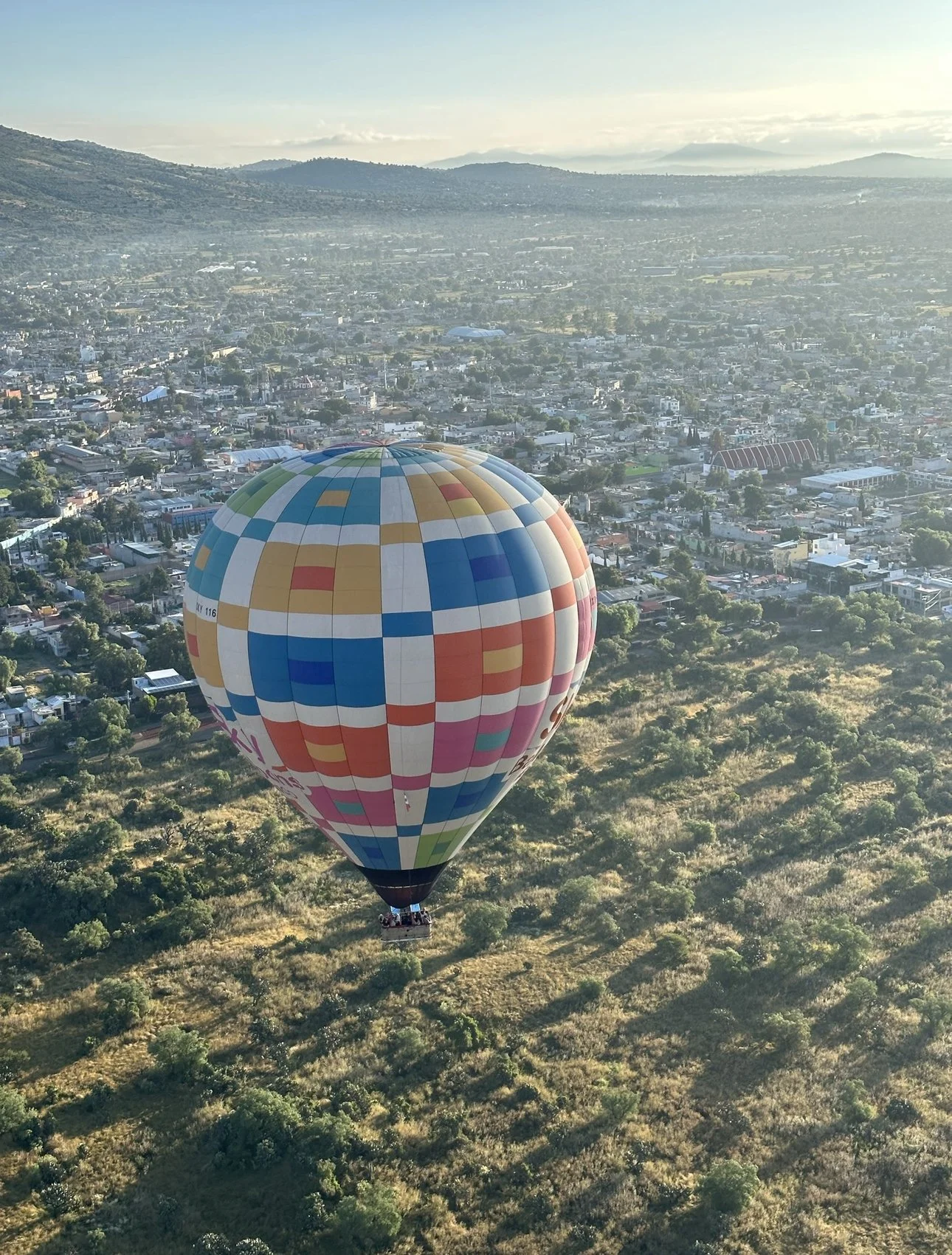



The view from above was beautiful. We took pictures before and during takeoff, and Aerodiverti uses a GoPro to capture drone footage of the excursion. When we landed, we were served sparkling cider. Aerodiverti transported us back to their office where all groups waited for each other, and each hot air balloon was offered to purchase pictures and video footage the employee takes before and during the flight. A singular picture costs $13 USD, and is a digital picture that is emailed to you — you don’t receive a physical printed copy. If you want a full package that includes all photos taken of you plus Go-Pro footage of the entire flight, that costs $200+ USD. I unfortunately purchased a single photo of myself for $13, but I didn’t realize it was a digital copy until after I paid. They email your photos and videos, but it is from a third party site, so you’d need to be on the lookout in your inbox as well as Spam folder. The third party site they use has an expiration date on the link, so once you receive the email, make sure you open and save the photo; otherwise you won’t have access to it again. To be on the safe side, take all of your pictures and videos yourself.
After the hot air balloon ride each separate group went about their own way, but if you used a travel group similar to Amigo Tours, we all headed to the same Mexican breakfast buffet afterwards, Rancho Azteca. Besides the buffet, the restaurant also serves a full a la carte menu and is open for lunch and dinner. If you decide to travel on your own to the hot air balloon, there are several restaurants in the area that you can patronize before heading back to CDMX or to your next destination. The cost of breakfast was included in our ticket price, so we didn’t have to pay extra once we arrived, but tips to the dining staff are encouraged. The breakfast buffet consisted of fresh tacos made to order, various fresh juices, fruits, and vegetables. There was a pastry stand that had concha, breads, and sweet breads. Eggs, made-to-order chilaquilles with house-made chips, green and red sauces, bacon, sausage, pulled pork and more were available on the buffet.
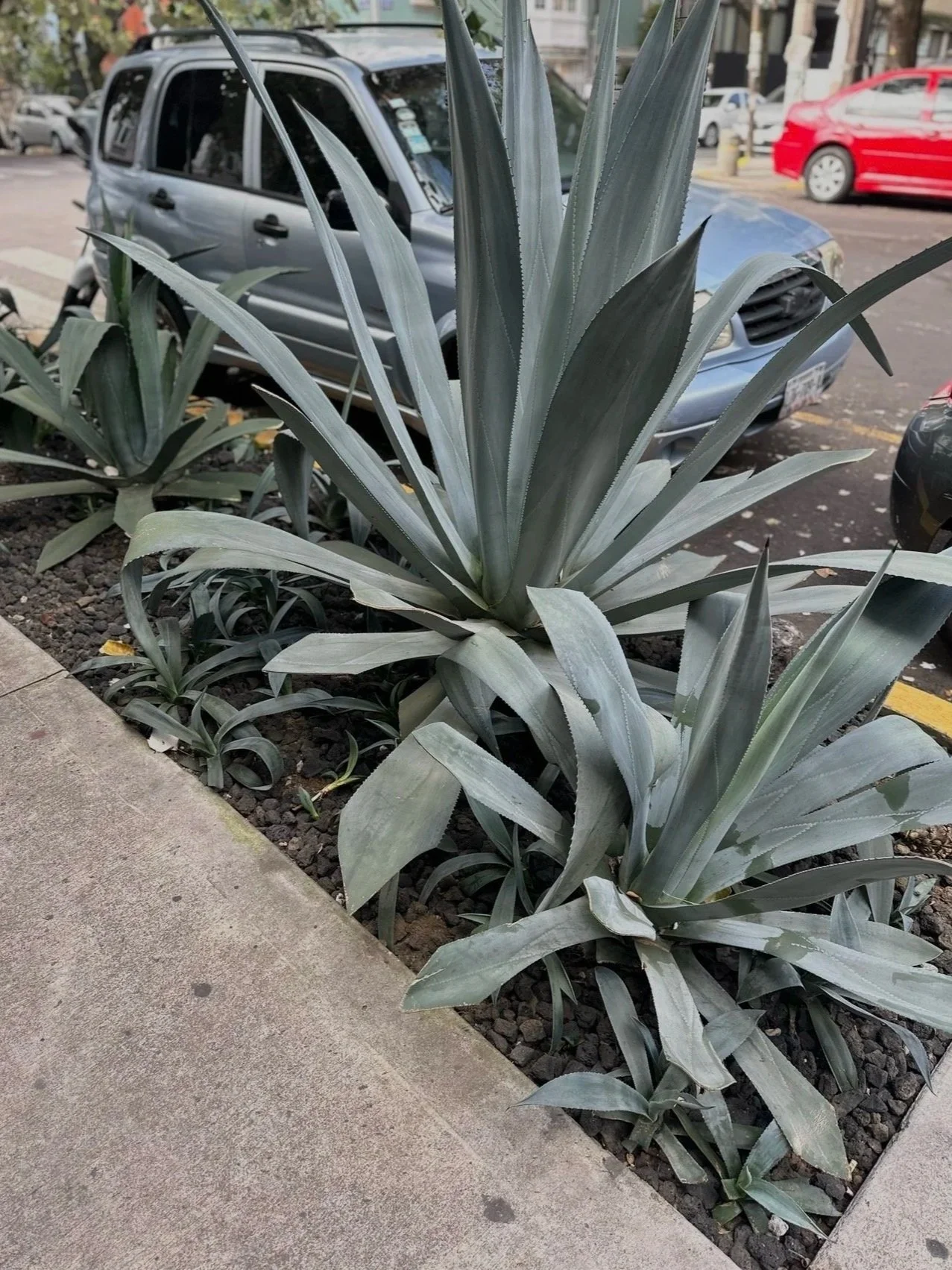
agave plant, Mexico
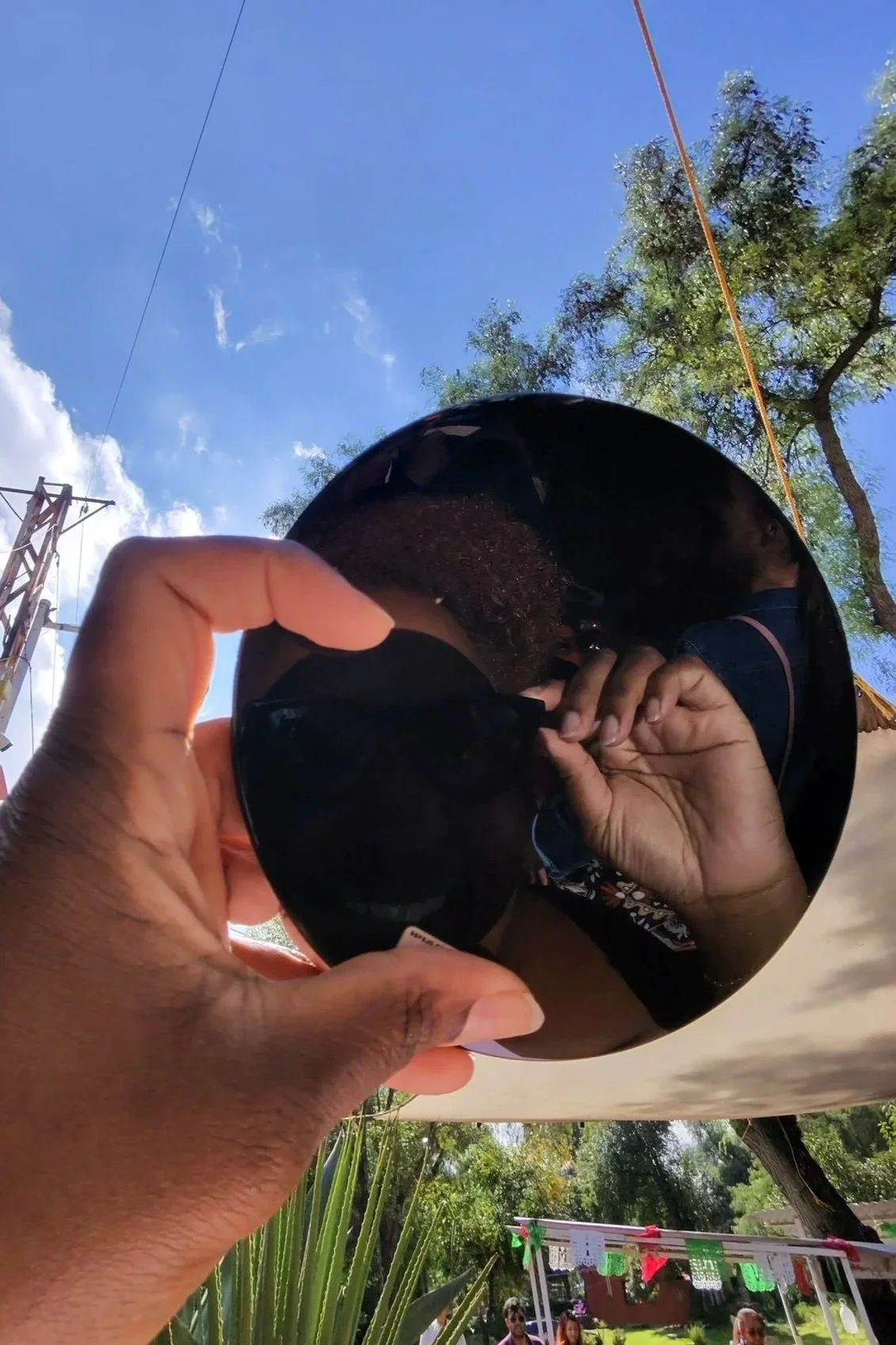
iew of the sun through obsidian rock
Nearby on the grounds, we went to a set of artisinal shops at Artesanías El Quetzal. We were given a quick introduction to the area, and I found it profound that the shopkeepers spoke about how their “ancestors” used the resources from the land as tools and created crafts. We learned about the agave plant and its many uses as it being the first pencil and paper. Agave thread is used to make textiles, and the ever popular distilled drinks. We then learned about obsidian rocks forming from lava, and how the black crysalized rocks are believed to offer psychic protection, ground energy, and cleanse negativity. Previously, the rocks were used for more practical purposes such as arrowheads, blades, and early mirrors. They also showed us a pretty cool trick: when holding a thick piece of polished obsidian to the sky you are able to see the sun. Mesoamericans used obsidian to view solar events like eclipses and equinoxes. It was interesting to see how generations from thousands of years ago used natural products and how their descendants have kept the tools in use but for various different uses now. Once we were shown the agave and obsidian uses, we were able to sample different types and flavors of mezcal. From there we were let loose in the shops to browse and purchase anything we wanted. There were jewelry containers filled with silver jewelry for women, men, and children, traditional souvenirs like shot glasses, magnets, etc. and of course various textile made from agave and cotton. The textile pieces consisted of ponchos and many home pieces like placemats, blankets, and tablecovers. The colors are so vibrant, and I believe for the most part, the fabric is dyed using natural ingredients. I purchased a large tablecover that will be perfect for Summer picnics.
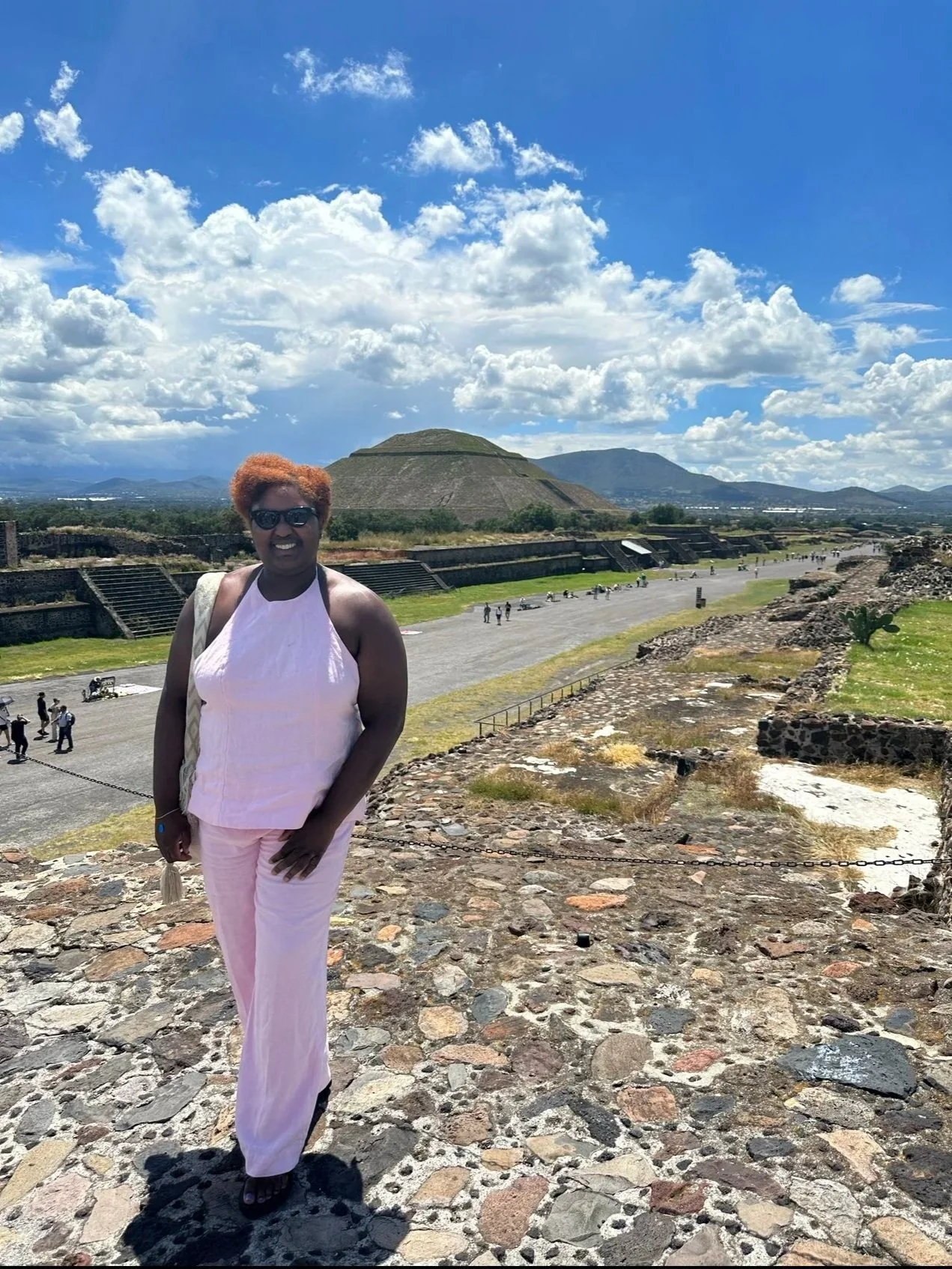
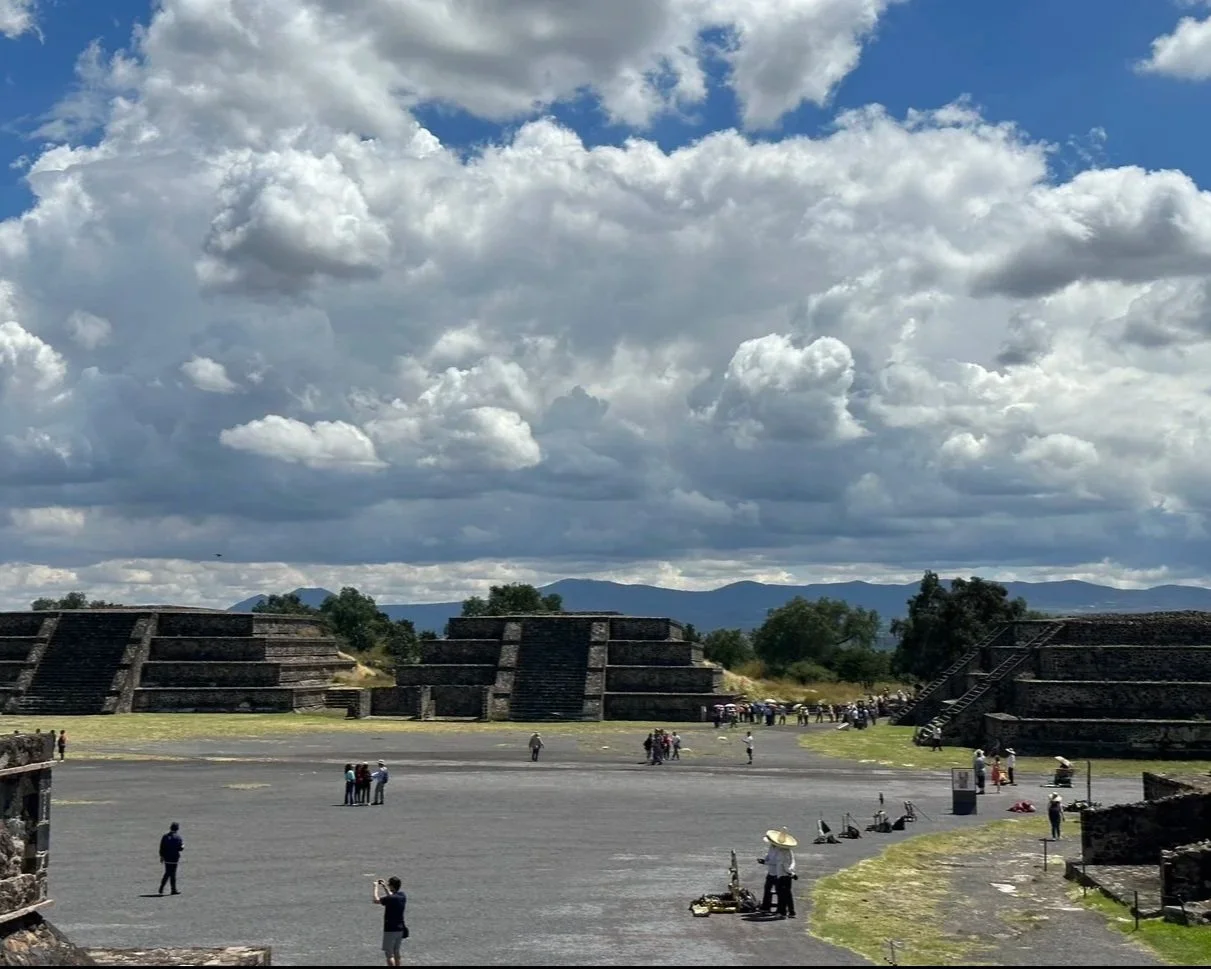
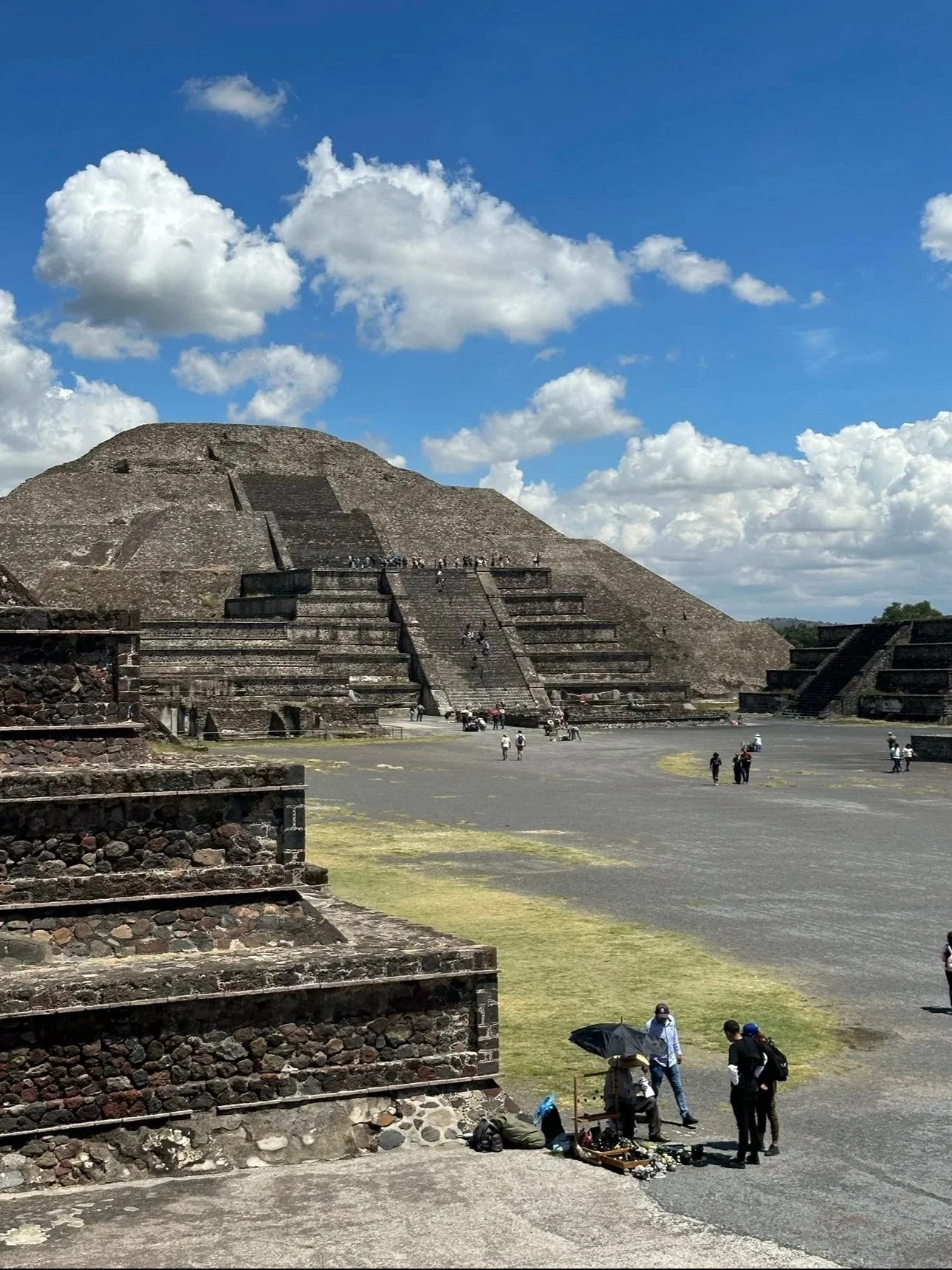
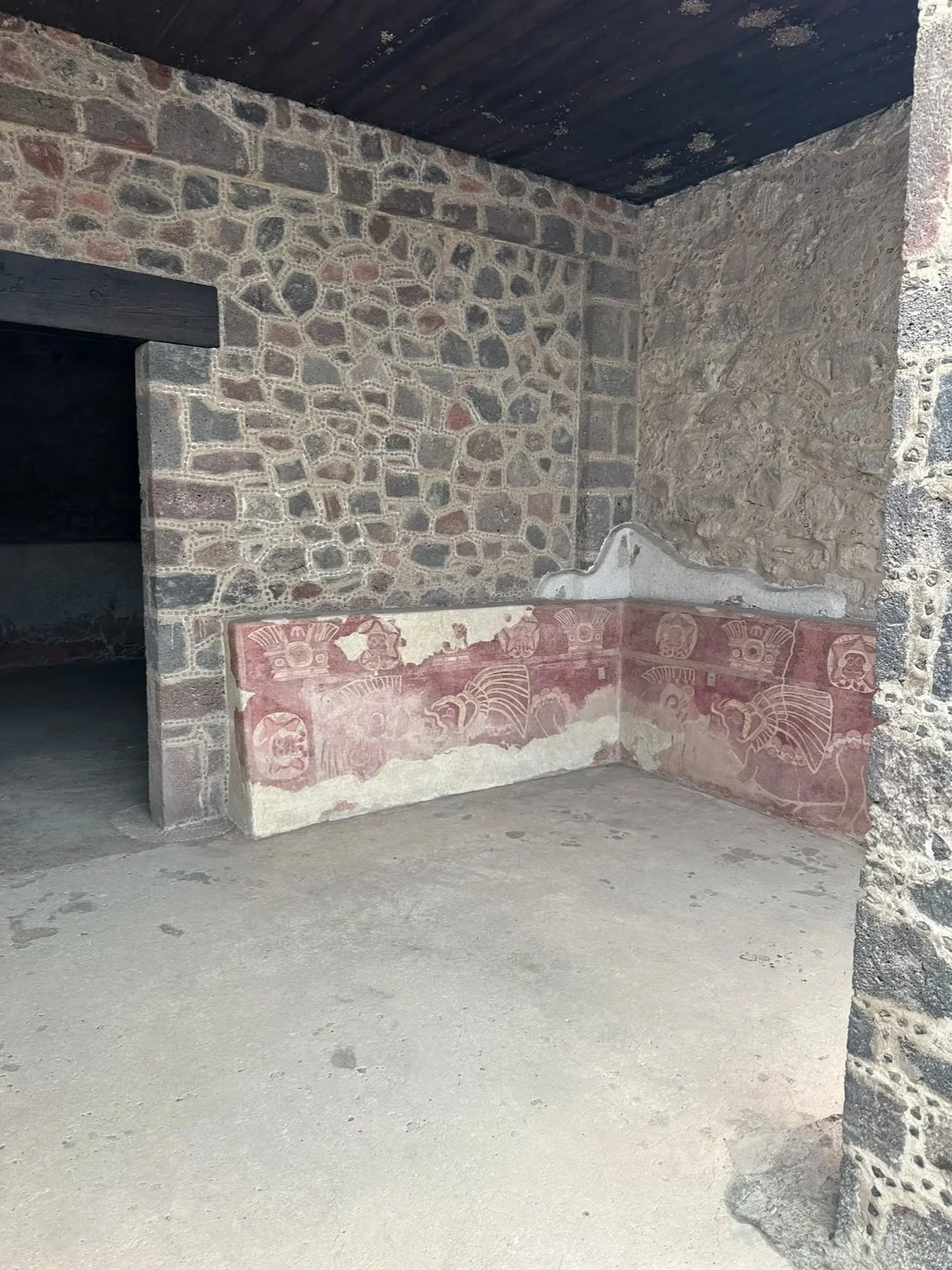
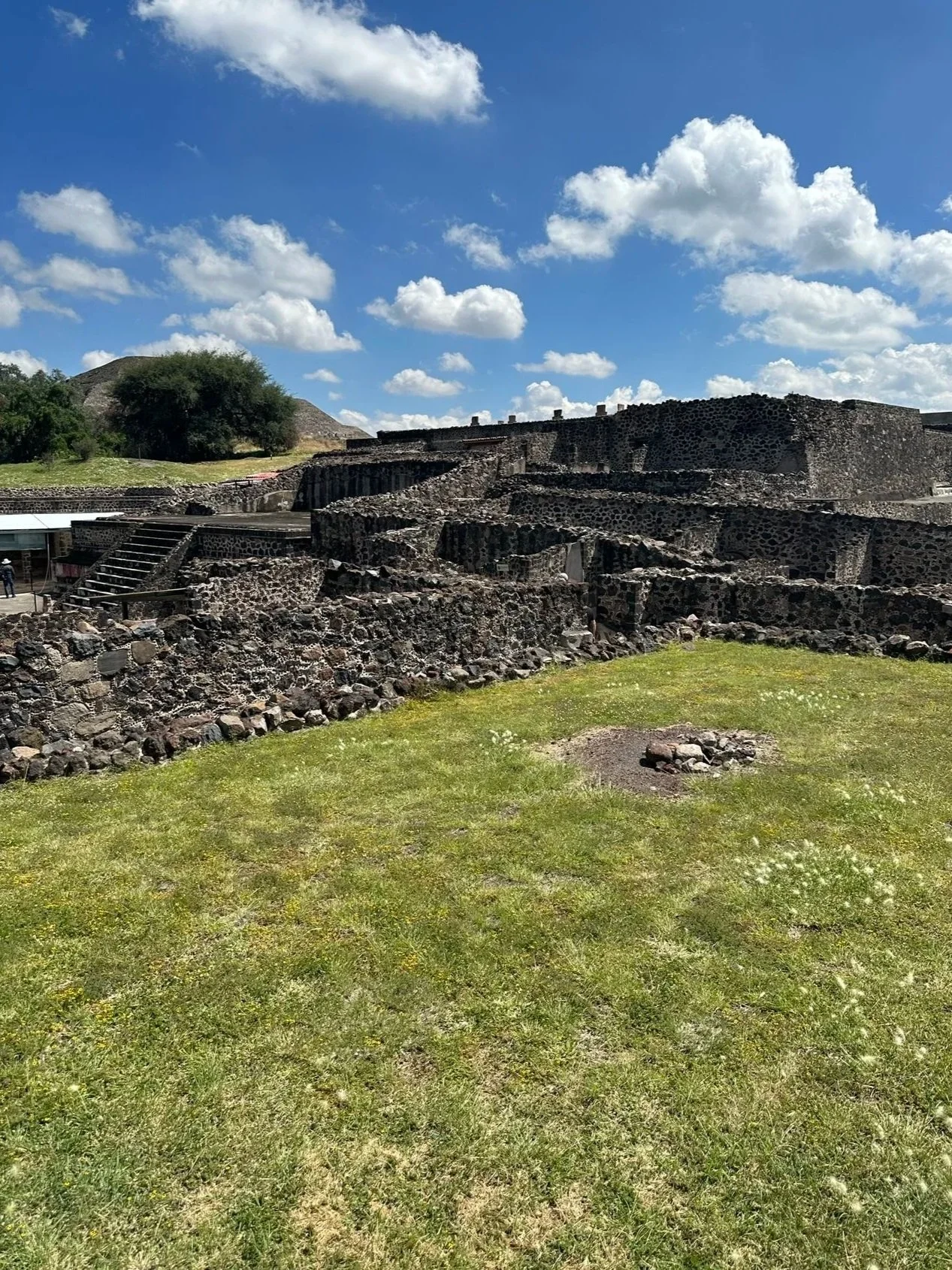
Once we finished shopping, we headed to the Teotihuacan archaeological zone via Amigo Tours bus. The archaeological zone has some standing buildings from the Mesoamericans, and we were able to be on the ground near the pyramids. We were within eyesight of the pyramids, but not close enough to touch — I’m not sure if the pyramids are open to the public or offer on the ground tours. There are maybe a dozen or so stalls of vendors selling locally made crafts like ponchos, hats, and souvenirs as well as a convenience store. There is no shade in the archaeological zone so sun protection is needed. The convenience store sold fresh homemade fruit popsicles and ice cold beverages, and their prices were fair. The majority of vendors here only accept cash, so for the all day excursion, I would recommend bringing enough cash for the day as we didn’t see an ATM until we were back in Mexico City. There are public restrooms on site, but I am unsure if there was a charge to use the facilities.
We spent about 2 hours on the grounds and our guide discussed with us how the natives likely lived. Their drawings are still visible on the buildings, and their engineering is still present even though they are long gone. Construction made of rock from thousands of years before us is still standing; architecture that survived generations and a population of over 25,000 people served as the thoroughfare of culture and society at the time.
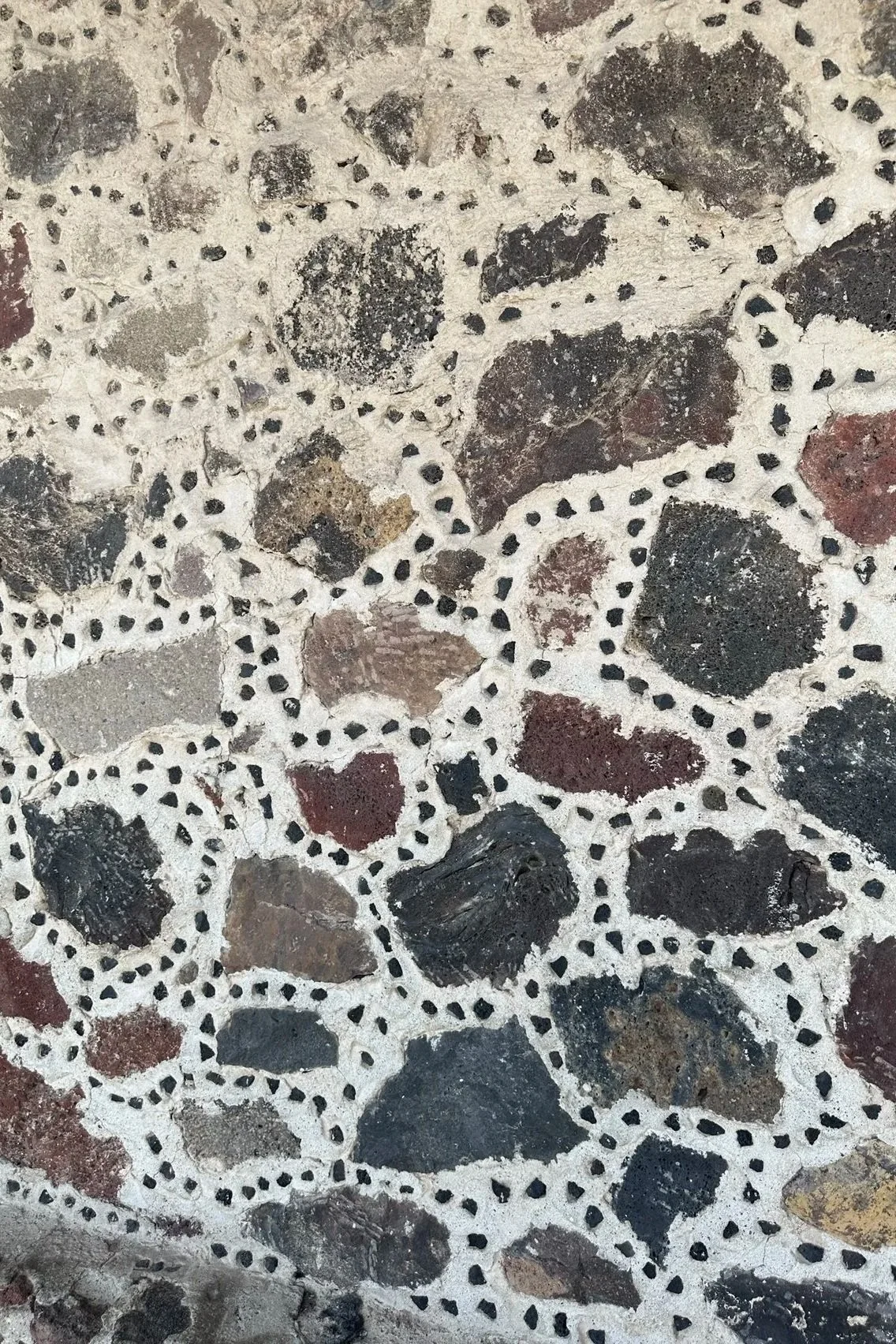
From the walking tour to Lucha Libre one day prior, I learned that many of Mexico’s historic buildings have gone through conservation efforts. You can easily tell which buildings have been renovated as there will be small circular dark grey or black stones/rocks placed where the original brick or stone once held the building together. It was evident to see in the zone that many of these historic buildings and structures were restored, while the drawings still stood. We also saw the drainage system of the Mesoamerican people, which was fascinating to learn that they knew rainwater could not remain stagnant within their community and developed a sophisticated tunnel and drainage system that held and moved water throughout the community and altered the San Juan River with their use of 90-degree turns.
From the archaeological zone, we made our way back to the city to finally see Guadalupe Shrine. When I say I was unprepared for this day, and had no idea what was going on, this is what I meant. I honestly only signed up for this excursion to do a hot air balloon ride, and had no idea prior that we were going to Teotihuacan nor Guadalupe, and if I’m being honest, I had no idea what the latter two tours were. The price for this all-inclusive day trip didn’t seem bad, so I figured, why not. There are other tours that I considered, some only offer round-trip transportation from Mexico City to the hot air balloons, the hot air balloon flight, and some include a stop for breakfast/lunch in a cave at La Gruta. This was an option for me, but I’d heard mixed reviews about the food at La Gruta, and the only highlight being you’d be able to say you’ve eaten in a cave…
As we were leaving Teotihuacan, we were hit with the ordinary Mexico City traffic and the journey took a little longer than expected. Once we arrived to the basilica it started to rain, so we weren’t able to take our time to roam around the grounds, but our guide still did great and gave us information on each building, walking us through the rain and the slick grounds.
The basilica is a Catholic church dedicated to the Virgin Mary.
Our guide told us about the legend of Juan Diego. He was walking through Tepeyac Hill, where the basilica currently stands and was approached by the Virgin Mary in the winter. Mary told Juan to ask the bishop to erect a church on that hill in her honor. Juan did as he was told, but the bishop consistently said no. Juan brought the news back to Mary, and she instructed Juan to get roses (which should not have been growing in the winter) and bring them to the bishop. Again, Juan did as instructed, gathering the roses and putting them in his poncho. When he arrived to the bishop, he opened his poncho and roses fell out at the bishop’s feet. Also, when he opened his poncho, the bishop saw an image of the Virgin of Guadalupe, and at that moment, the bishop was convinced it was a miracle. The church completed its construction in 1709.
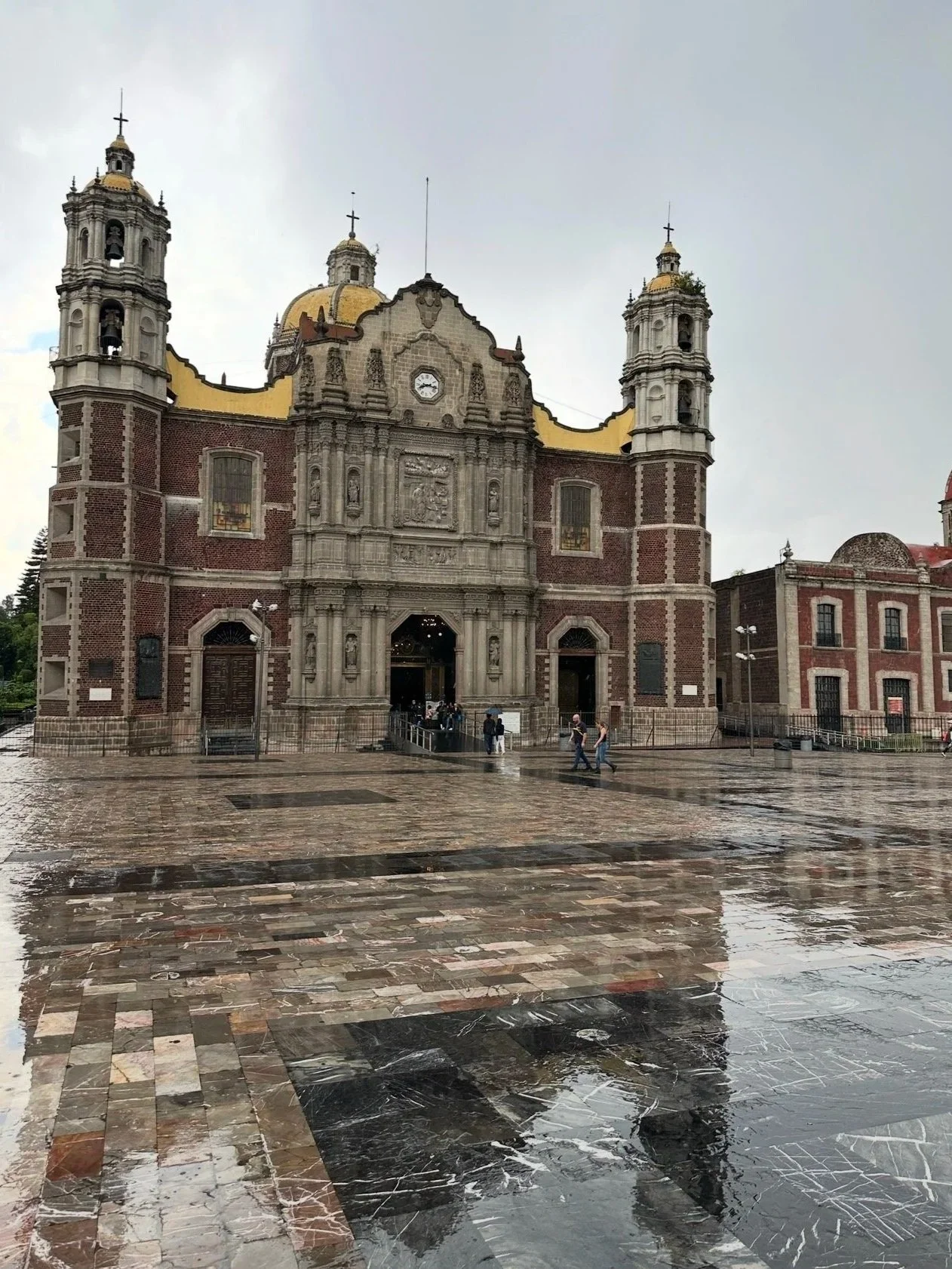
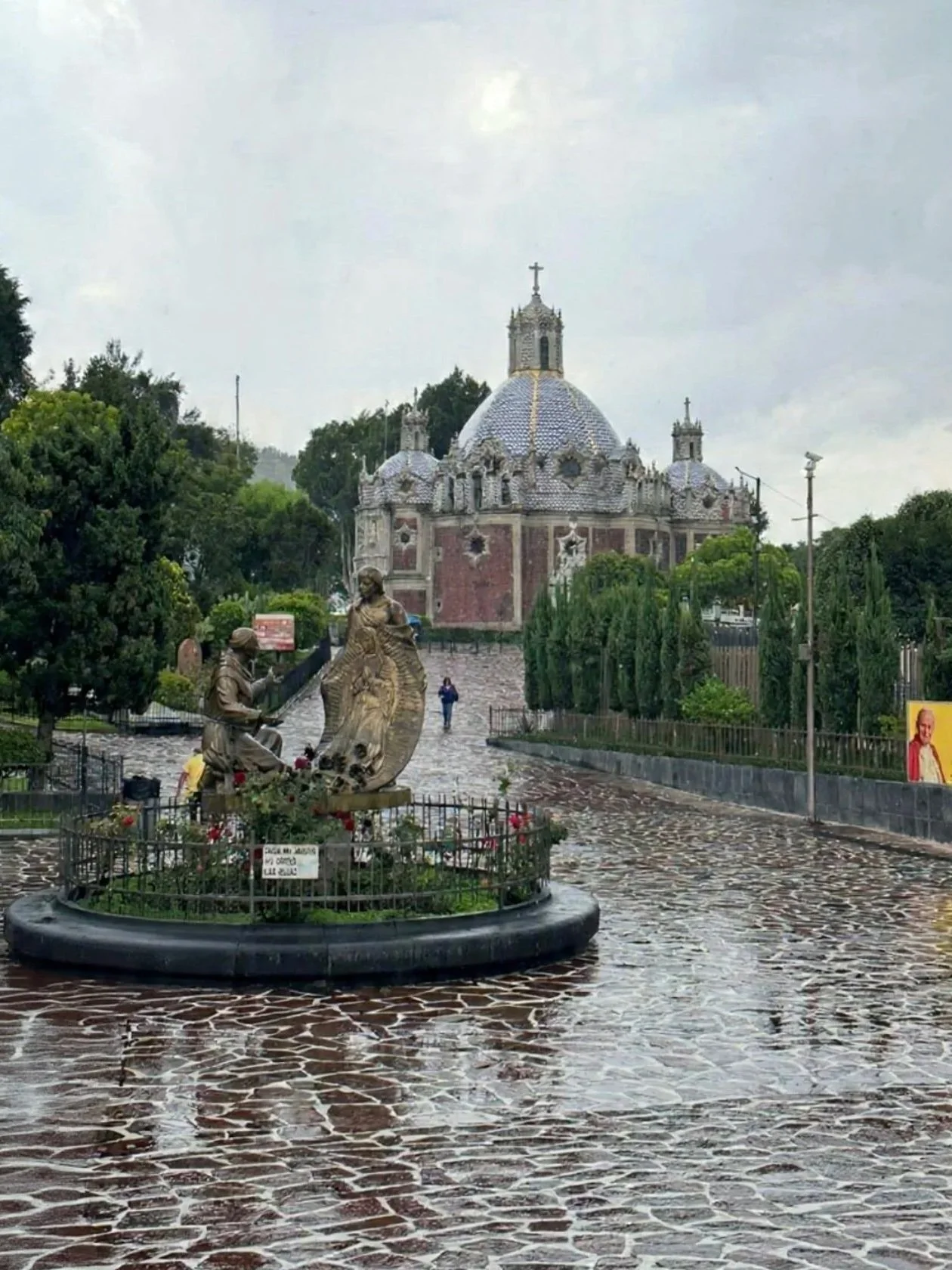
The basilica sees millions of guests annually, with the majority visiting around December 12, which is when Our Lady of Guadalupe is celebrated. Tepeyac Hill had always been a sacred place, but once Mary spoke to Juan Diego in his local native language and performed the miracle, many Aztecs of the time were baptized Catholic.
Today, several masses take place in the basilica, and it is open to the public. Many people bring items and babies to be blessed by the priests, and light candles for lost loved ones. Diego’s poncho, or tilma is on display in the basilica along with a portrait of Mary. There are also stories that Mary’s image has been indestructible since the 1700s. It has survived someone accidentally spilling acid on it and a bombing in the 1900s. Mary’s image is allegedly always the temperature of the human body at 98.6 degrees F, regardless of the basilica’s internal temperature.
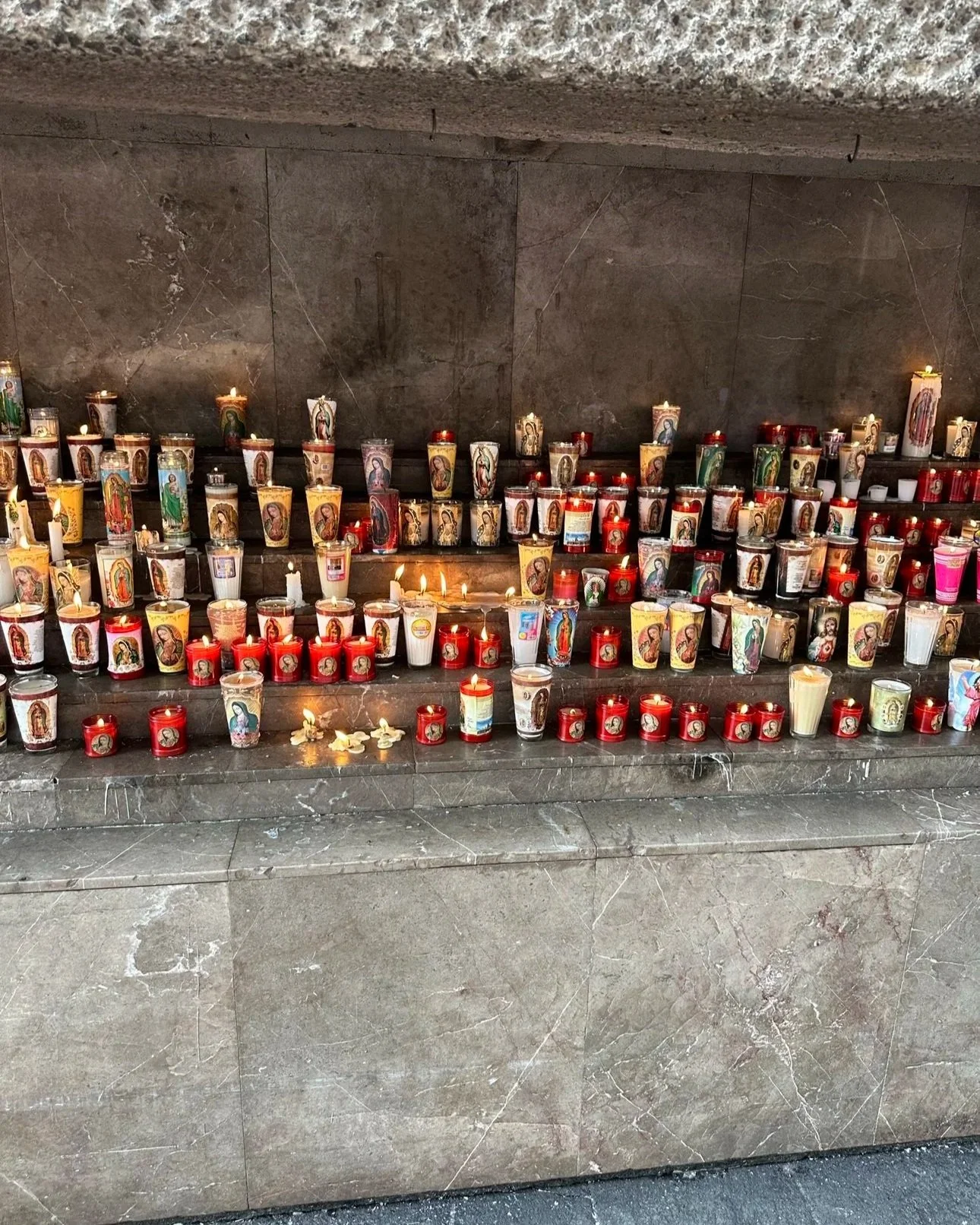
Candles burning at Guadalupe Shrine, Mexico City
Again, walking the grounds of the basilica, you can tell which buildings had been restored as many of them have the black stones in the exterior and interior walls to show the original stone of centuries past had been replaced.
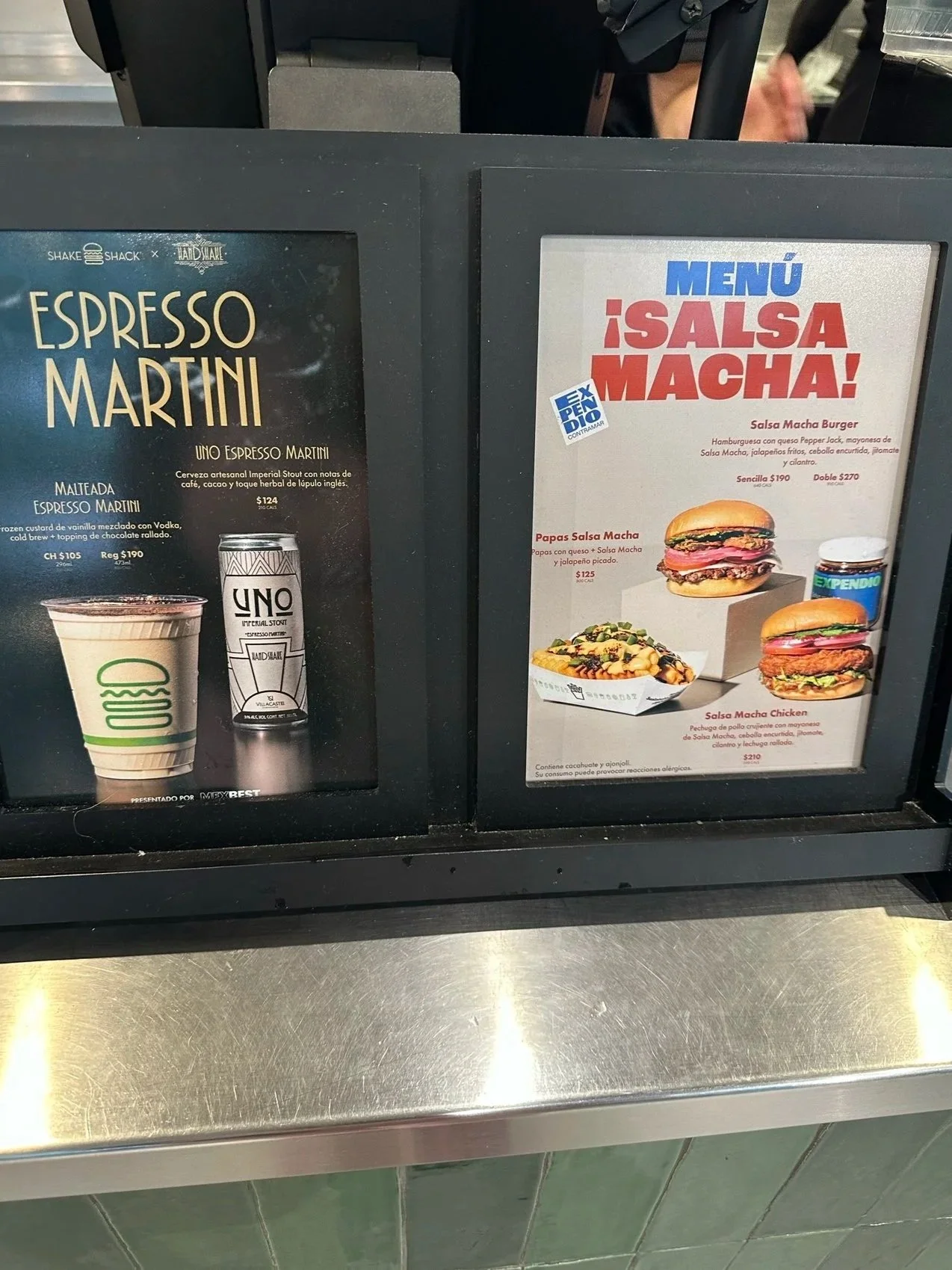
Shake Shack local specialty menu in Mexico City
We ended the rainy day trip back at our meeting point, Angel de Independencia. The city was preparing for a protest for the 11th anniversary of the disappearance of 43 students from Ayotzinapa Rural Teacher’s College. Many landmarks were barricaded and there was a heavy police presence. Traffic was almost at a standstill near the Angel, so I went to Shake Shack to wait out the rain. It wasn’t my original dinner plan, but they had local specialties and it sufficed.
After the rain finally died down, I walked to Churreria El Moro for churros to see if my handmade churros differed from a recognized chain. Churreria is a cute spot with only churros and beverages on the menu. There are a handful of locations throughout the city.
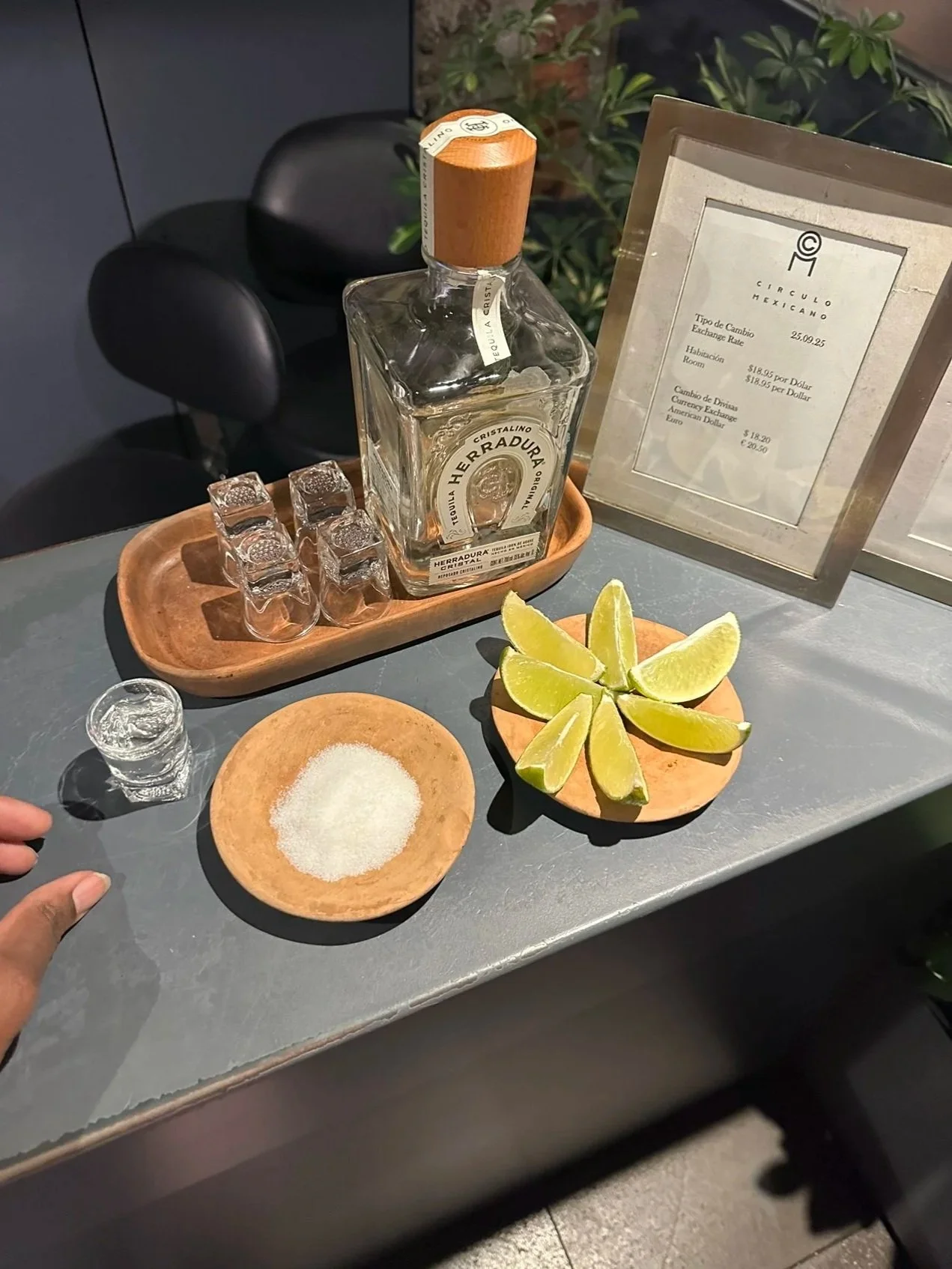
I made my way to my final hotel, Circulo Mexicano, also located in Centro Historico. I absolutely loved this hotel! It is located across the street from Catedral Metropolitan de la Cuidad de Mexico. Circulo Mexicano is another boutique hotel. Here and Casa de la Luz were my favorite hotels, and I’ll stay there again when I’m back in CDMX. Circulo, has boutiques and small stores on the main level, including cafes, a burger restaurant, a chocolate store, and a homegoods store. When checking in, the front desk attendant offered me a shot of tequila followed by sliced limes and salt. The tequila brand is sold on-property and there are bottles in the mini-bar in each room. A bellhop brought me to my room, also showed me around the property, and the room insturcting me on how to open the windows and turn on the lights. My hotel tour on YouTube is below.
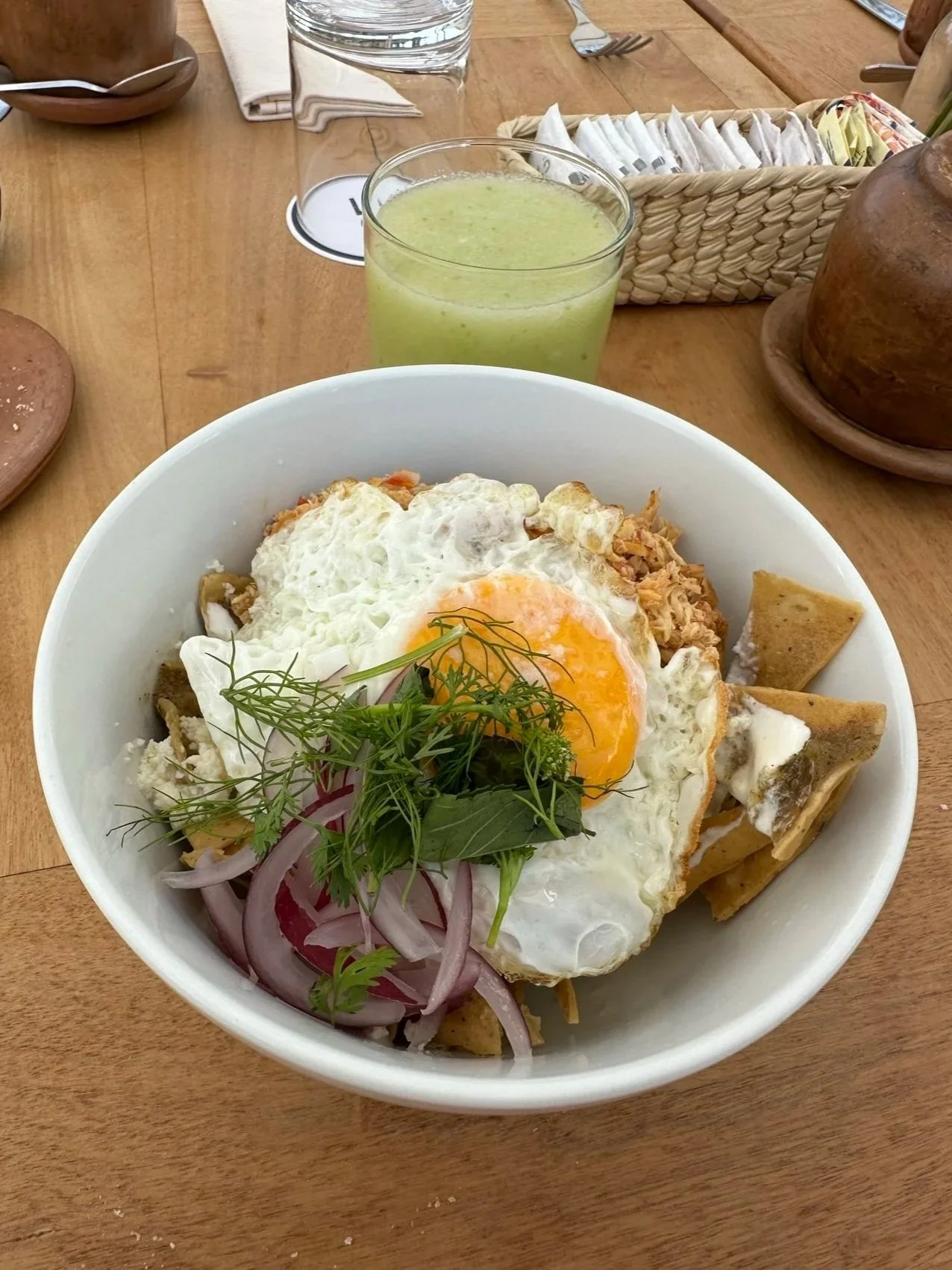
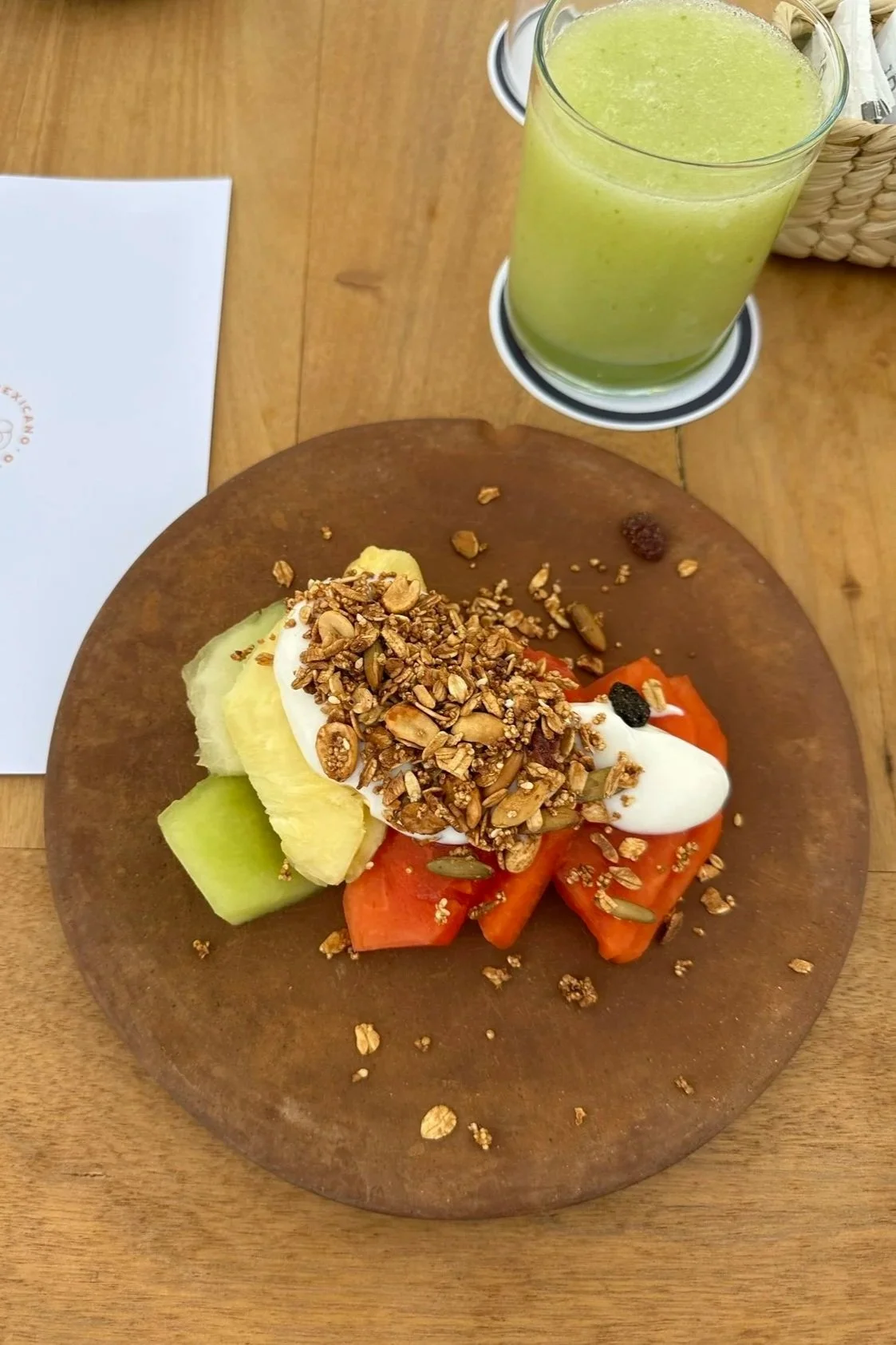
Also included in my room purchase was breakfast daily. The next morning, I had breakfast on the rooftop of the hotel. The breakfast offering includes one main, a bowl of fruit, one pastry, and a beverage which rotated daily. The rooftop housed a small swimming pool, beautiful views of Centro Historico, a sauna, a bar, and ample seating.
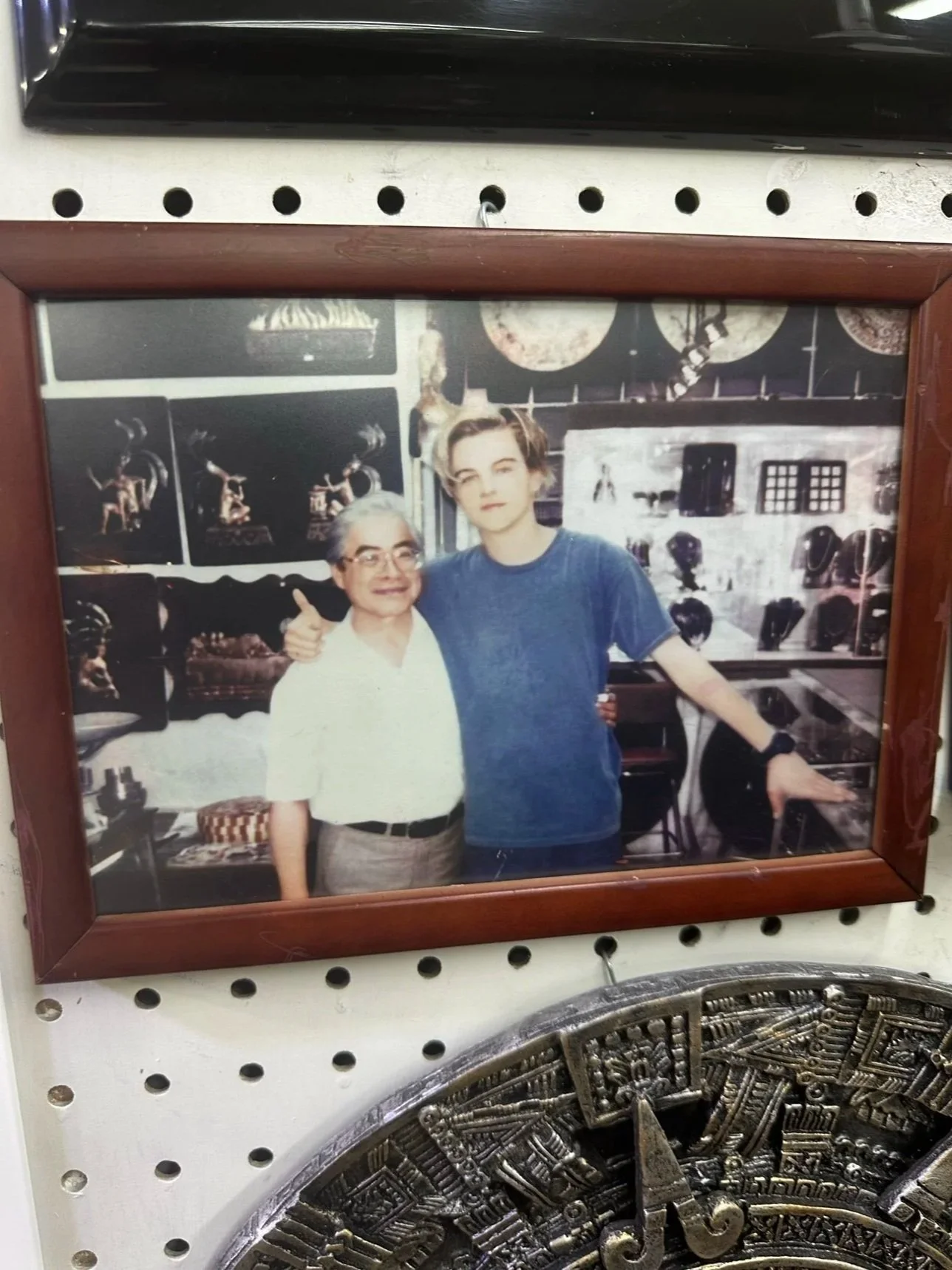
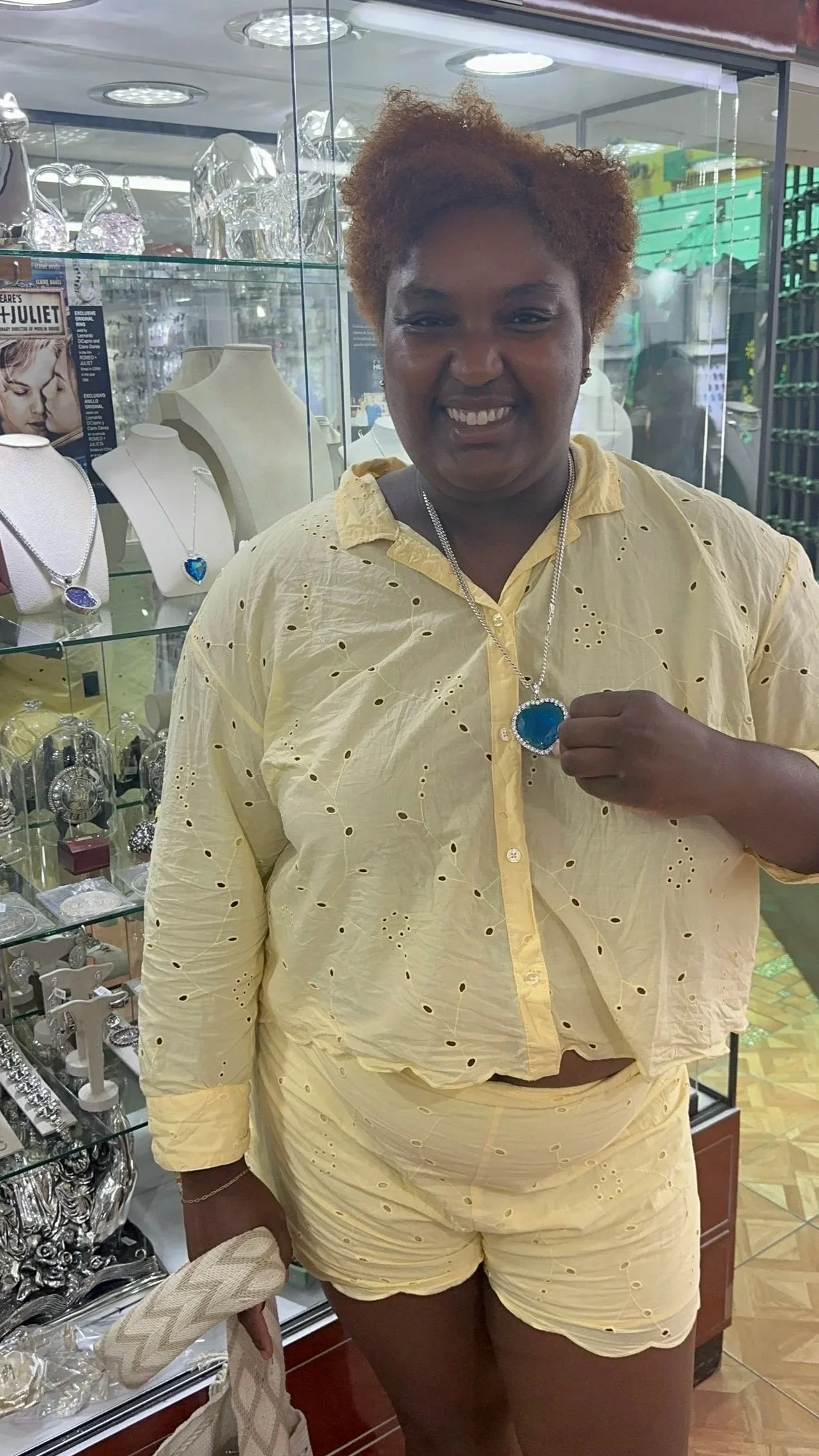
My final activity in Mexico City was set to be another all-day excursion that I booked on Expedia with Amigo Tours. Again, I didn’t fully pay attention to the tour description, I just saw the price, and knew I wanted to do Xochimilco, which is the colorful boat tour. This tour included Xochimilco along with the Frida Khalo museum, free time in her neighborhood, Coyoacan, time for lunch, and a visit to one of the silver districts. This time, the tour pick up was not at the hostel nor in a Sprinter van. Our pick up point was Palacio de Bellas Artes, also located in Centro Historico, and walking distance from my hotel. This was a full tour of over 40 people, so we had a charter bus. Our first stop was Plateria Rafael, a jewelry store run by 80 year old Rafael who has been in the jewelry business for over 6 decades! He reminds me of the quintessential Mexican abuelo! He is at most 5 feet tall and filled with so much charisma, and jet black hari. He spoke to the group in both English and Spanish about his upbringing and how he trained and worked in apprenticeships for years, perfecting jewelry making and designing. Rafael became so notable in the 1990s that Leonardo DiCaprio reached out to him specifically to make the jewelry for The Titanic movie. There are pictures of Leo throughout the store, and replica Heart of The Ocean necklaces and sapphire jewelry in a designated Titanic section of the store that guests are welcome to try on. As Rafael spoke to us and shared his story, he made a Frida Kahlo portrait on a small silver medallion showing us his artistry in real time. Normally I am offput by tours and excursions bringing guests to stores because I know the tour operator will receive a kickback. Rafael spoke to us for maybe 15-20 minutes, smilling the entire time, then let us browse his store and shop. Once he finished his spiel with us, another tour group came in, and the the process repeated for several groups, one after another. I didn’t mind it because I was under Rafael’s charm. I wanted to speak to him to praise his artistry and work, and he gave me my own silver Frida piece! There are multiple staff on site to help you shop and answer any questions. There are all types of jewelry pieces for women, earrings, bracelets, necklaces, mens jewelry, silver tea sets, mirrors, picture frames, and sterling silver serving sets for the home. I purchased one silver necklace and 2 pairs of earrings, a silver and pearly drop stud, and a peridot and silver set.
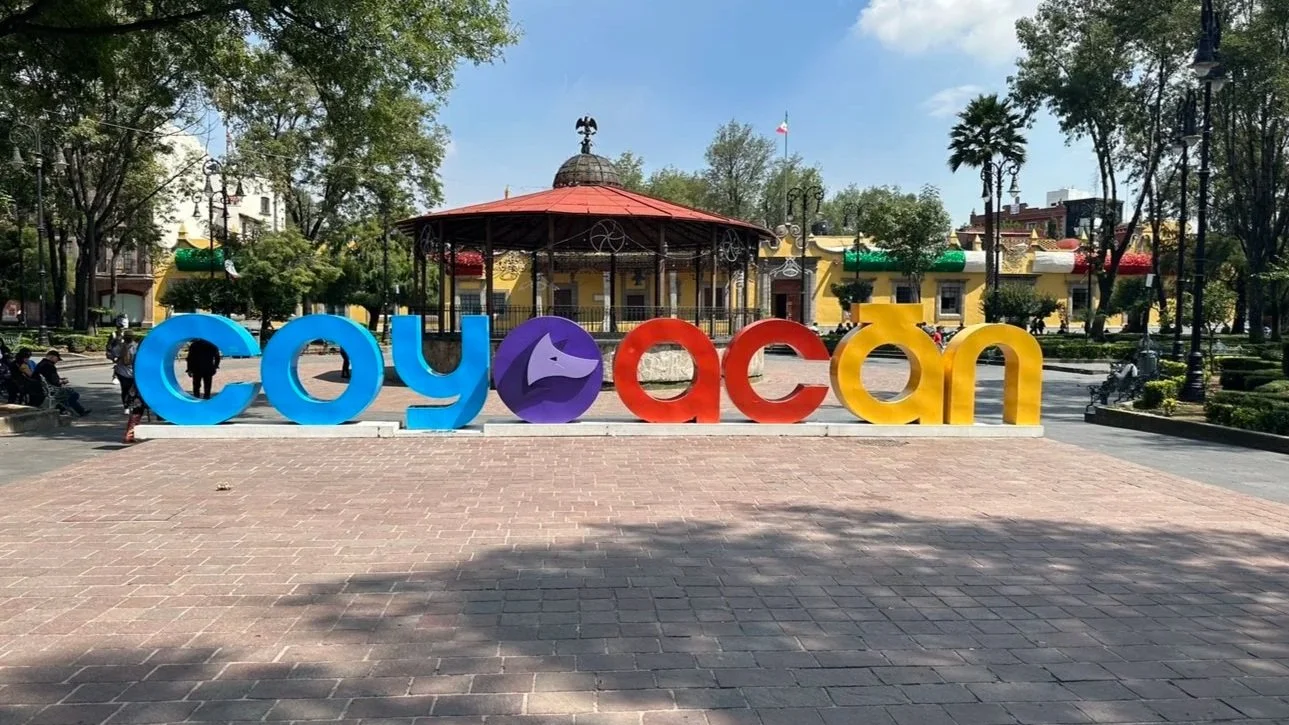
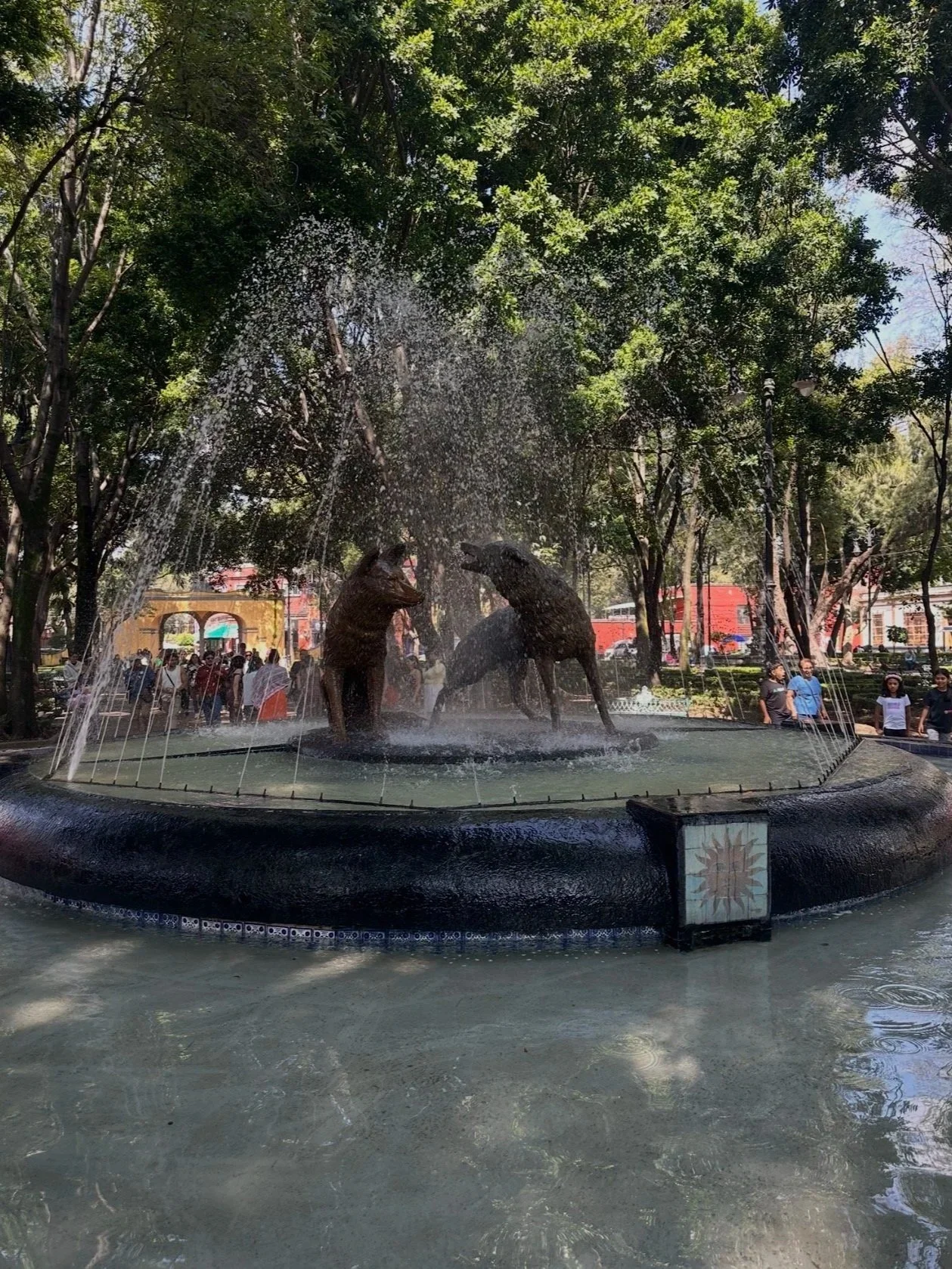
After we all finished making our purchases, our next stop was the Frida Kahlo museum in Coyoacan. Coyoacan is the neighborhood Frida lived in as a child and through her adulthood. We then as a group went to her home, which was turned in to a museum. Regardless if you’re solo, you need to purchase a ticket to the Frida Kahlo museum unless you book with a group and the ticket to enter is included in the price. Tickets to the museum sell out over a month in advance, and they seldomly sell tickets at the door if they are sold out for the day. The museum provides more insight on Frida’s life compared to the Frida Kahlo exhibit I visited in Playa del Carmen. The museum shows the kitchen where she and her family cooked and ate meals, their living room, her husband’s bedroom, Frida’s bedrooms upstairs, and her last bedroom houses her ashes in an urn on her dresser. I was surprised that her original artwork was not in the house, nor was there a coffee table book with all of her work available for purchase in the gift store. I also found it interesting that even after her illness as she was confined to her bed she remained on the second floor of her family home. How was she transported to the courtyard, the garden, and did she only receive in-person doctor’s appointments?
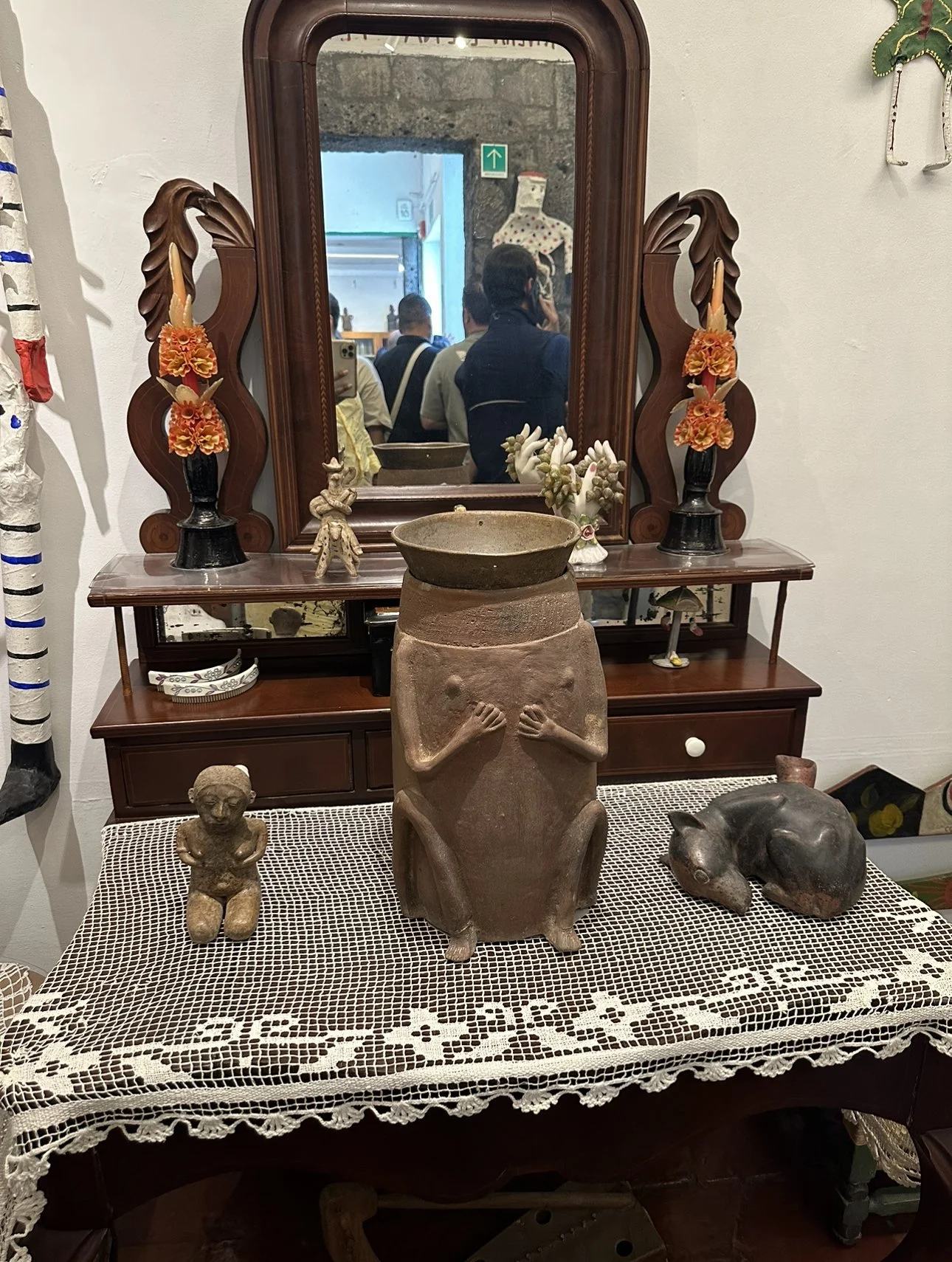
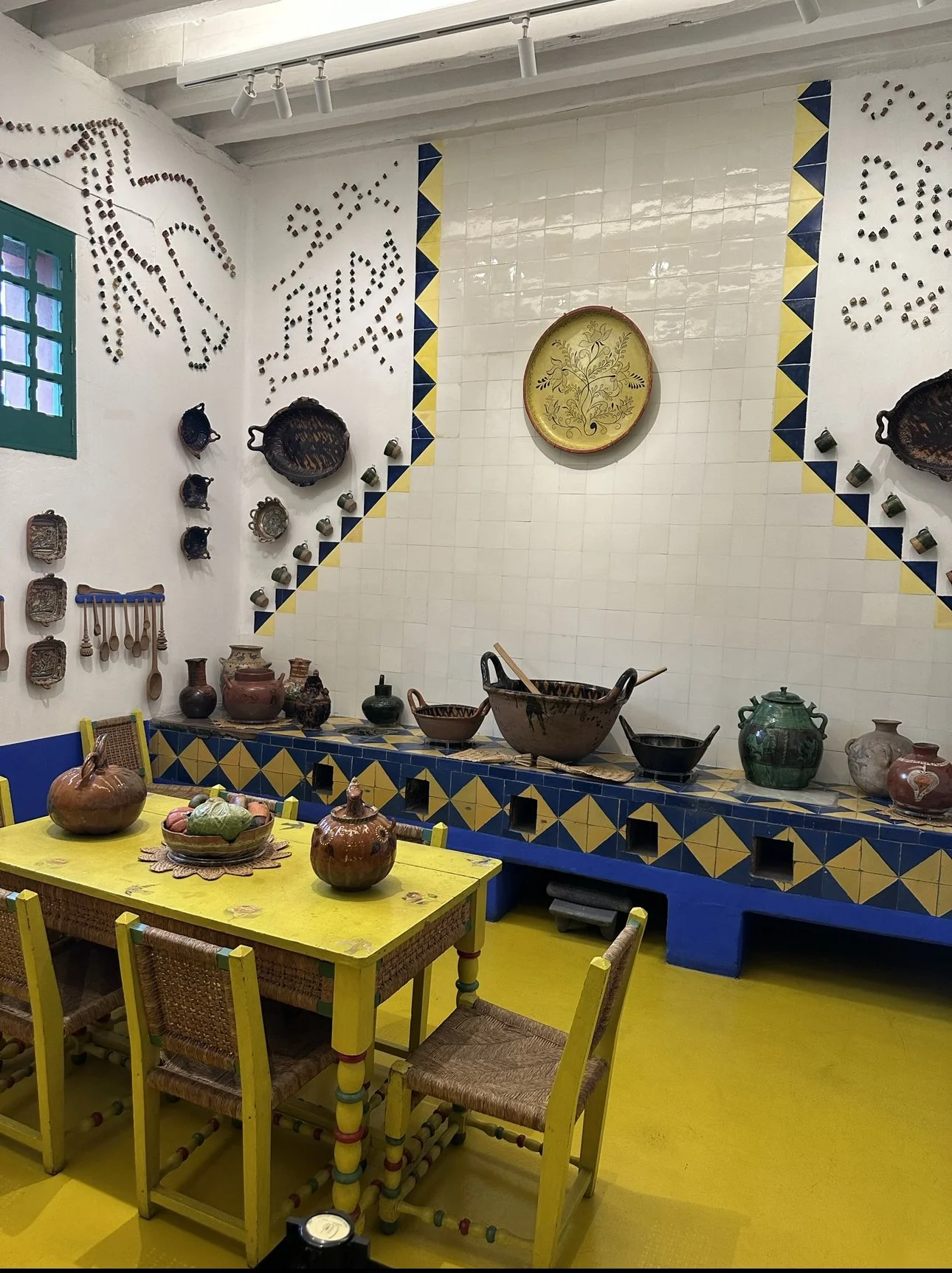
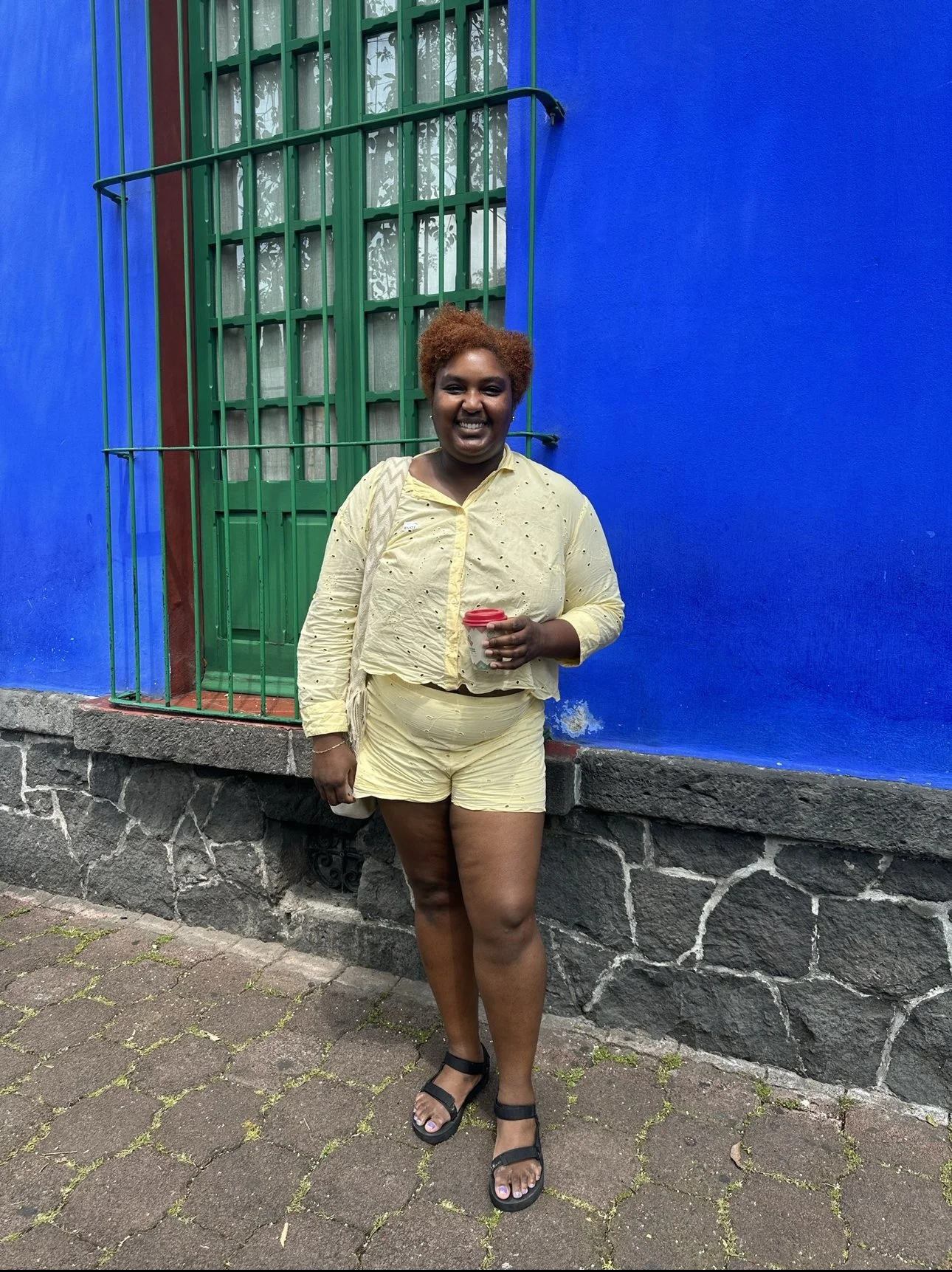
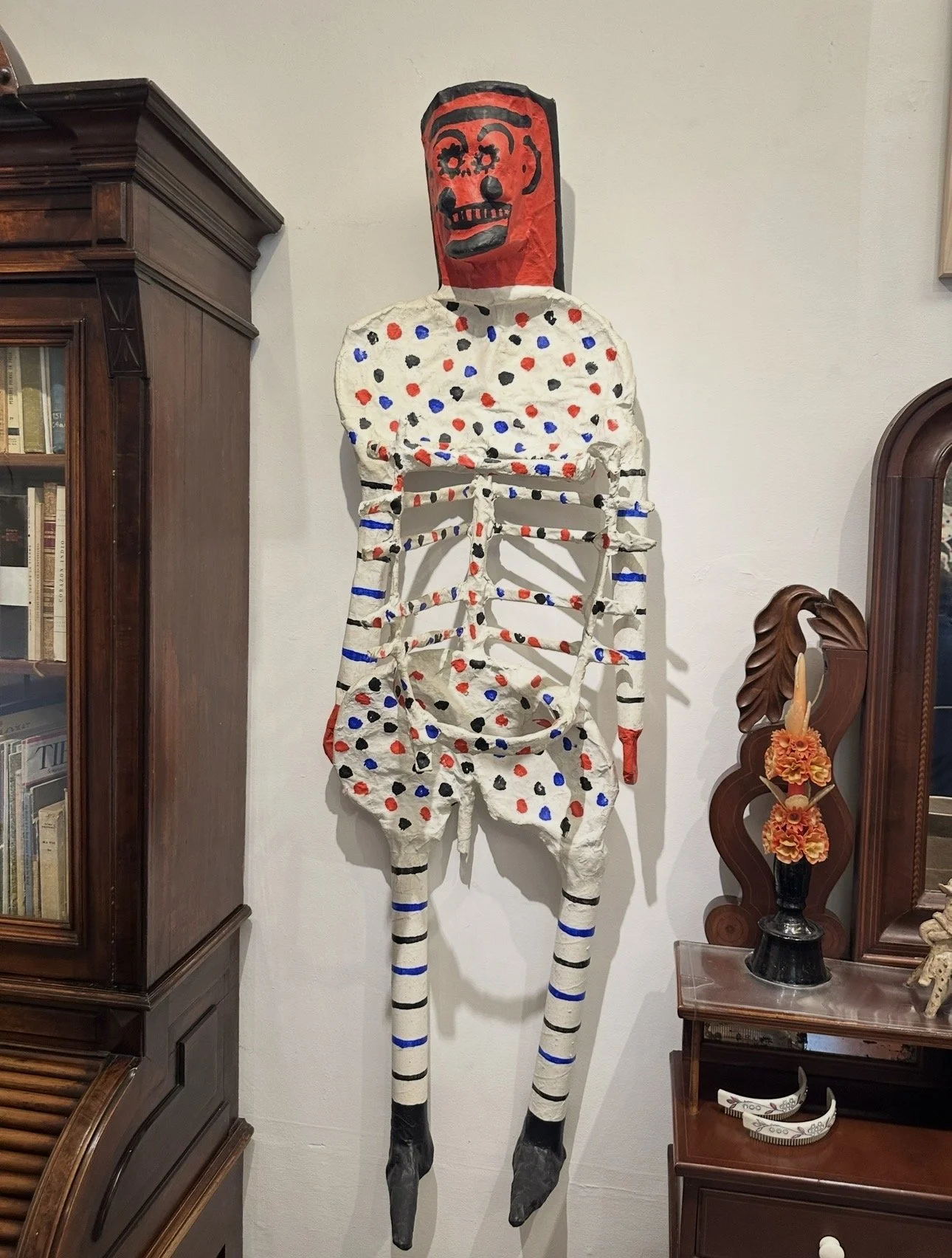
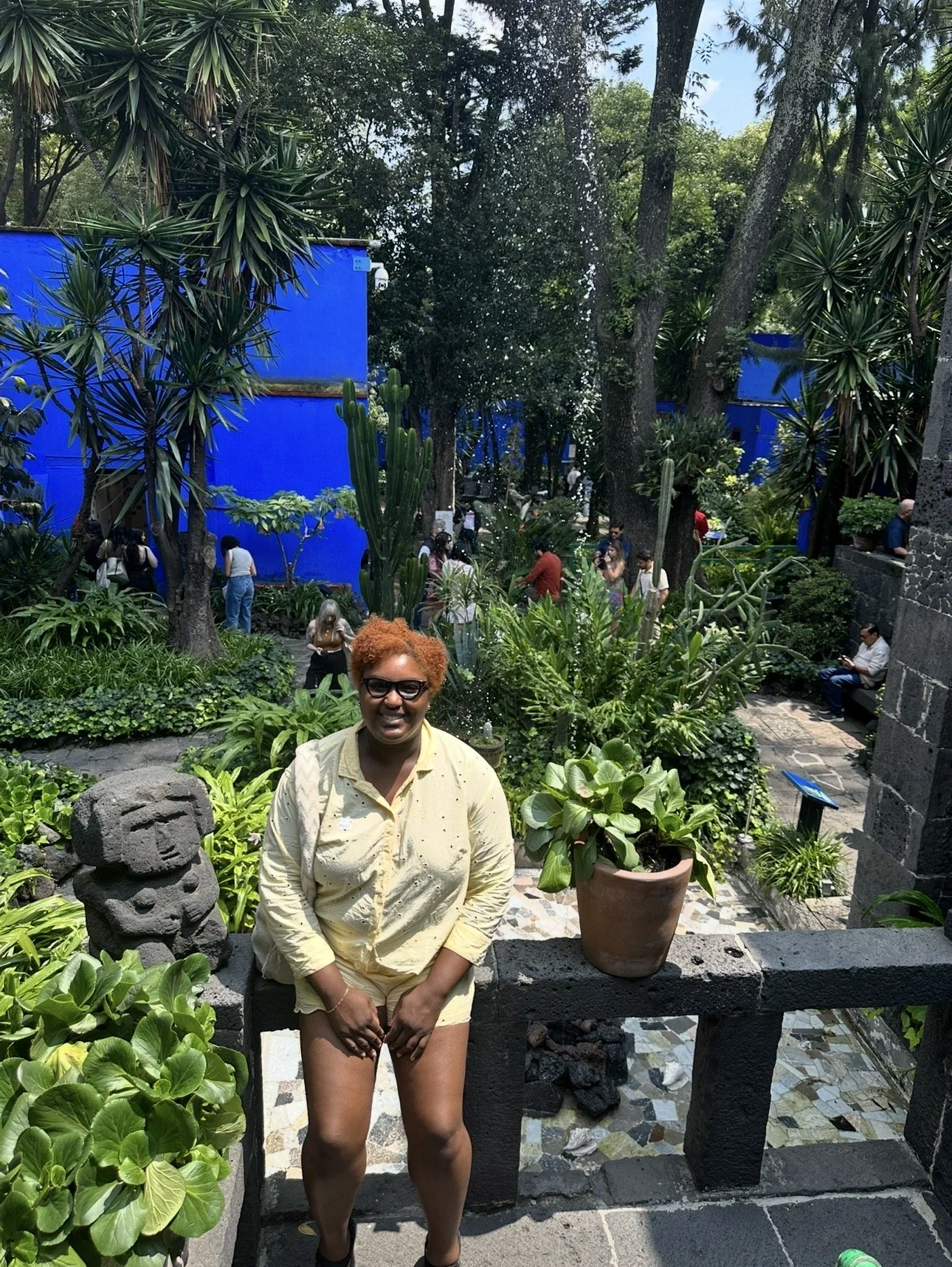
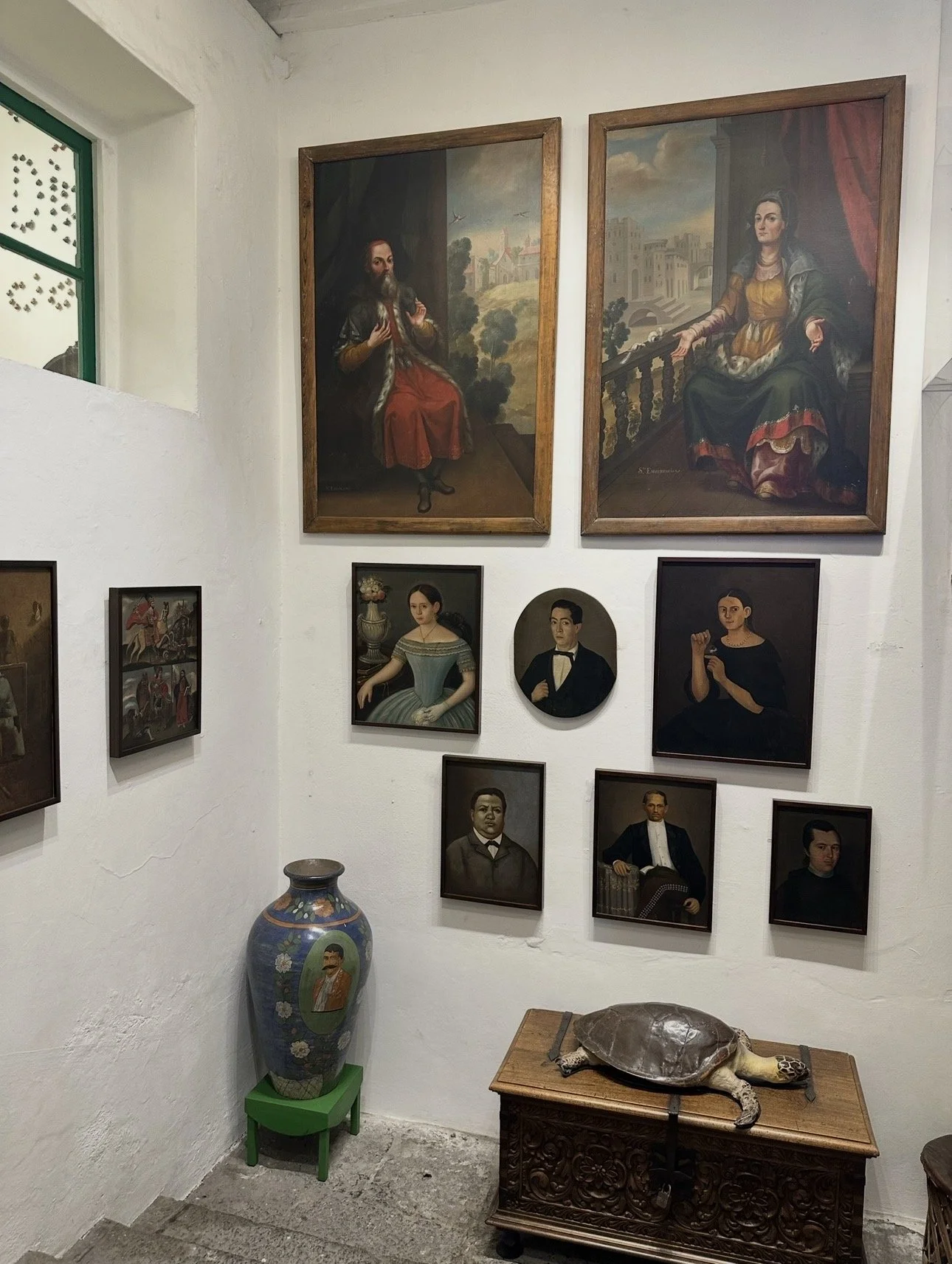
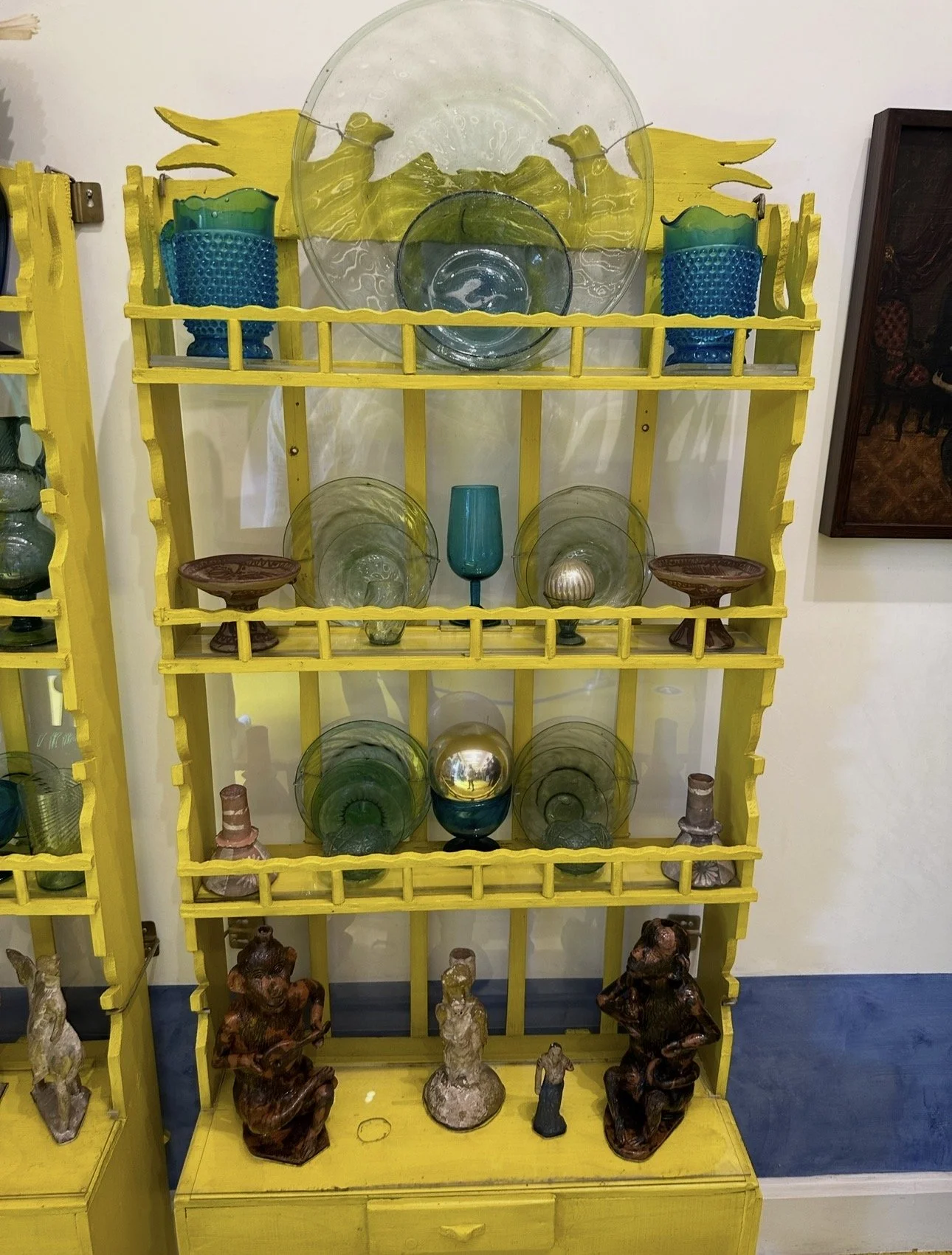
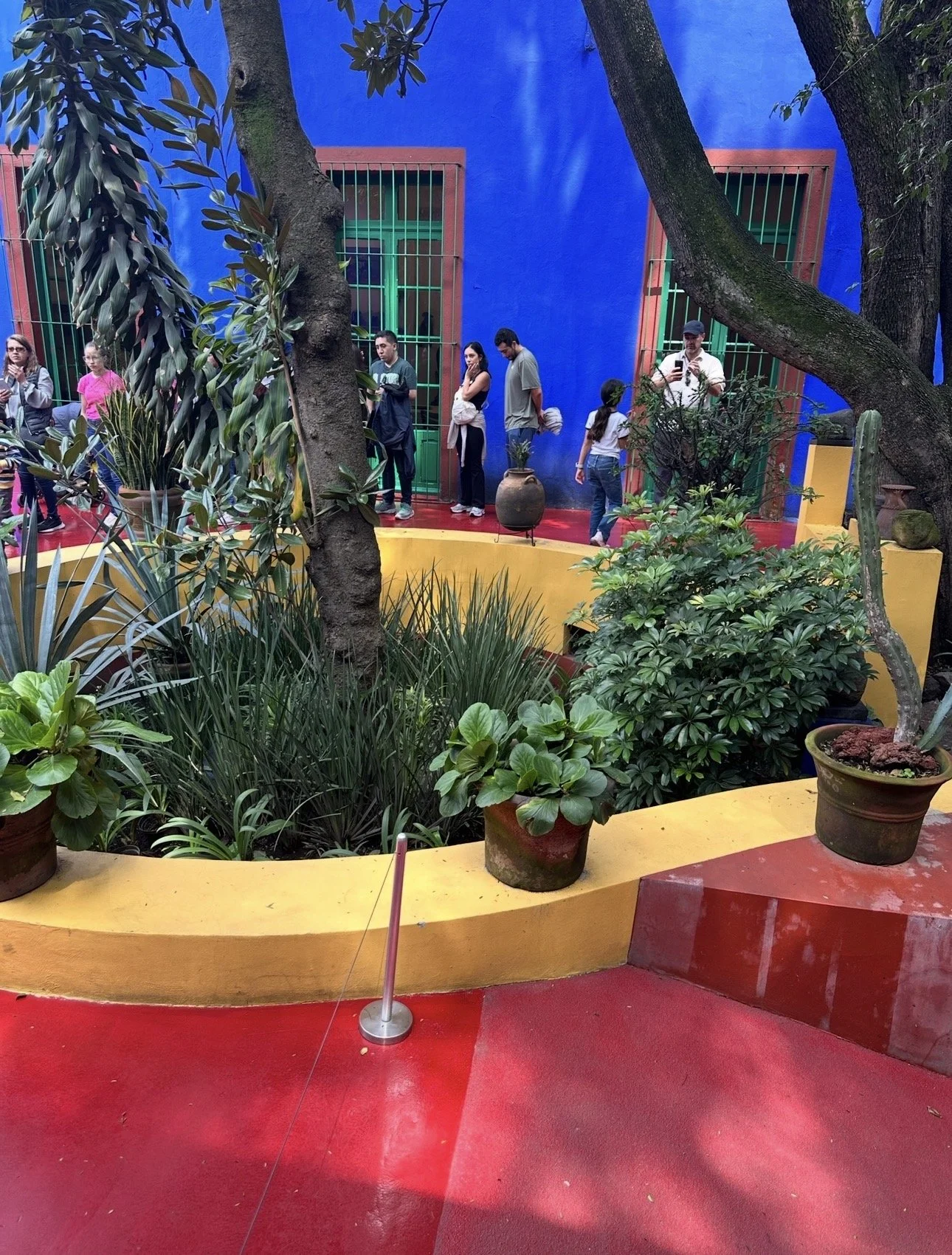
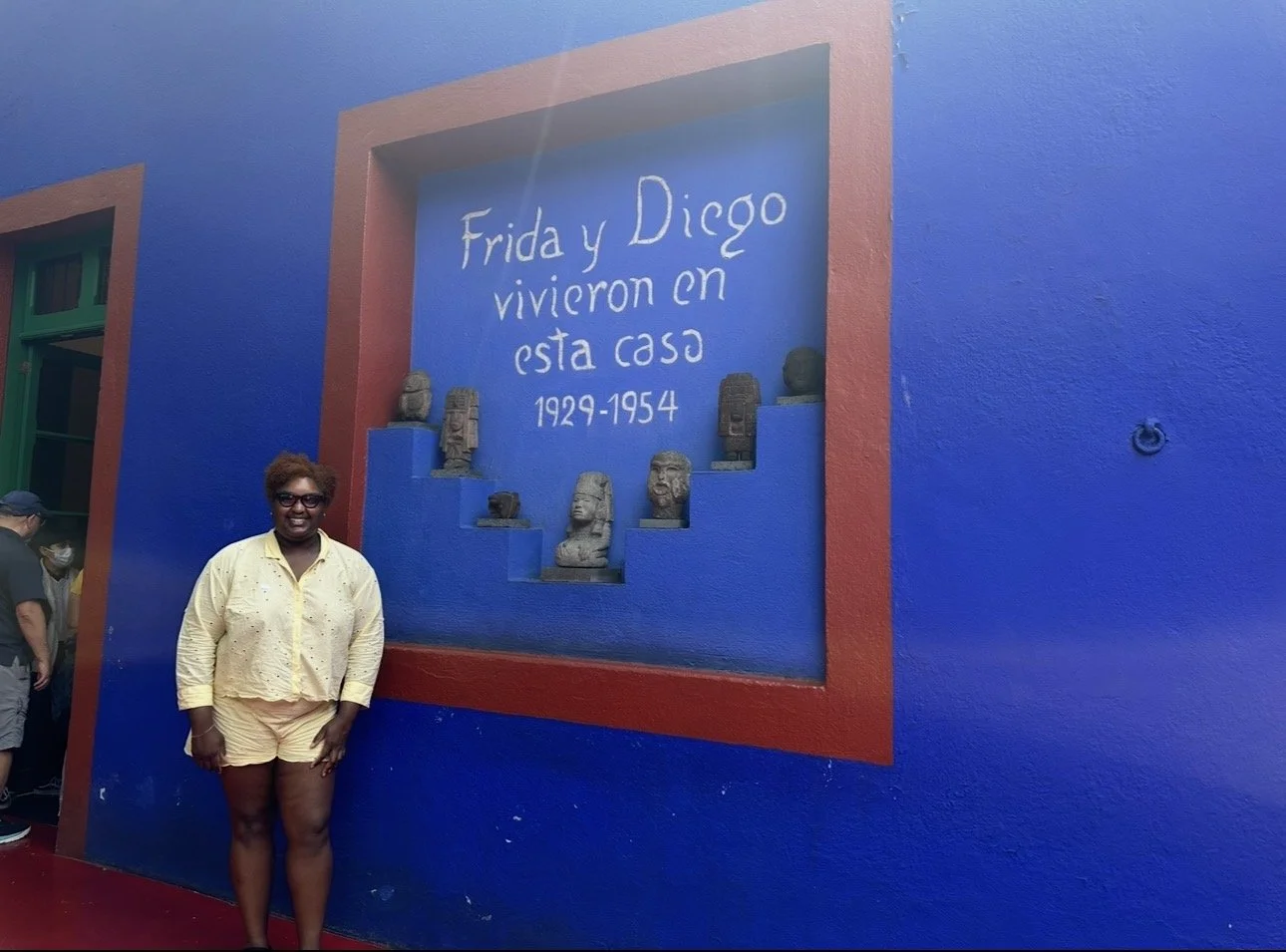
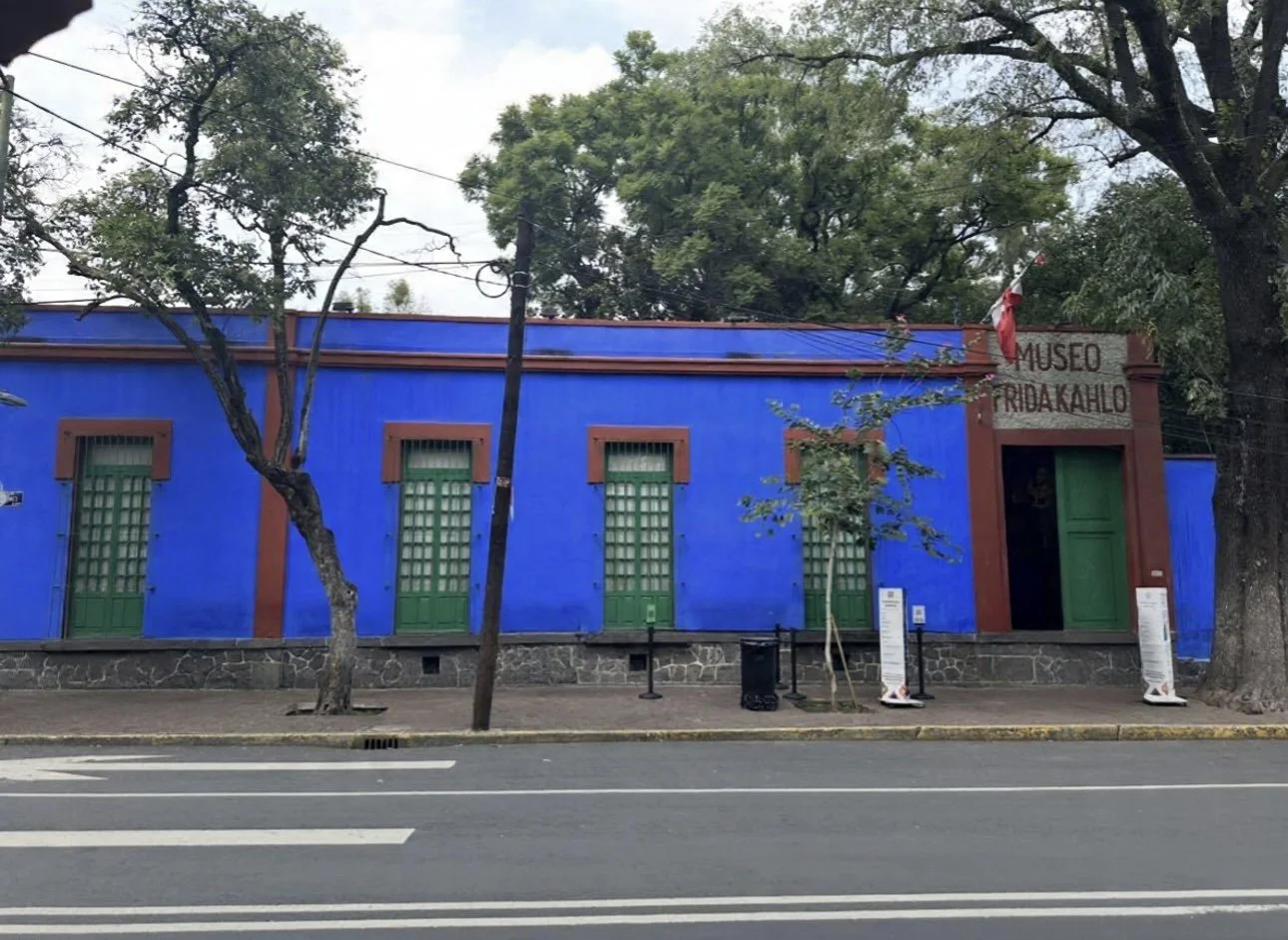
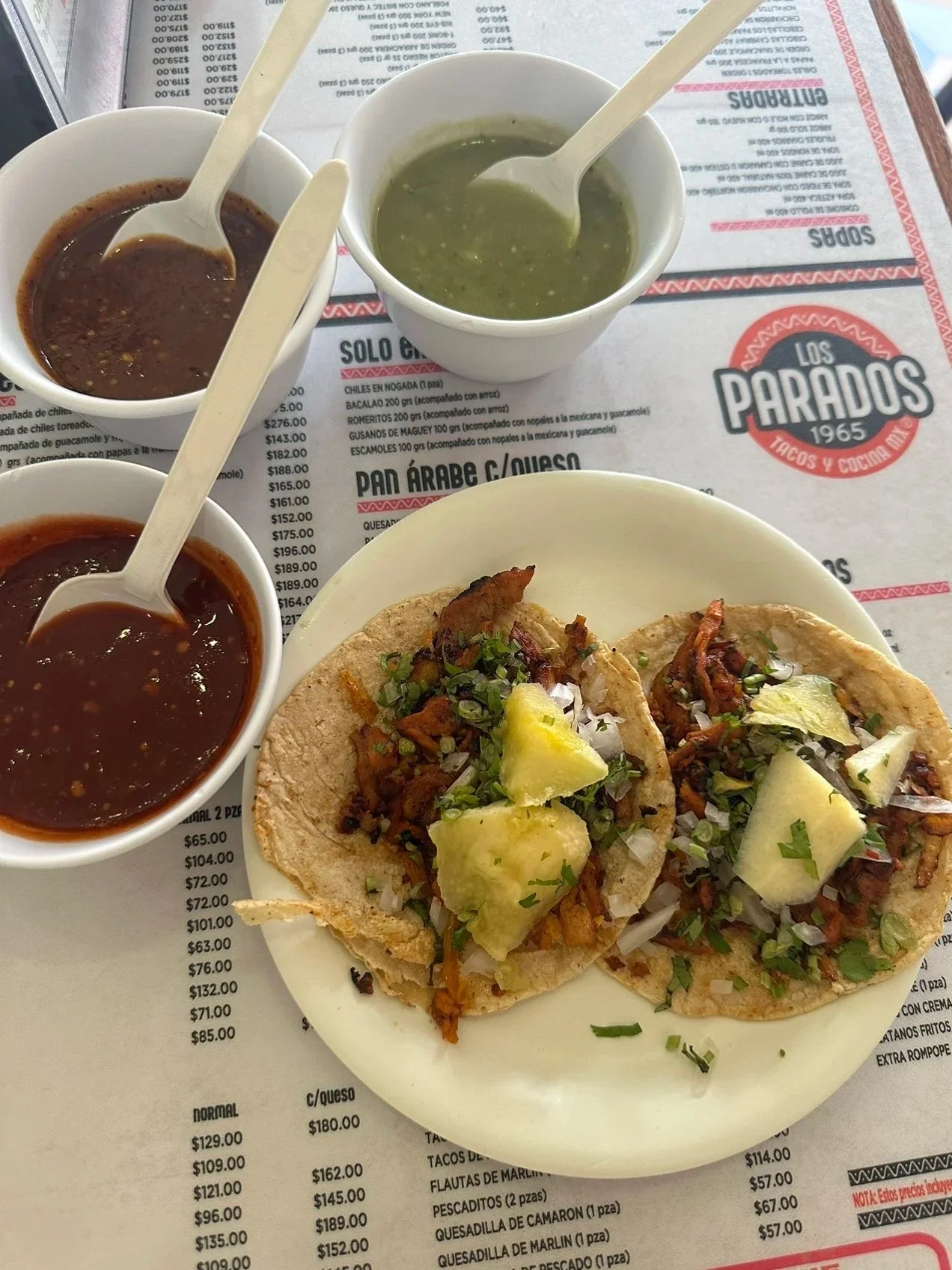
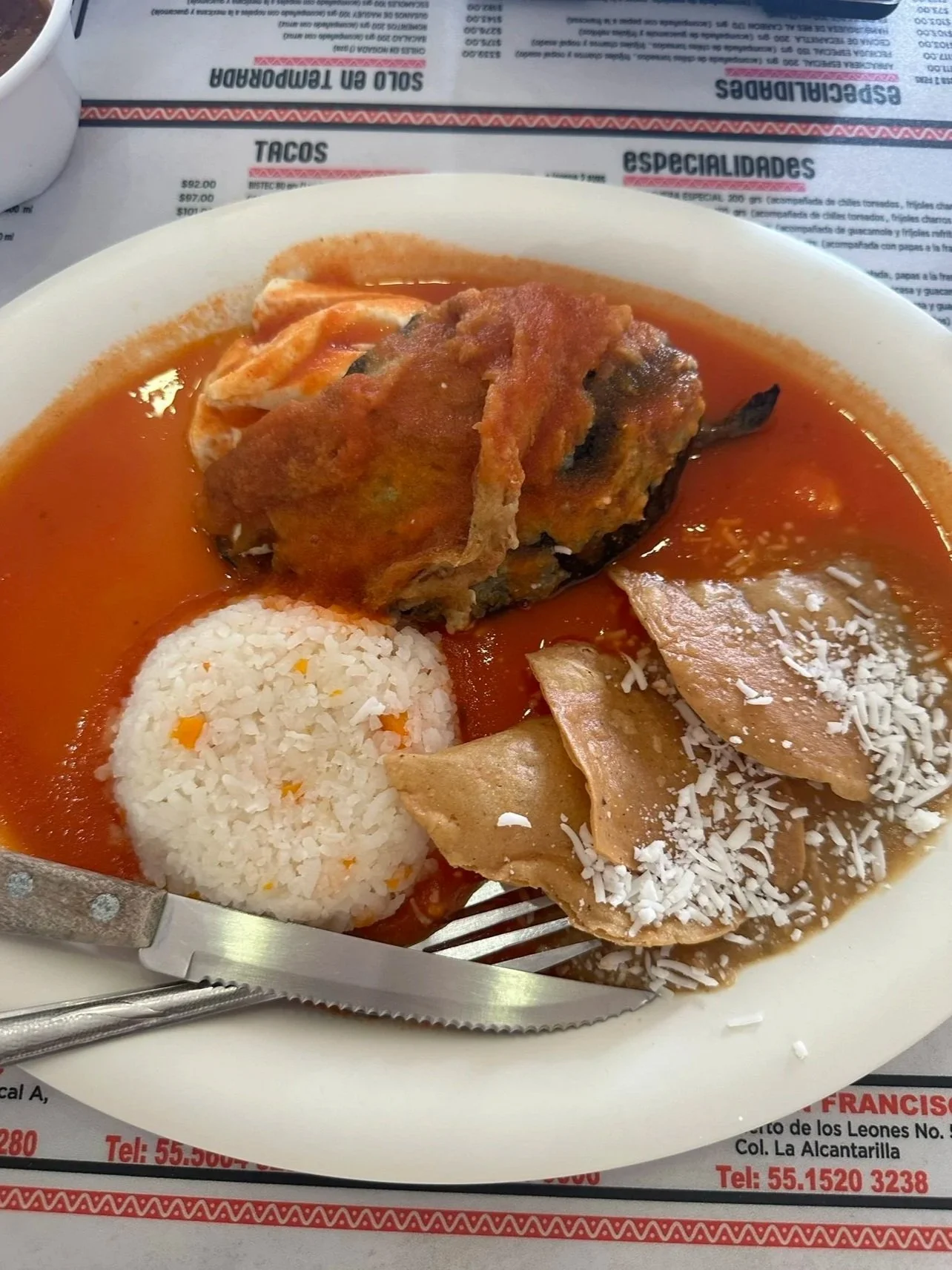
We spent about an hour in Casa Azul, which is the standard amount of time I would recommend to see everything. We were then given the option to have a buffet lunch at a local restaurant or have lunch on our own. I’d seen a mole dish on Tezontle’s menu showcasing a charred poblano pepper stuffed with cheese on top of beans and pomegranate seeds sprinkled. I didn’t get a chance to try it, and I saw posters with this exact dish in Coyoacan. I didn’t want to risk a meal at an okay or average restaurant, so I walked around Coyoacan trying to find the restaurant where I saw this dish advertised. I ended up stopping in Los Parados because they also had the dish advertised, but I don’t think it was the original signage in Coyocan that stopped me in my tracks. I tried to ask in Spanish for the dish, and look on their Google reviews, but from my understanding, the waitress told me it was seasonal, or they only had it during a recent festival. I felt bad because I’d already sat down, ordered a soda, and talked to the waitress so I figured I may as well try to order something else from the menu. Because I wasn’t thrilled with my first few orders of tacos al pastor that I’d had so far in CDMX, I ordered 2 tacos here as a starter, hoping they’d be better. They were not. The waitress then recommended a different poblano dish that was supposed to be similar to the special. It also was not. It was a charred poblano pepper stuffed with mozzarella cheese that was not melted, then deep-fried and covered in a red sauce and served with rice and tortilla chips. I did not enjoy it as it was not what I was looking for, and left the restaurant hungry. I stopped by a local vendor and ordered churros, then went to Cafe El Jarocho for a frozen horchata.
I met up with the group as they finished lunch, and what would you know. The fliers that I saw for the mole dish was at this restaurant I refused to dine at because it was a buffet! The restaurant served a buffet as well as a full menu a la carte, and the mole dish was on the menu. I was visibly pissed because I should have stayed with the group instead of trying to venture on my own.
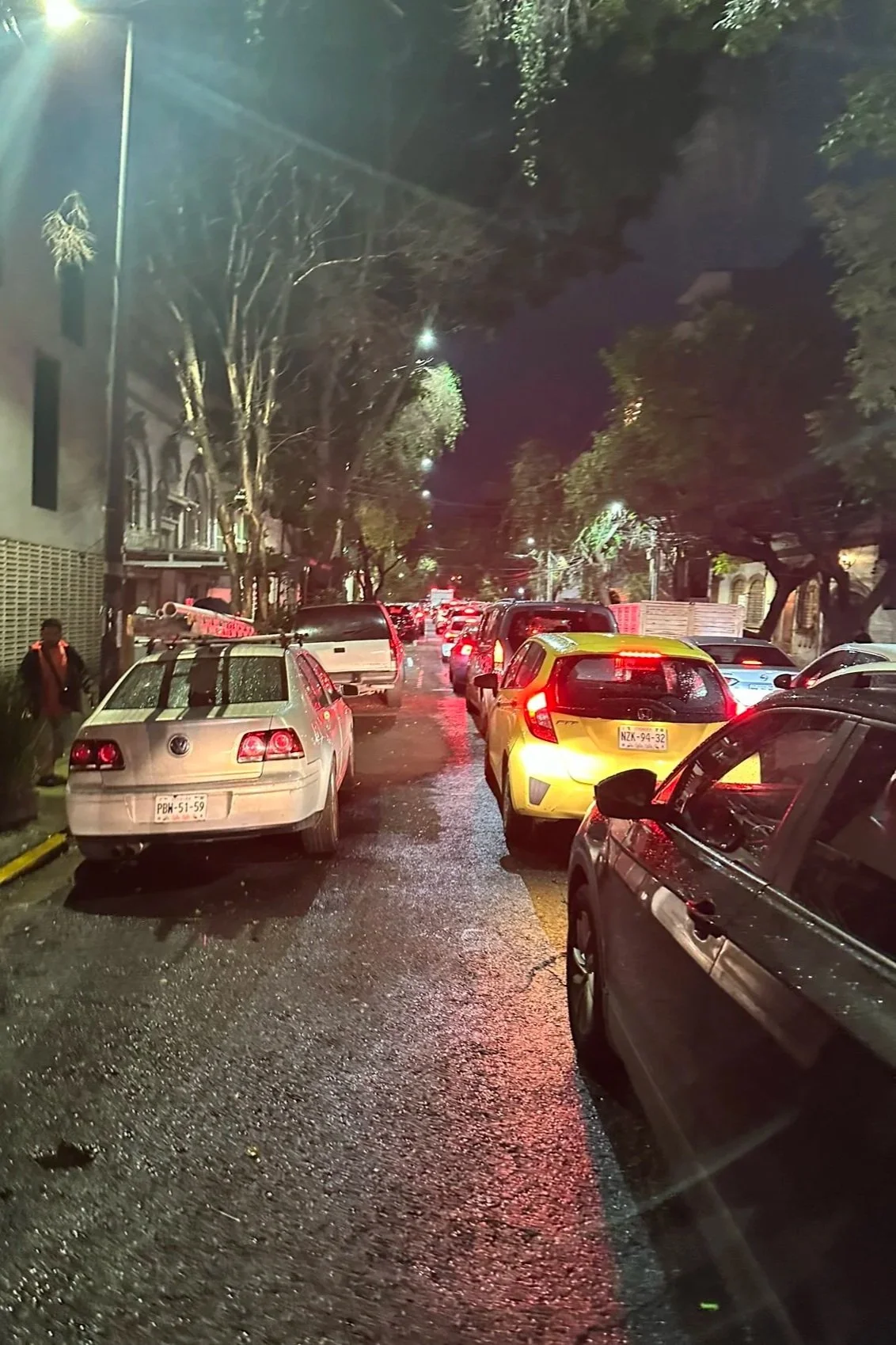
After Coyocan, we hopped back on the bus for the National Autonomous University of Mexico City to see the campus’ graffiti and large murals. It began to rain, and I had no real desire to see public art so I stayed on the bus while the rest of the group got off to explore. This was also another stop I knew nothing about during or after the booking process. It started to become a long day, and I just wanted to do the excursion I had my heart set on, the colorful boats. The group spent maybe 30 minutes on the campus, then the bus was off again, finally to Xochimilco. By this point, it was the afternoon and we had about a 60-90 minute drive before we reached the town of Xochimilco. Once we were an hour in to the ride, we hit rain and bumper to bumper traffic. Our tour guide informed us of the citywide protest and said we would have to detour, but we were in a large coach bus, so the street detour options were limited. We hit standstill traffic after 2 hours on the coach bus and were still miles away from our destination and sunset was looming. We unfortunately did not make it to Xochimilco. The protesters were blocking the streets, traffic was impossible to navigate, with no ETA to our destination, and at this point we would not be able to make it to Xochimilco to ride the boats as nightfall finally hit us. The driver and tour guide made the decision to drive back to the pick-up location in Centro Historico and end our day. It would still be another hour for the bus to make it back to Centro Histórico. A few people asked to exit the bus in Roma Norte as that is where their hotels were. I followed suit, getting out and walking. Because I had all of the destinations saved to Google Maps, I opened it to see what was nearby that I wanted to go to. Mi Compa Chava was a 5 minute walk away, and closed within an hour. I ran in the rain there to try to grab a seat. The host told me it was about a 30-minute wait, so I put my name down and waited.
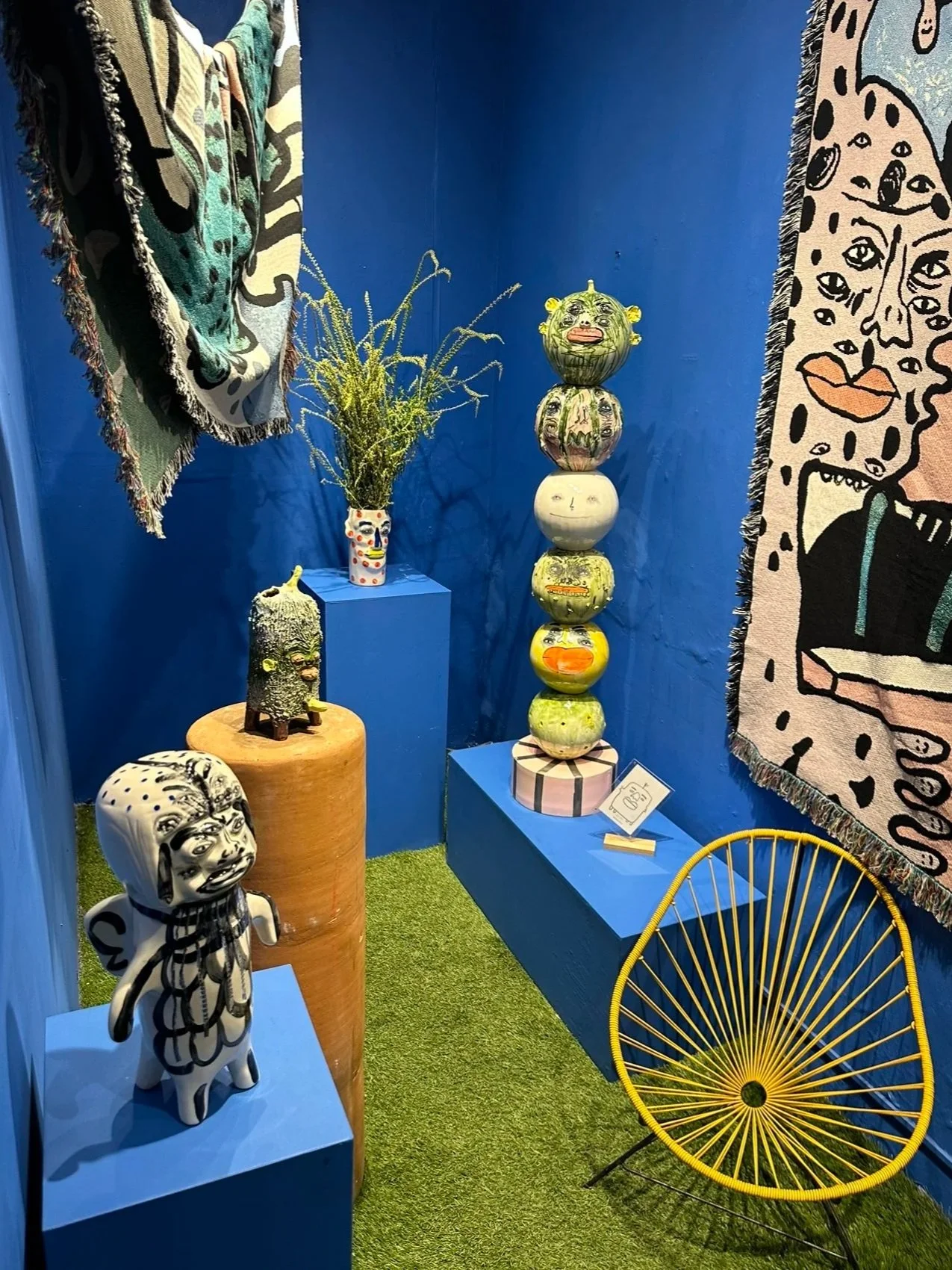
I again looked at Google Maps to see what other stores or restaurants were nearby that I can run in to on my last day. There were a couple home shops near Compa. As I began walking, I had intentions of only going to Cara de Planta, but saw ladies leaving out of Happening with bags, and they looked like my type of girls, so I quickly popped in. Happening appears to be a concept store with a little bit of everything. It appears that everything they sell is made in Mexico from jewelry, fragrance, ceramics, clothing, and shoes. I loved the vibe and the visuals of the store. There is a back area with a lot of children’s and home furnishings on sale. I didn’t need any clothing, and had already bought jewelry earlier in the day, so I debated buying ceramics and stoneware since I saw some fun vases. Happening wasn’t originally on my list of places to hop in to before dinner, so I ran down the block to see what Cara had available. Now, Cara is very eclectic and avante garde. I asked the salesperson at both locations what time they closed to make sure I had enough time to eat dinner, and think about any purchases I wanted to make. Fortunately, they both closed after Compa did, so I had time to come back.
I ran back to Compa, and a seat at the bar was available for me. Compa is another seafood restaurant with rave reviews in the shipping container-esque feel. Their specials include raw seafood, specifically raw oysters, ceviche towers, tostados, and grilled shrimp.
I was still hungry from lunch, but didn’t want to over do it. Everyone that I asked for recommendations said everything on the menu is good. I’m not a raw seafood lover, so I felt like my options were limited here, but they weren’t. It took me a while to digest the menu, so I started off with a shrimp birria quesadilla while I reviewed the menu. The quesadilla was moreso the size of a taco, and very cheesey. It was okay. I wanted the pescado, same as I had at Contramar, but my waiter told me their smalles portion would be too big for one person. Since I was leaving the next day and would not have time to eat the leftovers, I took his advice and ordered the grilled shrimp. The shrimp are cooked to order and tasted like they just came off the grill. It must have been at least one dozen large prawn with a green and red salsa to dip. I noticed that some shrimp were hot off the grill with the perfect texture, and some were cool and had a rubbery, not cooked all the way texture. It could have been that it was the end of the night, chefs were ready to go home, and quality control went out the window. The service was great with a packed restaurant at closing. I would come back to Compa, but earlier in the day when the quality is likely better, and I can see my food.
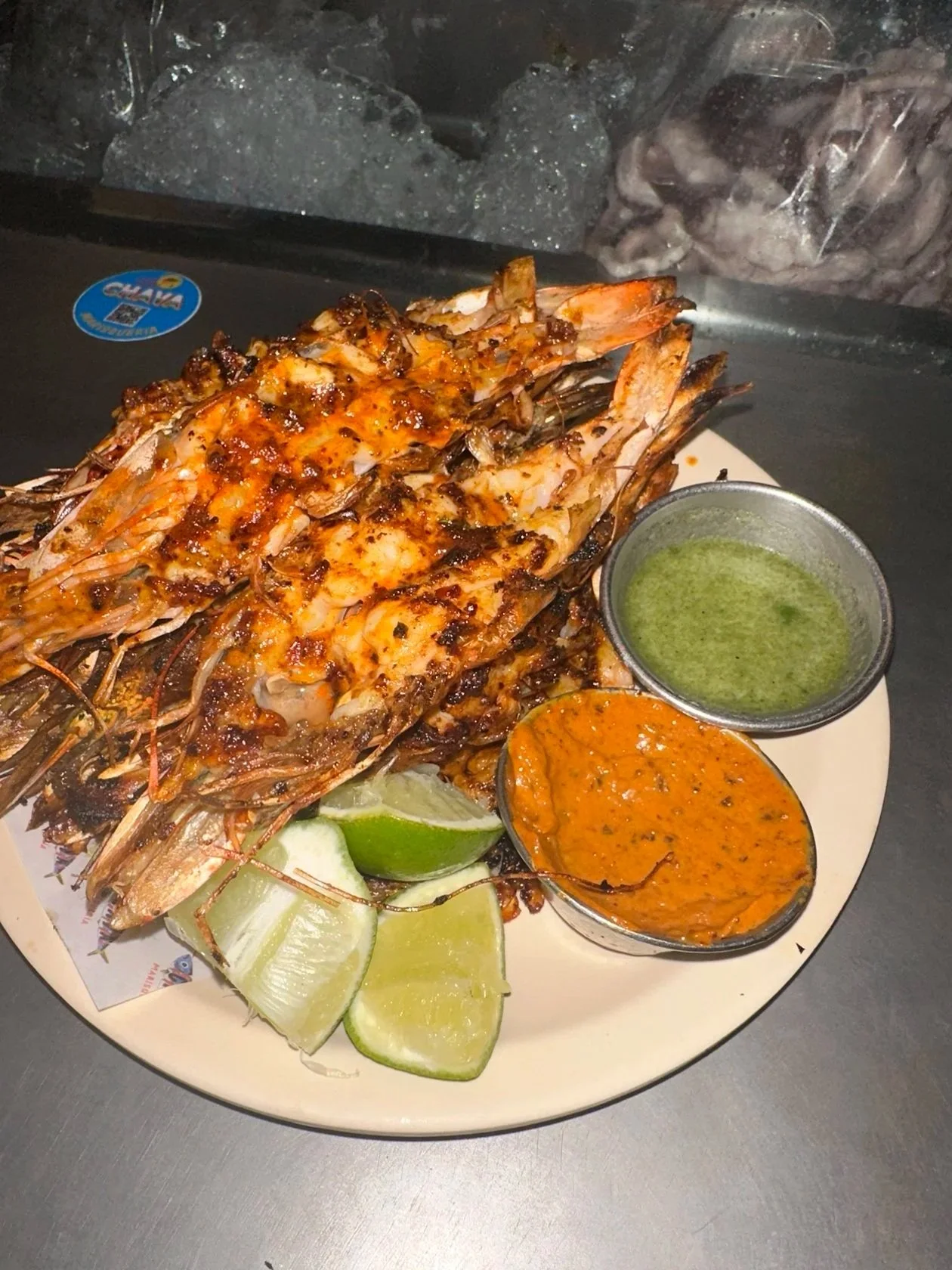
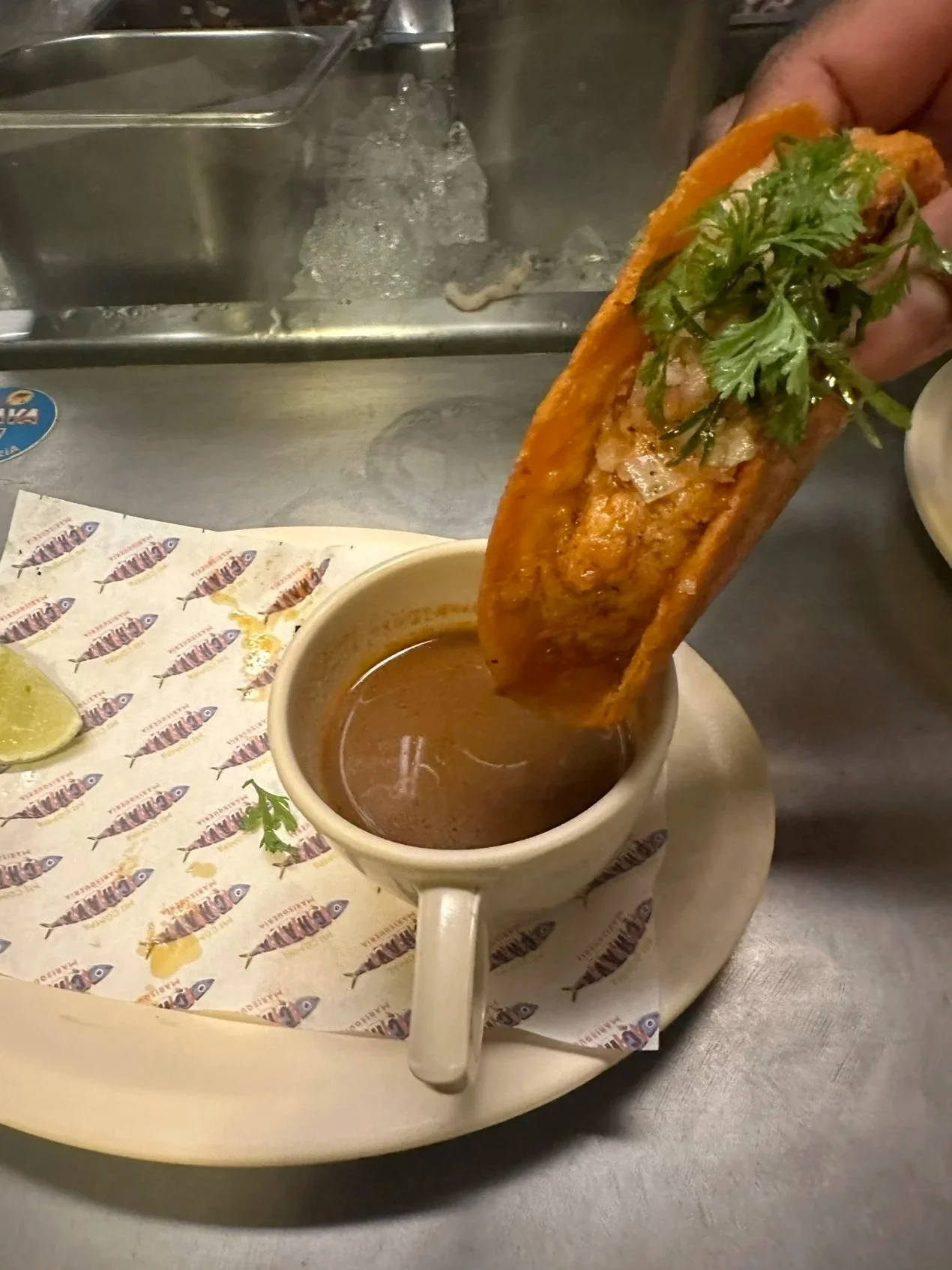
Once I finished my dinner, the dessert options were too large to devour by myself so I passed on dessert and ran back to Happening. I figured if I couldn’t stop thinking about the items in the store, I needed to purchase, and that I did. I went back and forth about 2 vases, but ended up purchasing a black spiked vase that can also be used as a caraffe and glass and looks like it could have come from CB2 or West Elm. I then went back to Cara. I was more on the fence about a purchase here because everything started that I wanted at $100+ USD. Many of the items for sale had functional uses in store. Some vases had flowers and water in them, some terracotta plant pots had soil, rocks, and plants in them. Many items were also missing price tags, so I had to keep asking the associate to price items for me to make sure I got the best deal based on size. I ended up purchasing a multi-use vessel that would be good as a beverage pitcher and vase. I’m obsessed with both pieces that I purchased last minute. When I use them in my home, I’ll have great stories to tell about how I bought them last minute, and speak about their uniqueness.
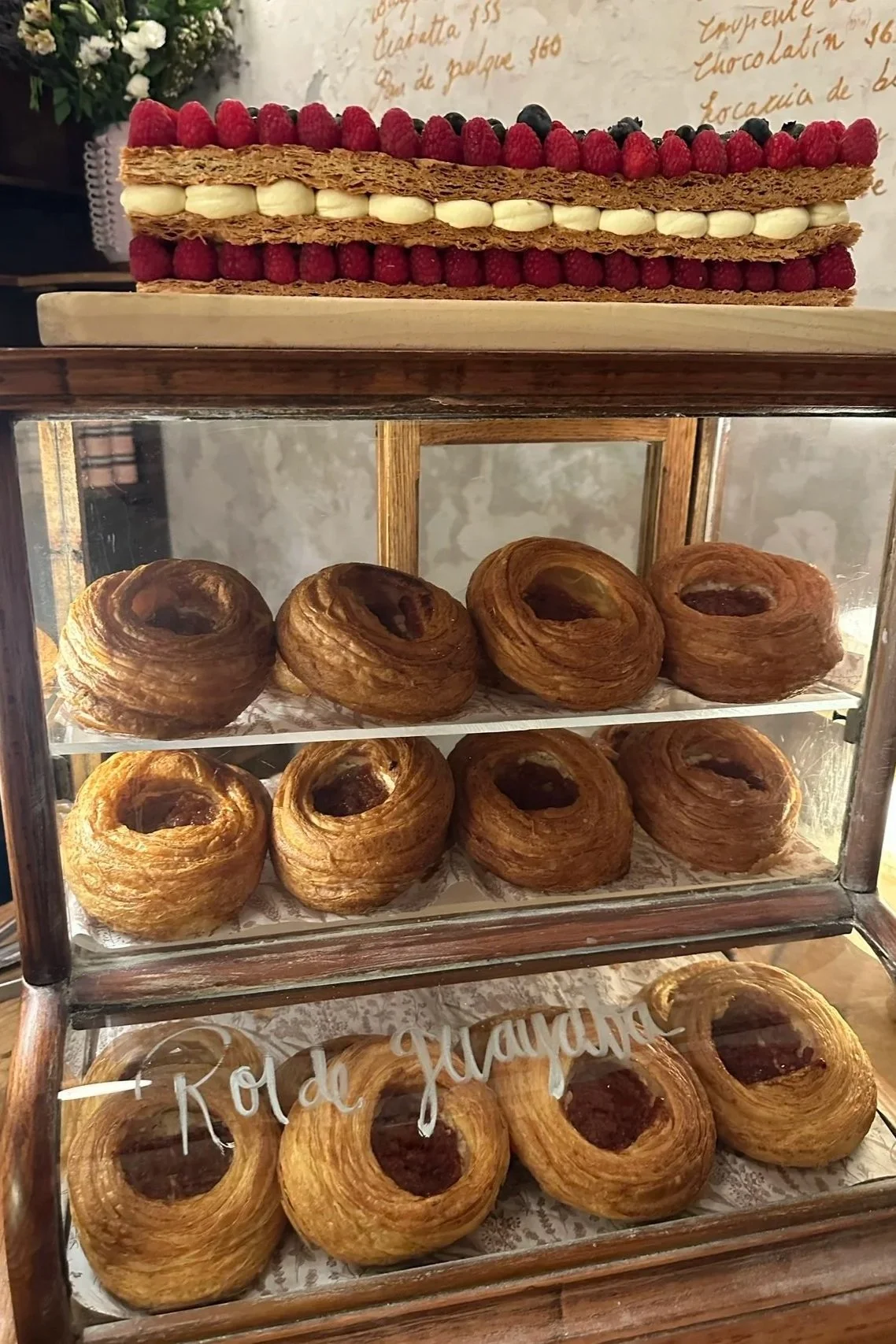
I walked aimlessly around Roma Norte still waiting for the traffic to die down at 9pm and found Panaderia Rosetta. Panaderia Rosetta is probably on every publication’s top bakery in the world list for their notable guava pastries. When I saw people reviewing them on social media, I knew it was bluff, and the bakery wouldn’t be up my alley. I personally love American pastries and baked goods because it has the perfect amount of sweetness, and I’m not a fan of baked fruit or flaky pastries, all of which Panderia Rosetta seems to hone in on. Rosetta’s pastries would likely be good in the morning with a cup of coffee. I entered after 8pm, and guests were sitting outside enjoying their baked goods, and there were a few people ordering from the bakery case inside. Almost everything that I wanted was out of stock for the night. Surprisingly, they sell soft-serve ice cream, but were out of. They also sell chocolate chip cookies, which they were also out of. But their famous guava roll was in stock as well as many savory breads, their cinnamon rolls, and baguettes. I ordered the apple pie turnover and a mini puerquito pilo, or little piggy. The little pig tasted like a soft gingerbread cookie, and the apple pie needed a little more sweetness and moisture in my opinion. I would likely return, again closer to opening to order more of a variety and see their entire selection.
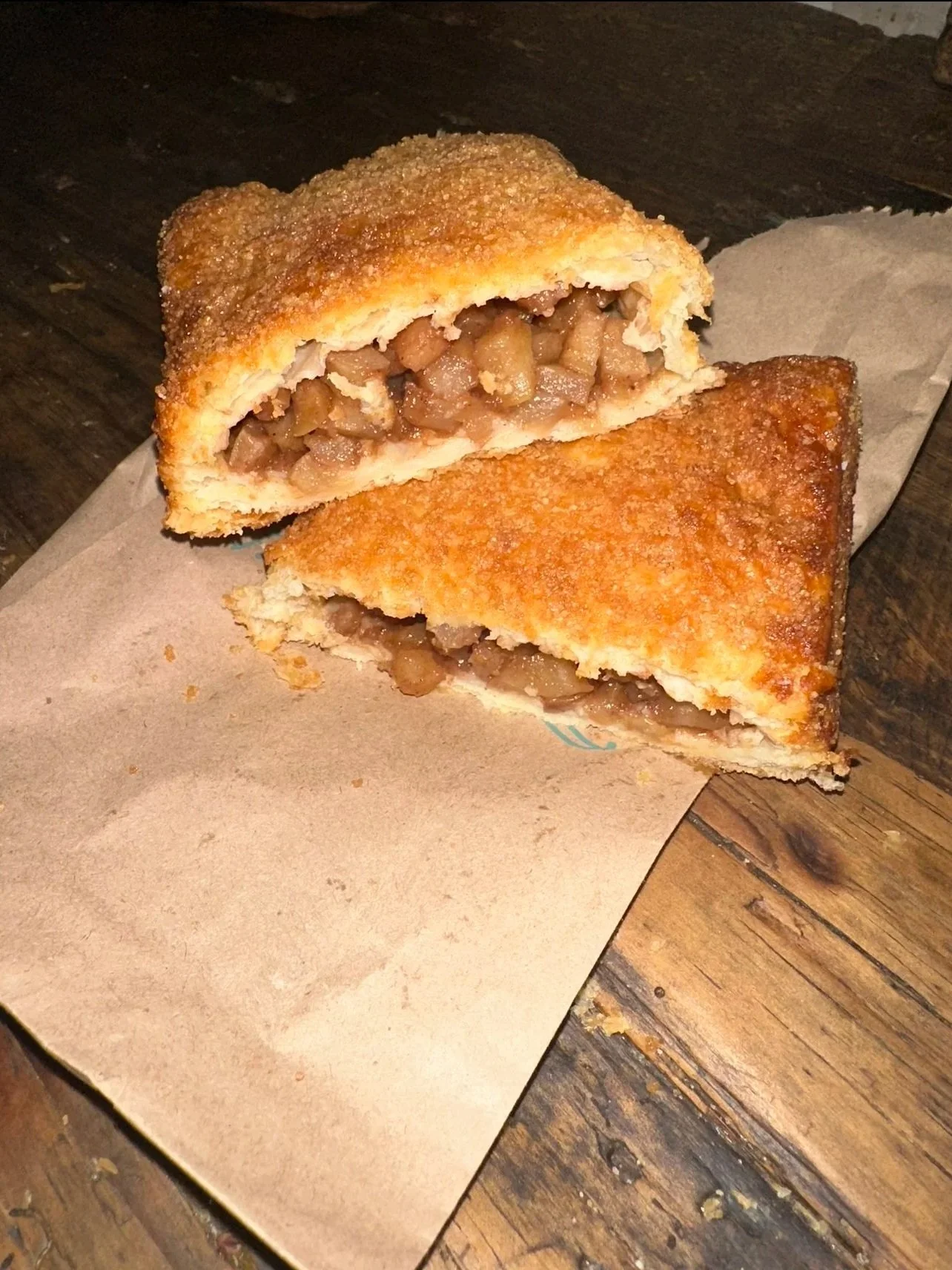
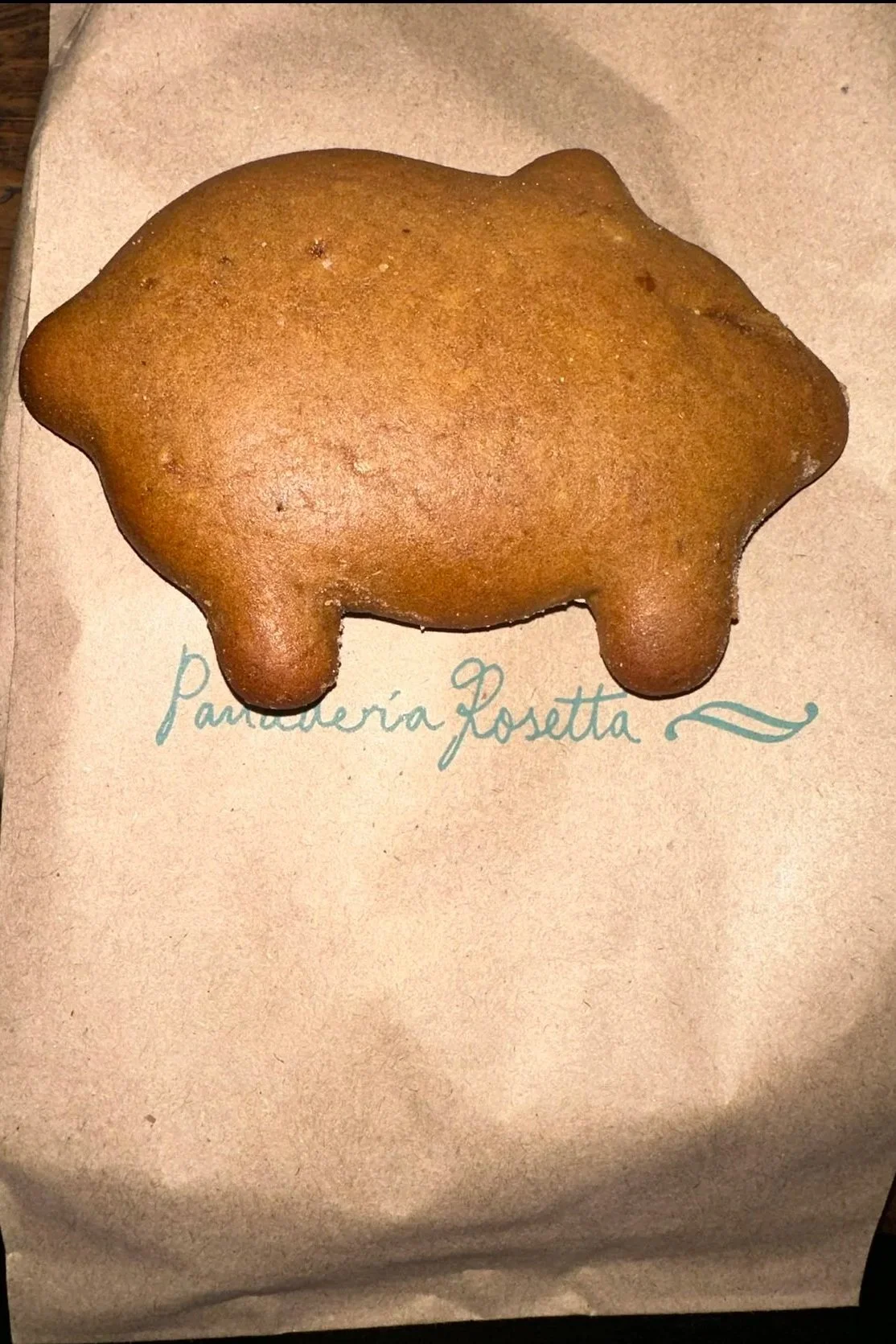
I took an Uber back to my hotel to call it a night. My last day in Mexico City was uneventful. I wanted to soak in as much time as possible at Centuro Mexicano. I went back to the rooftop for breakfast, and enjoyed my stay so much, I was asking the staff about where to purchase the bed linens and more mini-bar snacks.
From my time in Mexico, I fell more in love with the country, the people, the culture, and the food. I’m checking my schedule now for availability on a longer time in Mexico to be more immersed by the people and culture.
If you’d like to see a haul of everything I purchased in Mexico City, I have the full video on my Youtube.
If you’re planning a trip to Mexico City, I hope you were able to gain valuable takeaways and resources from my time in the city. If you’ve been to Mexico City before, please leave additional recommendations in the comments below on what I should add to my next itinerary!